Never miss a story!
Subscribe to our newsletter
IRU and Chinese automotive leaders explore common ground
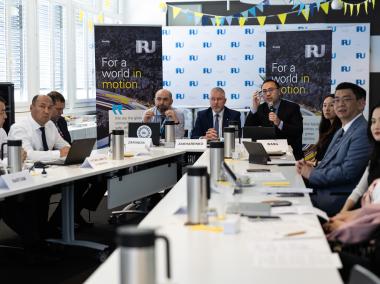
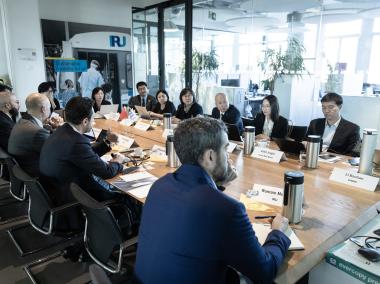
IRU welcomed a high-level Chinese delegation in Geneva, bringing together automotive associations CATARC and CASIC, as well as companies BYD, Huawei, Xiaomi and Great Wall Motor, for an in-depth exchange on the global road transport sector.

People, standards and reform key to stronger Eurasian connectivity
Efficient borders, modern regulation and stronger professional standards must advance together for Eurasian transport corridors to deliver their full economic potential, experts stressed at the IRU-UN-OHRLLS dialogue in Astana, Kazakhstan.

Diesel: all indicators turning red
Diesel pump prices have eased slightly from their late-September record, but they are edging up again. Wholesale market diesel is back where it was a month ago, at around USD 200 a barrel. What has changed is what makes up that price: the refining premium that drove it in September has halved, and higher crude and shipping costs have taken its place. Crude is flowing out of the Middle East again, but diesel is not, and refineries elsewhere are already running close to their limits. The IEA now e
IRU and UNECE eye stronger cooperation on international road transport
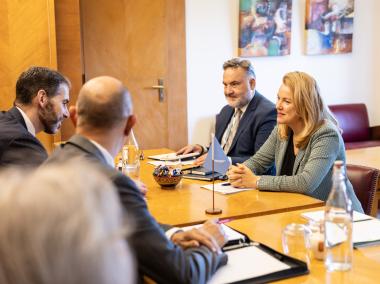
New IRU Secretary General Habib Turki and UNECE Executive Secretary Tatiana Molcean have held their first bilateral meeting, setting out priorities to strengthen their longstanding partnership, accelerate digitalisation and expand the reach of international road transport conventions.
Digital ECMT permits showcase impact of public-private partnerships
The digital ECMT permit system is proving how paperless processes can simplify international road transport. At the latest ITF Group on Road Transport meeting in Rome, IRU called for that momentum to extend to eCMR, eVisas and other cross-border tools, while warning that unresolved AETR issues risk undermining the multilateral permit system.

The EU cannot afford a smaller transport budget
IRU regrets the Irish Presidency’s intention to cut transport funding under the Connecting Europe Facility. Europe’s competitiveness, climate and security ambitions depend on stronger infrastructure investment.
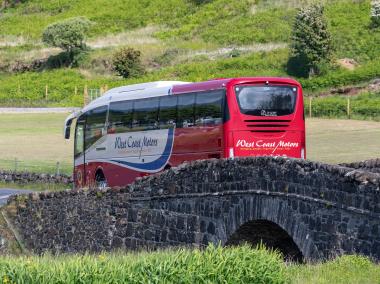
How UK destinations win coach visitors – and their millions
What does it take for a town to welcome coaches? IRU member the Confederation of Passenger Transport (CPT) answers that question through its Coach Friendly scheme. It accredits destinations that invest in coach parking, signage and facilities, and encourages local authorities to plan for coaches.

EU framework needed to unlock semi-private truck charging
IRU and Transport & Environment (T&E) are calling on the European Commission to establish a supportive EU framework for semi-private charging as part of the upcoming review of the Alternative Fuels Infrastructure Regulation (AFIR).

Green investment needs depot charging, cash flow certainty: new positions
IRU’s two new EU position papers call for semi-public depot charging and 30-day payment terms for road transport services. They address two practical conditions operators need to invest in zero-emission vehicles and infrastructure: charging access and predictable cash flow.

Convenience Express: China’s new coach model boosts ridership by 30%
The Convenience Express initiative shows how digitalisation, flexible services and coordinated branding can modernise intercity coach transport. Passenger numbers have risen significantly, with some routes increasing more than tenfold. Even some previously discontinued routes have been revived.
IRU clarifies road transport employers’ subcontracting discussions
The world road transport organisation distances itself from any claims or attempts to suggest that there is a unified position among road transport operators across the EU calling for EU-level intervention on subcontracting.
Trucks make transport corridors work: IRU at key UN working party
At the 39th session of the UNECE Working Party on Transport Trends and Economics, IRU highlighted how TIR trucks can turn international transport corridors from lines on a map into resilient operational trade routes.
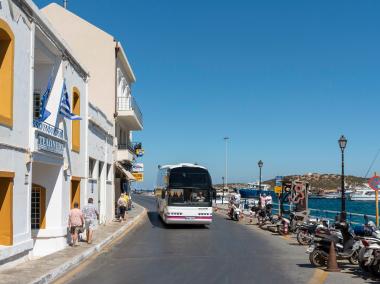
Coach needs on the table at EU forum
IRU brought the perspective of the coach and bus sector to the CIVITAS Forum 2026 in Thessaloniki, Greece, highlighting the need for coordinated urban access rules, investment in infrastructure and modernised skills to make urban mobility more sustainable, inclusive and connected.
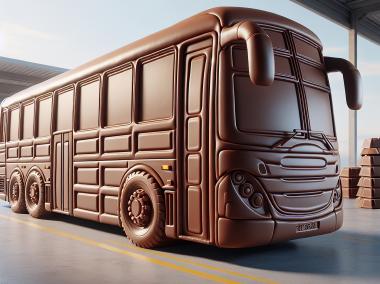
A coachload of Belgian ideas for better tourism
Belgian innovation goes beyond chocolate. Through a series of initiatives led by IRU member the Belgian Federation of Bus and Coach Operators (FBAA), the sector is helping destinations manage visitor flows, improve accessibility and develop new tourism products.

Connect better, operate smarter, compete stronger? Join us in Astana
How can road transport operators reduce trade costs, improve efficiency and strengthen their competitiveness? Join industry leaders in Astana, Kazakhstan, on 14 October to explore practical solutions for more efficient, professional and resilient road transport.
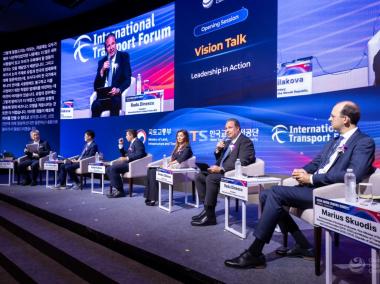
AI and new technologies are reshaping road transport, but people remain key
Artificial intelligence, automation and greater connectivity can help road transport respond to major challenges. But successful deployment will depend on common standards, trusted governance and keeping people at the centre, IRU President Radu Dinescu told transport leaders in Seoul.

Vehicle data, AI and operational challenges take centre stage at IRU event
IRU’s Commission on Innovation and Technology (CIT) brought together members and industry experts in Brussels to exchange views on the technologies, regulatory developments and practical challenges shaping the future of commercial road transport.
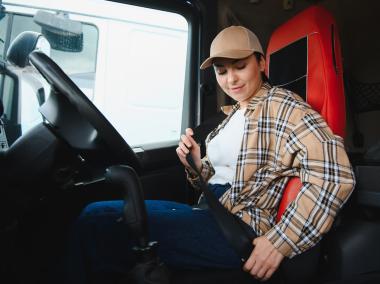
Legal mobility pathways key to mitigating driver shortage
The shortage of drivers is a major constraint on the industry, with implications extending far beyond road transport. Local recruitment efforts must be accompanied by legal driver mobility pathways, IRU said at the Budapest Process meeting on legal pathways for migration in Islamabad, Pakistan, this week.
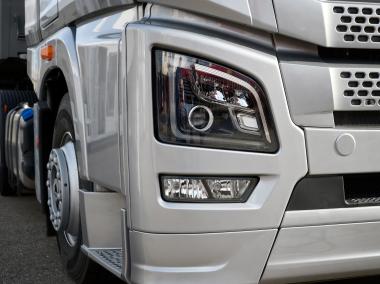
IRU brings OEMs and operators together to advance vehicle data access
Road transport operators need effective access to the data generated by the vehicles they own, lease and operate. But how can this be achieved while protecting manufacturers’ intellectual property and maintaining cybersecurity and vehicle safety?
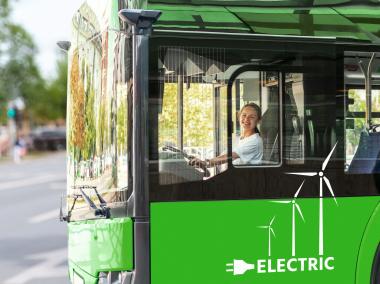
IRU and EMTA call for workable Buy European rules for electric buses
IRU and the European Metropolitan Transport Authorities (EMTA) are urging the Irish Presidency and Members of the European Parliament (MEPs) to fix key provisions in the Industrial Accelerator Act's proposed “Buy European” rules for electric vehicles. They warn that the current approach risks forcing working electric buses off the road and penalising public transport operators and authorities that bought them in good faith.
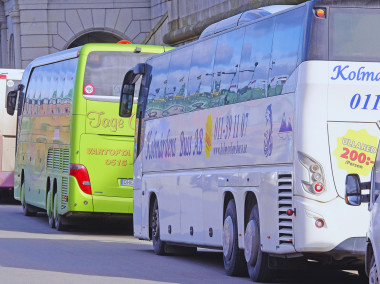
What makes a destination coach-ready? Sweden has some answers
A beautiful landscape, a historic town or a unique visitor attraction does not automatically attract coach groups. What does? We asked Anna Grönlund, Deputy Managing Director of the Swedish Bus and Coach Federation (Sveriges Bussföretag) and Vice President of IRU.

Coach tourism: Europe's overlooked sustainability success story
Europe is redefining the future of tourism. The forthcoming EU Sustainable Tourism Strategy is an opportunity to build a tourism model that is greener, more resilient, more inclusive and more beneficial for local communities. Achieving these ambitions will require looking beyond traditional assumptions and recognising the transport solutions that are already delivering tangible results.
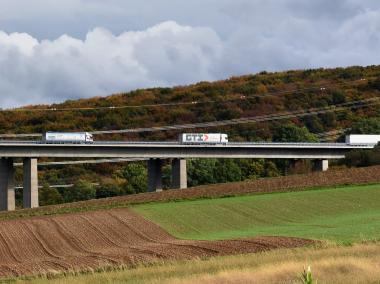
Stronger EU grids can power road transport electrification
IRU takes note of the Council’s agreed negotiating position on the grids package as an important step towards strengthening the EU’s energy infrastructure to support electrification and decarbonisation.

2026 Connecting Europe Facility call delivers on key road transport asks
IRU welcomes the launch of the European Commission’s final Connecting Europe Facility (CEF) Transport call under the current 2021–2027 EU budget, which provides dedicated funding for three long-standing priorities of the commercial road transport sector: alternative fuels infrastructure, external border efficiency and digital innovation. The package includes EUR 130 million for alternative fuels infrastructure, EUR 20 million for external border-crossing improvements, and EUR 20 million for digi

Inside the North American trade negotiations: status report
Protect the North American trade deal, modernise borders and keep goods flowing. That was the message from IRU’s recent North American Transportation Forum webinar. The discussion focused on the future of the United States-Mexico-Canada Agreement (USMCA), also known as CUSMA in Canada and T-MEC in Mexico, as the three countries move through the agreement’s six-year review process.
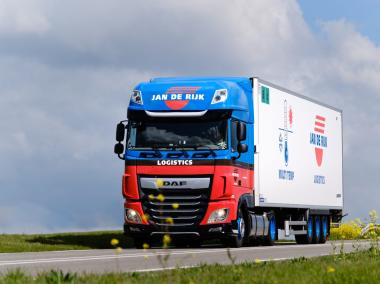
Ageing workforce looms over Dutch trucking industry
The Netherlands is not yet facing the same acute truck driver shortage seen in some European markets. But a deeper structural challenge is already taking shape. We spoke with Nadia Goverde, HR Director at IRU member Jan de Rijk, to better understand how Dutch operators are experiencing the shortage and preparing for the years ahead.

EU needs grid targets for greening to succeed: IRU at POLITICO event
IRU brought the voice of commercial road transport operators to POLITICO’s Energy & Climate Forum in Brussels, joining European Commissioners, national policymakers, members of the European Parliament, industry leaders and energy experts in discussions on Europe’s energy, climate and competitiveness agenda.