Coach mobility must be fully integrated into the EU’s future tourism framework if the bloc is to strengthen competitiveness, sustainability and resilience, IRU stressed at high-level discussions in Brussels.
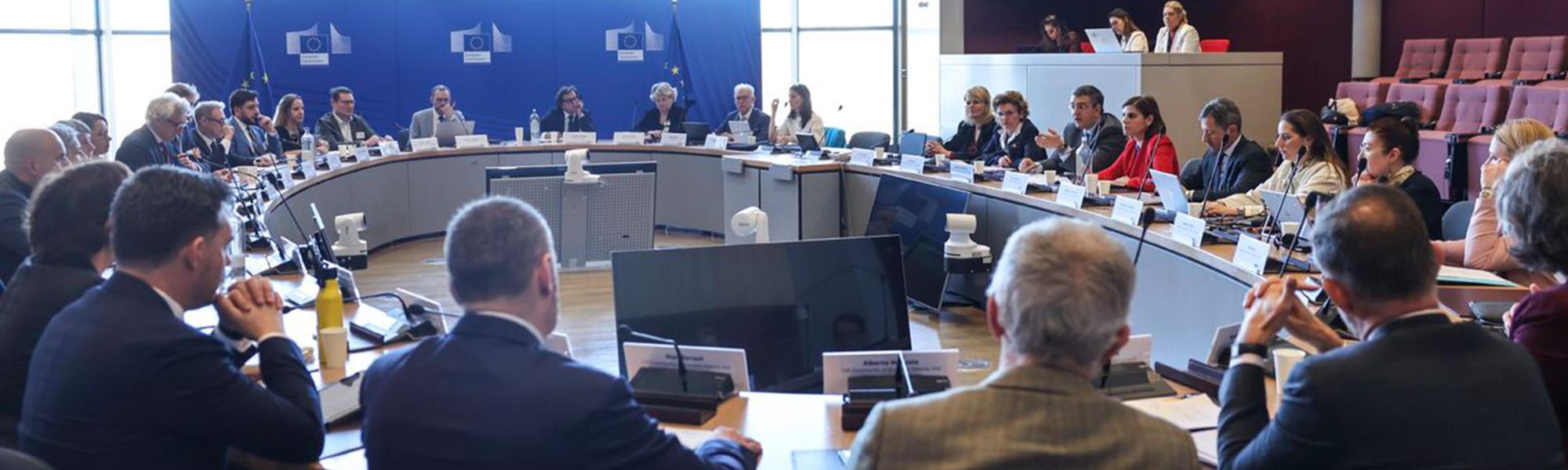
IRU contributed to discussions on the EU’s future tourism policy during the High-Level Strategic Dialogue on the EU Sustainable Tourism Strategy with Apostolos Tzitzikostas, European Commissioner for Sustainable Transport and Tourism, underscoring the importance of integrating road mobility into the core of the strategy.
The high-level EU dialogue, hosted by Commissioner Tzitzikostas in Brussels, brought together transport and tourism leaders to provide input into the forthcoming EU Sustainable Tourism Strategy expected in June 2026.
IRU EU Director Raluca Marian said, “The EU’s strength as a global tourism destination lies in its diversity and its seamless cross-border connectivity. Coaches make that possible.
“They enable visitors to experience multiple countries in one journey, connect travellers to rural and cultural destinations beyond major capitals, help avoid overtourism by carrying visitors where no other transport mode can, and provide a sustainable and affordable form of mobility.
“By strengthening the framework for coach tourism, the EU can reinforce both its global competitiveness and its sustainability ambitions.”
The forthcoming EU Sustainable Tourism Strategy aims to strengthen the sustainability, competitiveness and resilience of the EU’s tourism ecosystem in response to climate pressures, digital transformation, skills shortages and intensifying global competition. The initiative is expected to provide a coordinated framework for future policy actions and support measures at EU level.
Representing the bus and coach sector, IRU underlined that seamless connectivity is fundamental to a competitive, sustainable and resilient European tourism ecosystem. Coaches are tourism’s invisible infrastructure, linking airports and ports to cities and rural destinations, enabling organised group travel, cultural and leisure tourism, and supporting meetings and events across borders.
As a sector largely made up of SMEs, bus and coach operators contribute to regional cohesion, accessibility and the decarbonisation of travel.
Restoring predictability in city access
Urban access has become one of the most pressing operational challenges for coach tourism businesses.
Across the EU, there are close to 650 urban access restrictions. This growing patchwork, often implemented differently across cities, languages and administrative systems, creates legal uncertainty, planning complexity and significant compliance costs for operators managing cross-border itineraries.
Greater coordination is essential. A harmonised “one-stop-shop” system for urban access rules and procedures, conceptually similar to the EU VAT framework in travel and tourism, would significantly reduce administrative burden while maintaining policy ambition.
“Access to cities is vital for giving visitors the possibility to travel by this sustainable transport mode and avoid the use of private cars,” said Raluca Marian.
“Beyond the needed harmonisation of administrative requirements related to city access restrictions, access to terminals and dedicated parking areas for long-distance coaches is essential and becoming ever more important given the charging needs of future electric coaches,” she added.
Investing in long-distance connectivity
Strengthening the EU’s tourism competitiveness also requires investment in terminal infrastructure that ensures seamless connectivity of various transport modes and public transport.
Targeted support under EU instruments such as the Connecting Europe Facility (CEF) would help modernise infrastructure, enhance multimodal integration and improve the passenger experience.
EU initiatives such as DiscoverEU should explicitly recognise coaches alongside rail, reflecting their essential role in delivering affordable, sustainable and inclusive cross-border mobility across all regions of the EU.
“We are grateful to Commissioner Tzitzikostas for taking this unique initiative to strengthen EU tourism and the inclusive and comprehensive perspective of all the parts that together enable it. We reaffirm our commitment to working with EU institutions and stakeholders to ensure that coach mobility is fully embedded in a competitive, resilient and sustainable ‘Destination Europe’,” concluded Raluca Marian.