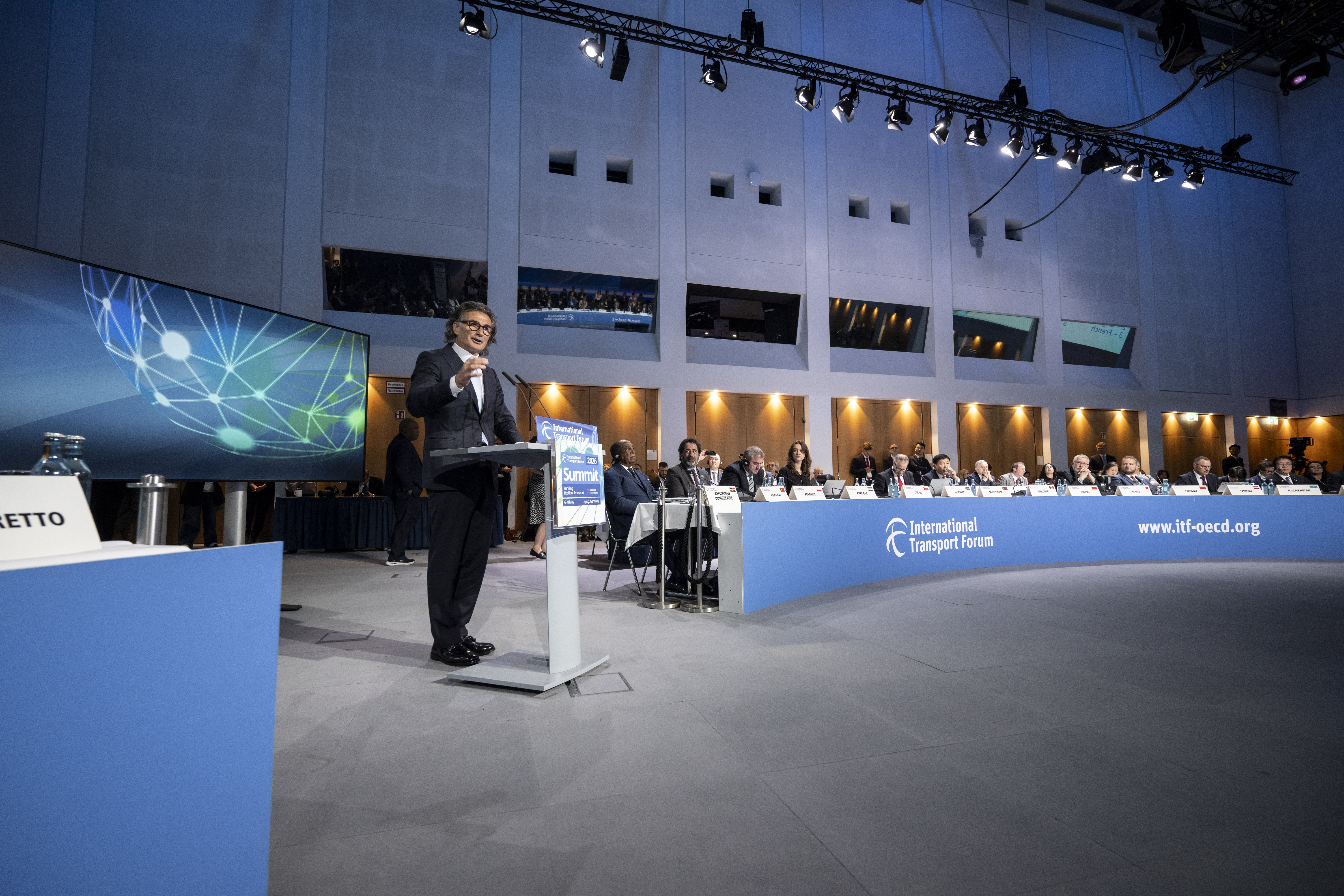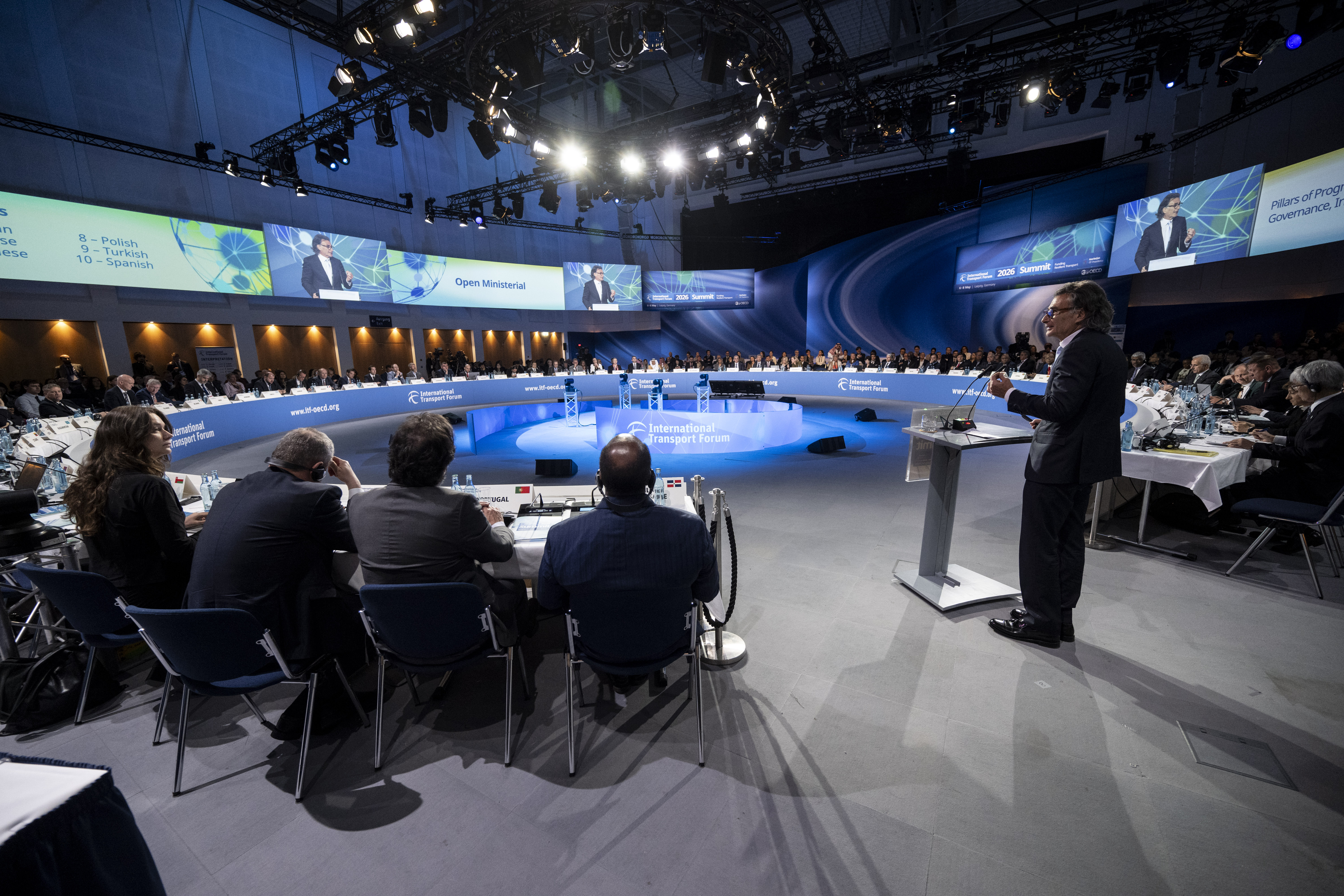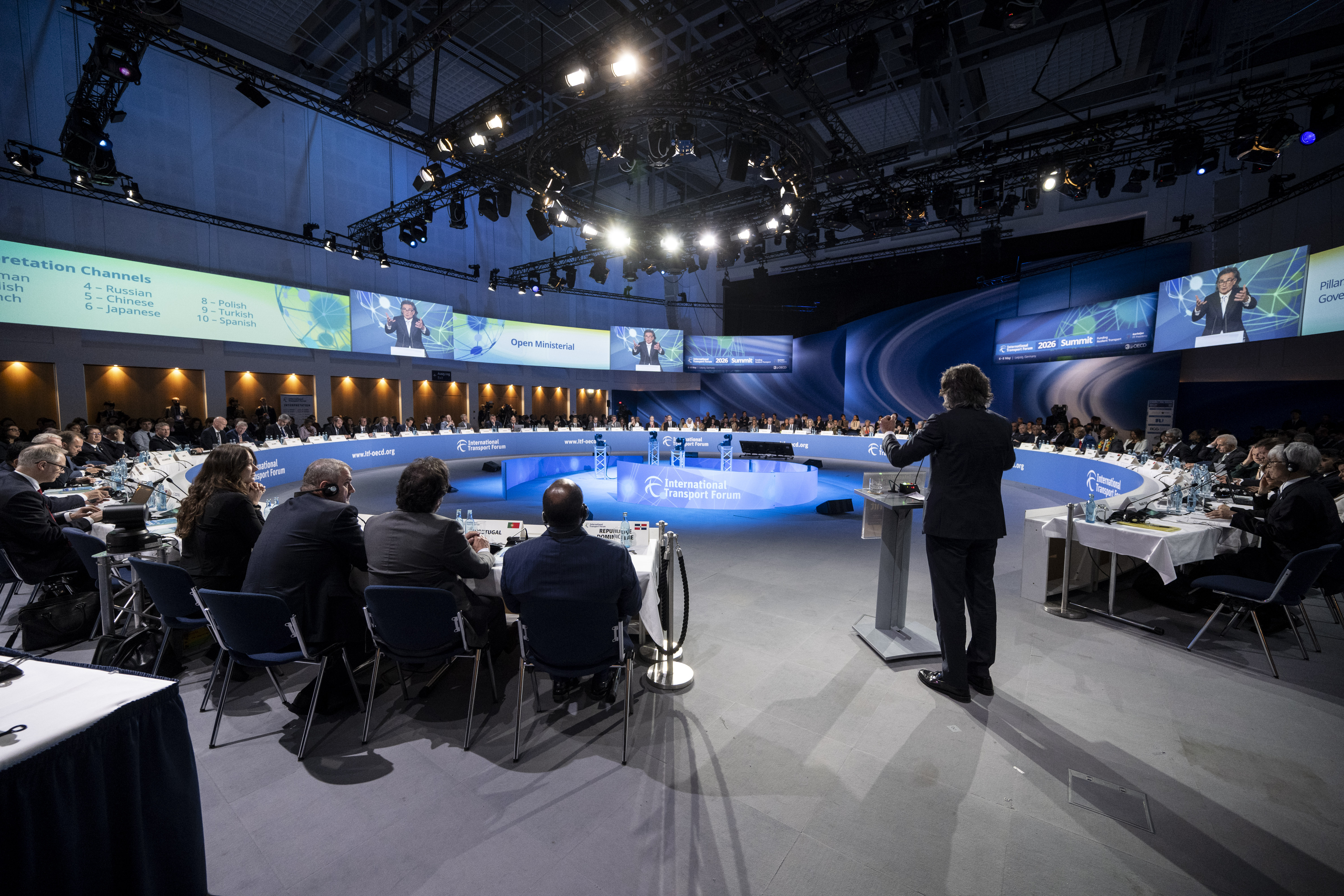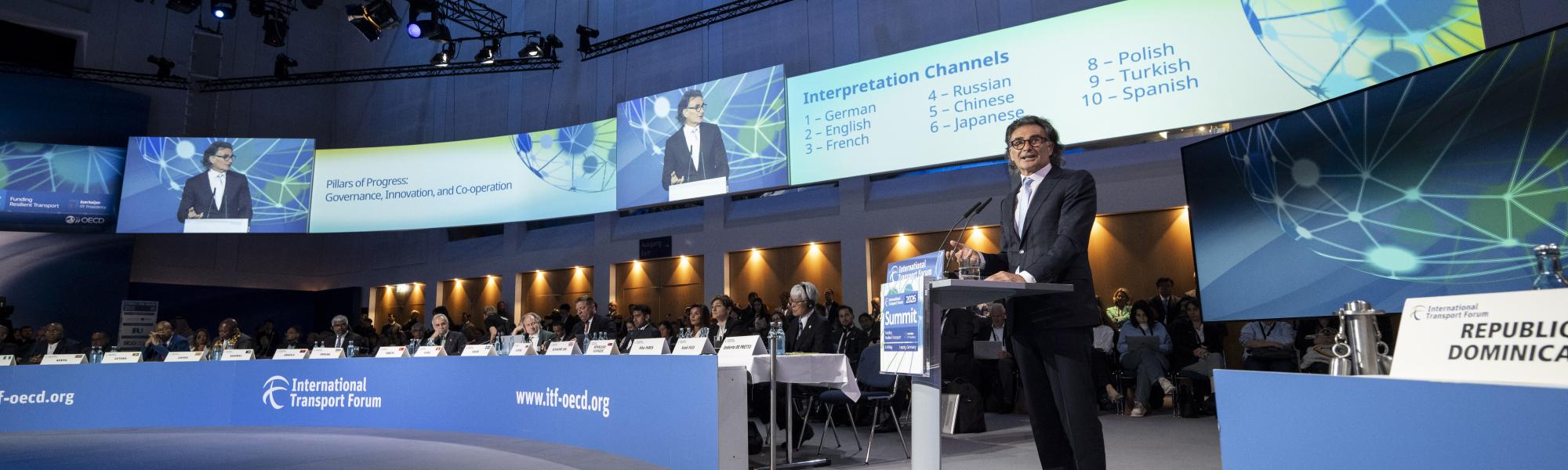
At the 2026 International Transport Forum (ITF) Summit in Leipzig, IRU’s Secretary General delivered a stark message to ministers and transport leaders: the world has entered a state of permanent crisis mode, and governments must move from discussion to action to help transport systems respond to growing global disruptions.
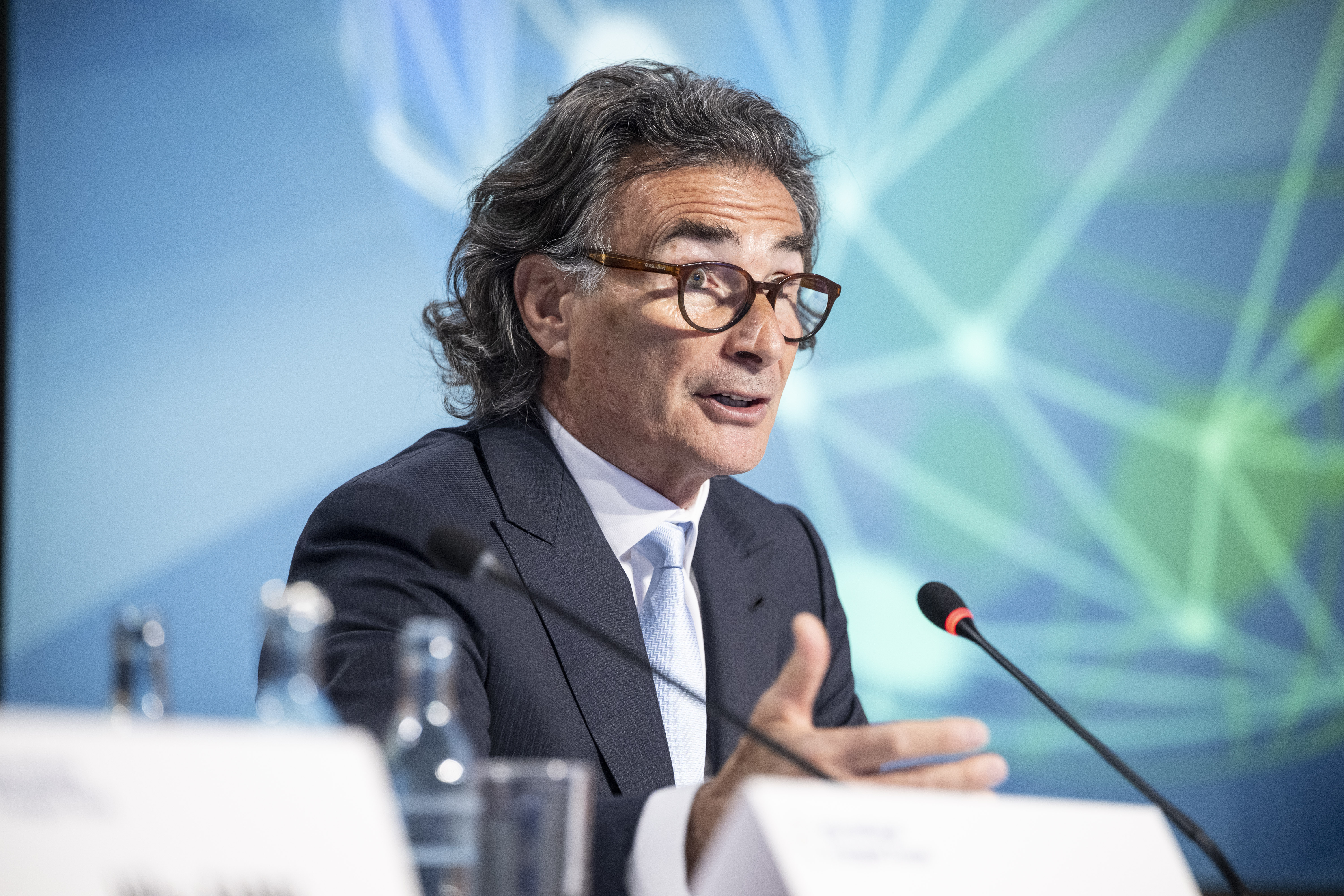
Speaking during today’s ministerial session “Pillars of Progress: Governance, Innovation, and Cooperation”, IRU Secretary General Umberto de Pretto warned that wars, natural disasters and geopolitical instability are placing unprecedented pressure on global mobility and logistics networks.
“Every year, we talk about crises. Wars in the Middle East, Europe, Africa and elsewhere disrupt transport operations. Natural disasters damage infrastructure. Covid showed how vulnerable transport can be. We seem to be in permanent crisis mode these days.”
But road transport, he stressed, is not only a victim of instability. “Transport is also crucial to how the world deals with crises.”
Representing an industry of more than 3.5 million road transport companies worldwide, Umberto de Pretto highlighted the essential role of buses, coaches, taxis, vans and trucks in maintaining resilient supply chains and mobility services. “We are the glue that makes intermodal networks work. We are the first and last mile.”
Drawing on the current war in Iran and conflict in the Middle East, he described how road transport operators are helping populations affected by war while simultaneously adapting supply chains under extreme pressure.
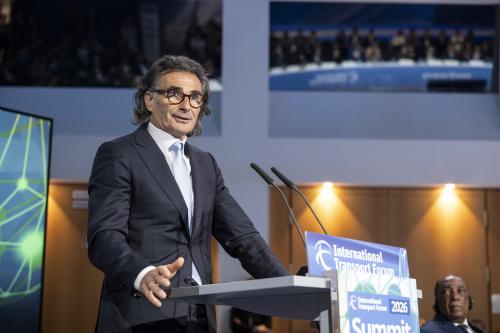
“We are not only hugely impacted by the current crisis in fuel price and supply, our work is also crucial in helping those affected by this war – from moving people fleeing conflict to redeploying truck routes across the wider Middle East and rerouting shipments carrying essentials.”
His central message to governments was direct: “Let us do our job. Help us be more resilient; don’t hinder our resilience.”
Umberto de Pretto pointed to three priorities requiring urgent action: borders, bureaucracy and digitalisation.
On borders, he called for wider use of the TIR system to enable faster and more secure cross-border transport during crises. “TIR strengthens resilience by enabling flexibility in transit routes. When traditional corridors are disrupted, the system absorbs the shock and trade keeps moving.”
He cited the rapid rerouting of cargo through Iraq as an example of resilience in action. “TIR trucks are crossing Iraq rapidly and securely, enabling swift rerouting of cargo from the GCC to Türkiye and on to Europe.” He noted how Iraq has reduced some journeys from Poland to Dubai from 24 days to just 10.
Turning to bureaucracy, Umberto de Pretto criticised outdated visa and administrative processes that continue to slow down transport operations during emergencies. “Driver visas and processes are stuck in the last century. Remove visas, at least in times of crisis, or, at the very least, make the processes fast and efficient.”
He also urged governments to accelerate digitalisation efforts. “Digitalisation is a real buzzword. It’s great to talk about AI and new technology, but we are still decades behind on some of the most basic digitalisation opportunities that would bring real benefit to operators.”
Umberto de Pretto also expressed frustration at the lack of implementation following repeated political commitments on resilience. “After Covid we talked about ‘building back better’. Are we succeeding? Well, not really.”
“Let us stop talking and start acting,” he urged ministers. “Help us help you.”