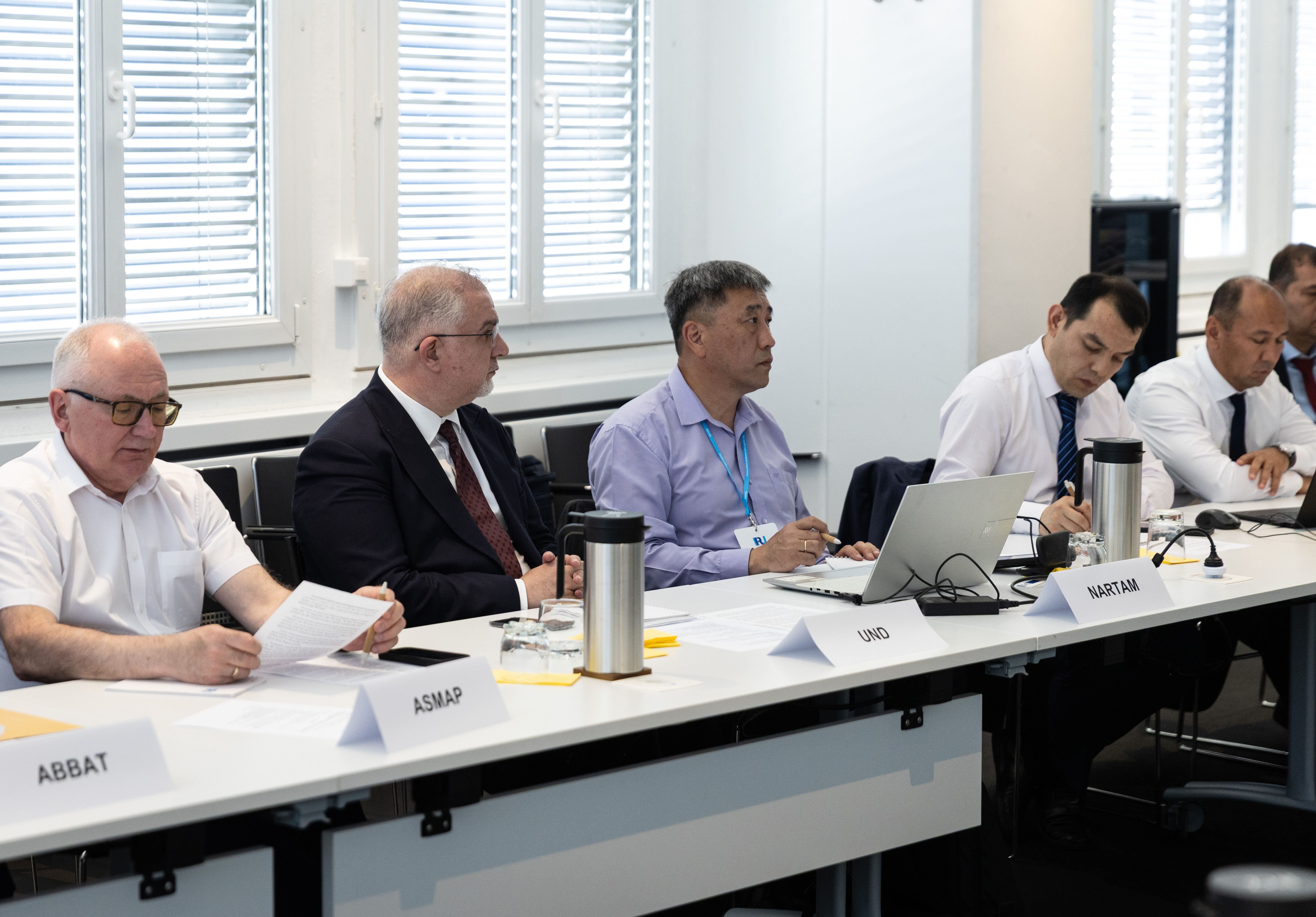
At a recent TIR roundtable in Geneva, IRU members from across Eurasia discussed how to strengthen corridor connectivity, address bottlenecks and accelerate digitalisation.
Ten years ago, China joined the TIR system. Together with the modernisation of cross-border road transport regulatory frameworks across Eurasia, this opened mutual access to transport markets and enabled transcontinental door-to-door deliveries.
This milestone marked a new chapter in Eurasian connectivity. At the same time, road transport has helped China establish a new sustainable logistics channel and connect vast cargo flows with the necessary transport capacity.
Against this backdrop, a TIR roundtable in Geneva, Switzerland, brought together IRU members to discuss recent developments, share practical knowledge and expertise, and explore measures to promote TIR along transport corridors connecting China to Eurasian markets, Türkiye and beyond.
Participants were briefed on the latest TIR developments in China and Eurasia, new TIR scenarios, and ongoing work by IRU, its members and customs authorities to transition to eTIR.
The Customs Committee of the Republic of Uzbekistan presented an overview of the national strategy designed to simplify and digitalise cross-border road transport operations.
In 2025, Uzbekistan was the top issuer of TIR carnets globally for the third consecutive year. Its customs authorities are now preparing for regular eTIR operations with neighbouring countries.
IRU members from China – CRTA, CEVA Logistics, HPF and TRU Logistics – highlighted the growth of TIR in China as well as the growing number of companies and fleets admitted to the TIR system. They also shared successful examples of launching new TIR routes, expanding cargo types, and combining different modes of transport
IRU members from Eurasia and Türkiye – ABBAT, AIRCUZ, ASMAP, NARTAM and UND – shared feedback from their member transport companies already operating in the Chinese market.
The participants addressed common challenges facing transport operations. These include congestion and long border delays, language barriers, visa issuance challenges for professional drivers, excessive controls, local requirements that undermine harmonisation and predictability, and regulatory changes.
Drawing on concrete use cases, experts from IRU, China and Eurasia explained how specific transport and customs norms are applied in different scenarios, shared experiences from interactions with enforcement authorities en route, and reviewed the most common mistakes committed during transport operations.
To improve the situation and enhance operational efficiency, the participants called for closer collaboration and coordinated action across business sectors and with public authorities. Transport corridors can offer seamless transit only if they are backed by harmonised multilateral facilitation instruments.
About TIR
The TIR system enables the transport of goods from one country to another, transiting as many countries as needed along the way, via a secure, multilateral, multimodal and mutually recognised system. Goods are sealed at the point of origin and only reopened at their destination – regardless of how many national borders are crossed.
TIR also provides a financial guarantee for the payment of suspended duties and taxes.