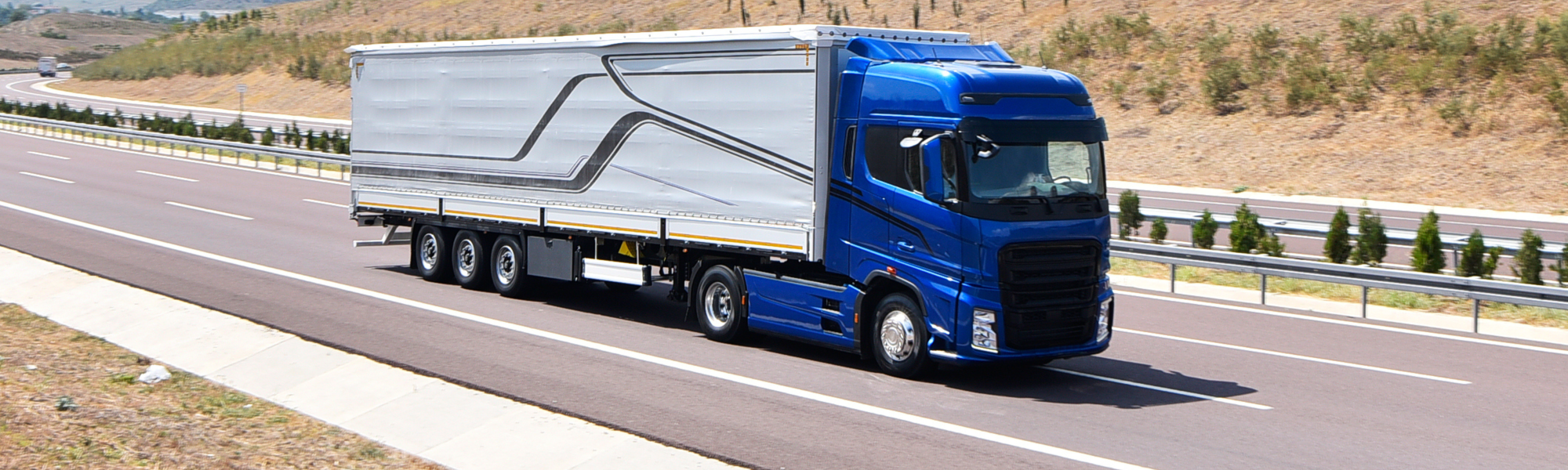
The shortage of professional drivers is a major challenge for Turkish operators. But targeted cooperation between industry and government is opening the profession to new talent. Long-term career visions and digitalisation are also key to making the profession more attractive.
For Elif Nuhoğlu, EU and International Relations Unit Manager at IRU member the International Transporters' Association (UND), one of the clearest answers to the shortage of drivers is to widen access to the profession. This means attracting more women and younger people – while making training more accessible and affordable.
The UND Women Truck Driver Academy was created to do exactly that.
Developed in 2025 by UND, together with Türkiye’s Ministry of Transport and Infrastructure and the Ministry of Labour and Social Security, the academy combines professional training and government incentives for companies that hire women drivers.
“It took around a year and a half to get it off the ground. Before launching the academy, we interviewed women truck drivers,” Elif Nuhoğlu told us. “Their stories showed that truck driving is a profession women can do successfully.”
These interviews also challenged old perceptions. Many still see truck driving as a male profession. This perception is not limited to Türkiye.
“The academy has helped make women drivers more visible. It has also shown public authorities and companies that there is real interest among women in joining the sector.”
More than 400 candidates applied to the academy in 2025. The first two groups have already graduated. The second group had both women and men, with women making up around 70% of the class.
The training programme combines 40 hours of theory with 60 hours of practical training.
“Cost is one of the main barriers to entering the profession,” said Elif Nuhoğlu. “Many people want to become truck drivers, but do not know how to access training or cannot afford the full process.”
Working conditions are another major factor.
Elif Nuhoğlu pointed to endless queues at borders and the need for better truck parking areas. These issues affect both women and men. But safe, suitable facilities are especially important to attract more women.
Growing interest
Elif Nuhoğlu highlighted the importance of having more young people. There are still not enough young drivers entering the profession. But interest is growing.
“For younger drivers, part of the attraction is the opportunity to travel abroad. Some drivers describe their truck as their home. They decorate it and make it their own space,” said Elif Nuhoğlu.
Truck driving can also be a family endeavour.
“I know cases where a husband and wife travel together, with their dog, carrying out international operations and seeing different countries along the way,” said Elif Nuhoğlu.
“These experiences are attractive to many drivers. They take pictures from the road and share them with us. It shows the sense of freedom and pride that can come with the profession.”
Digitalisation is key
The digitalisation of road transport is creating new opportunities to improve the attractiveness of the profession.
Digital transport documents, electronic freight information systems and other digital solutions reduce administrative burdens and simplify everyday operations for professional drivers.
“For younger generations in particular, a more digital and technologically advanced working environment can increase interest in professional driver career paths and align the profession with current workforce expectations.”
Ongoing public-private initiatives in Türkiye related to eCMR, paperless transport procedures and preparations for broader use of electronic freight transport information systems demonstrate the sector's commitment to modernisation. Such efforts improve operational efficiency and make the profession more attractive to young people.
A gateway
Professional driving is also a gateway to other logistics careers. In Türkiye, many successful road transport entrepreneurs and fleet owners began their careers as professional drivers.
“Their experiences illustrate how the profession can provide opportunities for long-term career growth, business ownership and entrepreneurship,” said Elif Nuhoğlu.
“Many experienced drivers in Türkiye progress into positions such as fleet supervisors, transport managers, trainers or compliance specialists, while others go on to establish their own road transport companies.”
Together we can
Elif Nuhoğlu believes that the academy and other public-private efforts offer lessons beyond Türkiye. Other countries and road transport associations have already shown interest in the model.
For her, the key lesson is clear: no single actor can solve the shortage alone. Governments, industry associations, companies and international organisations all have a role to play.
About UND
Founded in 1974, UND is a professional association representing the international road transport sector.
It works to remove barriers, promote efficient and sustainable services, and cooperates with global institutions such as IRU while building regional and international partnerships.