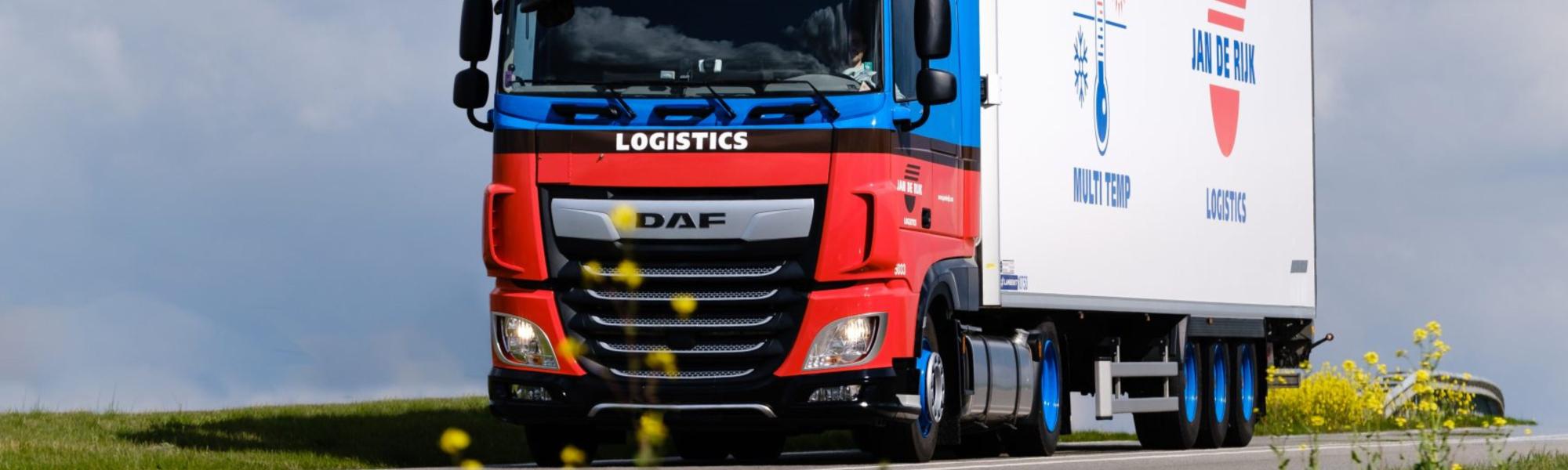
The Netherlands is not yet facing the same acute truck driver shortage seen in some European markets. But a deeper structural challenge is already taking shape. We spoke with Nadia Goverde, HR Manager at IRU member Jan de Rijk, to better understand how Dutch operators are experiencing the shortage and preparing for the years ahead.
The Netherlands is facing a quietly building structural crisis. Its truck driver workforce is ageing rapidly, the retirement wave is among the steepest in the EU, the gender gap remains wide, and the share of foreign drivers is still relatively low compared with the scale of future demand. For Jan de Rijk, the warning signs are already visible.
“We don’t have a driver shortage at this moment,” said Nadia Goverde. “But for the future, we don’t think we will manage to attract all drivers from the Netherlands and other countries like Poland, Bulgaria and Romania.”
The average driver age at Jan de Rijk is around 49. The company expects 21% of its workforce in the Netherlands to retire by 2030. For drivers based in other countries, Nadia Goverde estimates the figure will be similar.
Pressure is being felt across both long-haul international transport and national and Benelux operations.
Two trends are particularly concerning. Young drivers trained by the company often leave within two to three years, frequently exiting the transport sector altogether. At the same time, sick leave is relatively high among drivers over 50, prompting Jan de Rijk to work on sustainable employability plans.
For Nadia Goverde, the difficulty in attracting young people is not mainly about the cost of licences or professional training. In the Netherlands, these costs are often covered by employers or subsidised by national education schemes.
The deeper issue is the nature of the job.
Irregular working hours and not being home every evening are the main barriers, particularly for younger workers seeking a better work-life balance.
The same barriers also affect women entering the profession, although Jan de Rijk performs better than many operators. Around 8% of its national drivers are women. For international operations, it’s about 22%. According to Nadia Goverde, the higher international figure is partly explained by husband-and-wife teams operating double-manned trucks.
But for women, one obstacle stands out: the lack of safe and secure truck parking in Europe. “For a female driver, it is no fun to remain overnight in a dark, unsecure parking area without decent toilet facilities,” said Nadia Goverde, noting that this describes a large share of available parking areas.
International recruitment is expected to become increasingly important. Jan de Rijk already operates from several countries: 67% of its drivers reside in Poland, Bulgaria and Romania, while 33% are Dutch.
However, the practical and regulatory picture is complex. Polish-based drivers operating in the Netherlands must comply with cabotage rules. Employing them on Dutch contracts would bring them under the Dutch tax regime, increasing taxes and living costs, and making the option less attractive. Polish drivers remain the most integrated group from Central and Eastern Europe in the company’s operations. Jan de Rijk also directly employs around 15 to 20 Ukrainian and Belarusian drivers under Polish labour contracts. Most live in Poland and do not commute.
But additional barriers remain. As Jan de Rijk’s core business includes air cargo transport, drivers need to be screened. This is difficult for Ukrainian and Belarusian drivers and may also become an issue for other third-country drivers in the future.
Looking ahead, Nadia Goverde expects the Dutch driver pool to shrink sharply if the domestic pipeline does not improve. Jan de Rijk will continue to attract young people, women and even retired drivers willing to work a few days per week. But retention remains a challenge.
Nadia Goverde also stressed that third-country recruitment must be properly enforced.
Drivers from outside the EU should be treated according to national labour rules, Nadia Goverde said. Weak enforcement risks exploitation and undermines fair competition between operators.
For the Netherlands, the message is clear: the shortage may not yet be fully visible, but the structural challenge is already taking shape.
Driver shortage webinar
The trucking industry faces a persistent and increasingly structural driver shortage.
Join us on 30 June for 45 minutes of data, forecasts and frontline insights into the driver shortage: from demographics and retirement trends to capacity constraints and what the industry is doing about it.
Topics covered in depth:
- Workforce demographics (age, gender and origin)
- Shortage in 2025 and forecasts based on retirement trends
- Structural factors behind the shortage
- Impact on capacity and operating costs
- Perspectives and experiences from IRU members
Register here.