With new powertrain technologies becoming increasingly available on the market and EU-level policies pushing the sector towards zero-emission vehicles, operators are facing tough choices in planning investments for future vehicle purchases. Spain’s national trucking association gave us an overview of the key competing factors.
With over 630,000 trucks in 2024, Spain has the fourth-largest national fleet in the EU.
Unlike the EU fleet, which remained stable between 2022 and 2024, the Spanish fleet has grown steadily over the past decade (approximately 2% year on year). This aligns with the recent increase in Spanish freight activity and overall economic growth.
In 2024, 16,000 alternative fuel trucks were registered in the EU (48% were BEVs and 42% were CNG vehicles). However, new alternative fuel vehicle registrations fell by 21% in 2024, despite the national fleet growing by 10,000 vehicles.
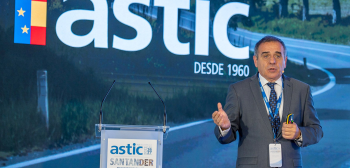
We asked Ramón Valdivia, the Executive Vice President of IRU member ASTIC and IRU board member, to give us an overview of the factors driving powertrain choices in Spain.
What are the main factors shaping powertrain choices in Spain?
The choice of powertrain technology does not depend on a single factor, but rather on a complex balance of multiple variables.
These include the technological, industrial and commercial realities of each technology, as well as EU climate regulations (Fit for 55, CO₂ emission standards for heavy-duty vehicles, and the Renewable Energy Directive RED III), total cost of ownership (TCO) – including diesel prices, fuel taxation, potential tax equalisation, exemptions for alternative energies, and emissions-based tolls such as the Eurovignette – as well as the available infrastructure (electric charging points, LNG/CNG stations, biomethane production and supply, or hydrogen refuelling stations).
Public incentives, customer requirements, and technical feasibility – depending on the type of operation and route – also play a role, considering factors such as range, refuelling time and payload capacity in heavy long-haul, medium-distance or urban distribution operations.
In my opinion, operators should primarily base their choice on what enables efficient transport operations and, of course, on TCO. However, the EU’s increasing pressure towards electrification exerts a strong influence that is difficult to ignore.
Why is TCO important?
Without a favourable TCO, the competitiveness and economic sustainability of transport companies – and of their customers (virtually all business sectors in Spain) – is put at risk.
The choice of truck powertrain technology cannot be determined solely by politics or regulation. It must be based on sound economic and operational criteria, factoring in acquisition and maintenance costs, infrastructure availability, technical feasibility depending on route and operation type, and the real profitability of each vehicle within the business context.
Only in this way can our transport companies adopt cleaner and more efficient technologies without compromising their survival.
What are the on-the-ground challenges?
Operators purchase vehicles to cover the widest possible range of services – not for just a single route.
Today, electrification works well only where operations are highly predictable and charging is guaranteed, while in long-haul transport, public infrastructure remains the main bottleneck.
In addition, Spain’s growing international operations towards non-EU countries such as Morocco weigh heavily in decision-making. In these cases, technology choices become even more about “operational continuity”, since energy must be available and reliable along the entire corridor.
“Currently, the most scalable way to decarbonise immediately without losing flexibility involves solutions compatible with the existing fleet. For example, HVO where supply and traceability are ensured.”
Therefore, the most common conclusion is technology neutrality coupled with TCO. Currently, the most scalable way to decarbonise immediately without losing flexibility involves solutions compatible with the existing fleet (e.g. HVO where supply and traceability are ensured), while electric and hydrogen remain more constrained by infrastructure and cost.
In addition to being one of the EU countries with the highest share of international road transport, Spain is geographically extensive, has many hours of daylight, strong wind energy potential, significant incentives for recycling agricultural, forestry and livestock organic waste, and a powerful refining infrastructure.
All this supports the use of renewable fuels as a technologically, industrially and commercially available option capable of enabling Spanish transport companies to meet decarbonisation targets – even ahead of EU deadlines.
What is the most energy-efficient and economically competitive powertrain?
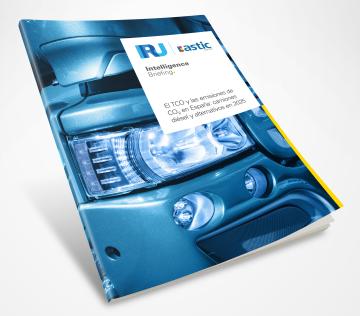
According to the recent IRU research conducted with our collaboration, “TCO and CO₂ emissions in Spain: Diesel and alternative trucks in 2025”, the most energy- and environmentally efficient and economically competitive option for the Spanish heavy road transport sector currently is a modern combustion engine powered by hydrotreated vegetable oil (HVO).
“Several of our larger member companies are already operating with HVO, together with their customers and fuel suppliers, without any financial support.”
Several of our larger member companies are already operating with HVO, together with their customers and fuel suppliers, without any financial support.
From these operations, well-to-wheel CO₂ emissions show very significant differences depending on the energy source used: HVO ranges between 94–105 gCO₂/km, well below fossil diesel, which exceeds 900 gCO₂/km.
Regarding TCO in long-haul operations (with a 15-tonne payload), IRU’s analysis found that HVO reaches approximately EUR 0.64 per km, slightly below modern diesel (EUR 0.66 per km).
Furthermore, ETS2 (the EU emissions trading system for buildings and road transport), scheduled for 2028, will not tax HVO, further reinforcing its competitiveness compared to conventional diesel.
What about BEVs?
Battery electric vehicles (BEVs) emit very low emissions.
They depend solely on the carbon intensity of the electricity mix used for charging, which is particularly favourable in Spain due to the strong expansion of solar and wind power in recent decades. Unfortunately, this contrasts with the limited rollout of public charging points.
BEVs also benefit from lower operating costs thanks to relatively affordable electricity for private charging (EUR 0.15 per kWh) and Spain’s low grid carbon intensity (131 gCO₂/kWh). However, their TCO remains high (EUR 0.80 per km).
TCO parity would only be achievable in very specific and limited scenarios.
And gas trucks?
Natural gas trucks (CNG and LNG) have a lower TCO (EUR 0.75 per km) than BEVs.
However, along with diesel, they generate the highest CO₂ emissions.
And hydrogen trucks?
Hydrogen trucks – whether fuel-cell electric or combustion-based – are currently not industrially mature. They are practically prototypes with extremely high acquisition costs and no residual value.
They also have the highest TCO, driven by the high cost of hydrogen (approximately EUR 7.8 per kg), vehicle price, and limited refuelling infrastructure.
They could become a viable option in the future – but not right now.
How can operators lower their TCO and emissions?
Regardless of powertrain technology, efficiency measures can immediately reduce both TCO and CO₂ emissions.
Actions such as maximising payload and minimising empty mileage are particularly effective and cost-efficient. Combining class A low rolling resistance tyres, a lighter semi-trailer (5,000kg instead of 7,500kg), and a more aerodynamic cab (from A14 to A10) can significantly reduce TCO for any vehicle, diesel or electric.
For example, a standard BEV truck may be approximately EUR 0.11 per km more expensive than a conventional diesel truck in long-haul operations with a 15-tonne load. However, by applying these efficiency measures, TCO drops considerably, achieving parity with diesel and the same operational profitability – while delivering a 90% reduction in CO₂ emissions.
How can policymakers support?
The most effective public policies combine economic incentives – particularly regarding research, development and innovation – regulation and infrastructure development.
However, a critical issue requiring urgent attention is renewable fuel taxation. Current fiscal frameworks in Spain do not support their production and adoption as strongly as in other EU countries such as France. This limits their deployment potential and slows the energy transition in road transport.
The Renewable Fuels Platform, of which we are a founding member, will publish a report before the summer, titled “Differentiated Taxation for Renewable Fuels”, prepared by a leading independent international consultancy. It analyses how an adapted tax regime can incentivise domestic production, reduce operating costs, and accelerate fleet decarbonisation.
This fiscal approach, combined with alternative fuel infrastructure development and policies integrating TCO and CO₂ emissions into regulation, would be decisive in enabling companies to adopt sustainable solutions without jeopardising competitiveness.