Roads alone cannot keep trade moving. At the International Transport and Transit Corridors Conference (ITTC) marking World Sustainable Transport Day, and organised alongside TurkmenTEL 2026, IRU President Radu Dinescu called for smarter borders, harmonised digital systems and stronger international cooperation to improve connectivity.
Transport and telecommunications have a lot in common.
Both connect economies, businesses and people. Both depend on reliable infrastructure. And, crucially, both depend on the systems, standards and rules that make their networks work.
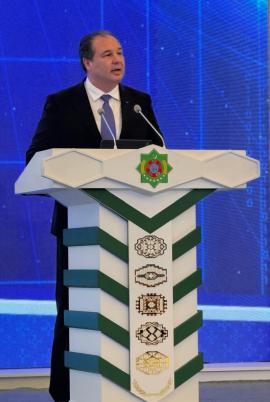
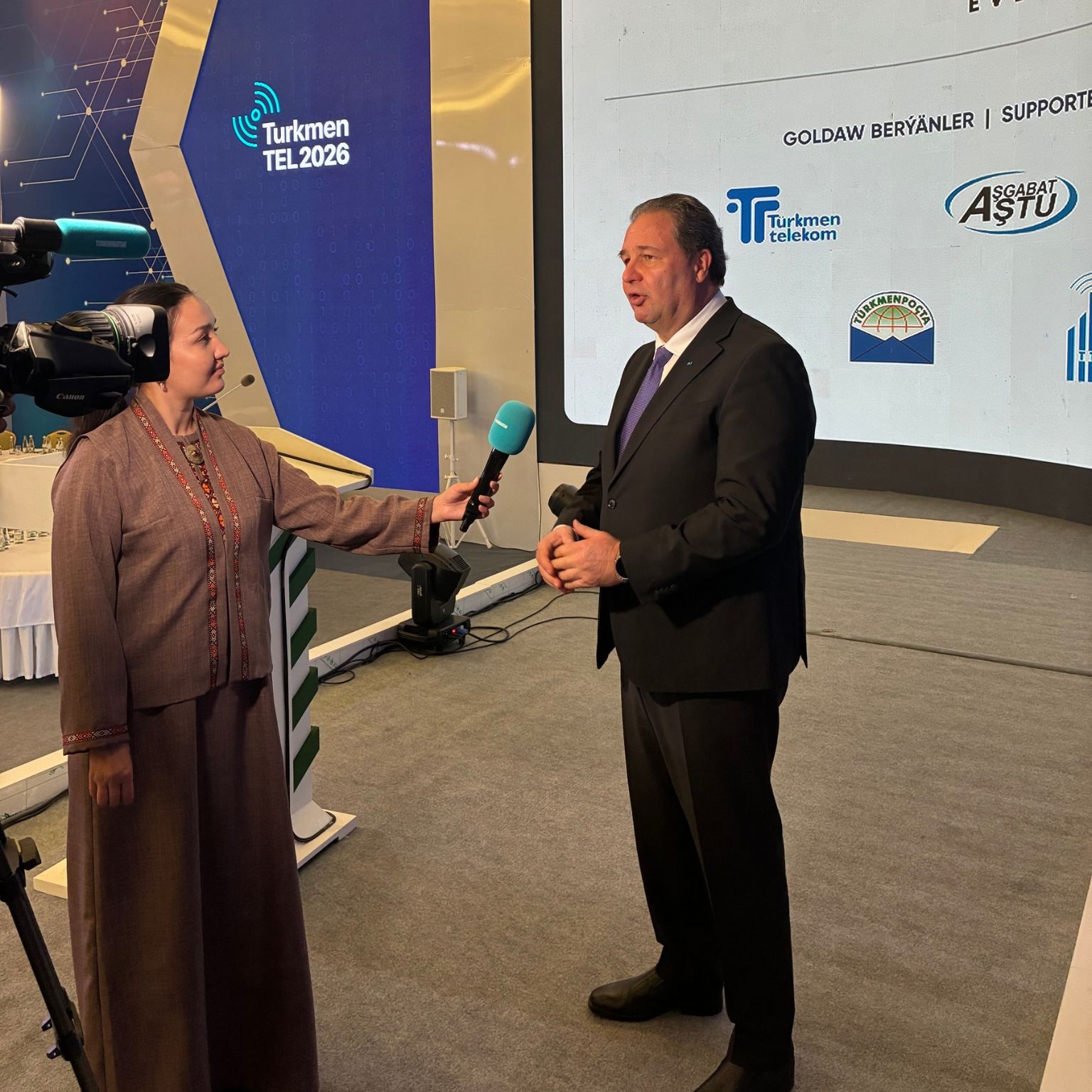
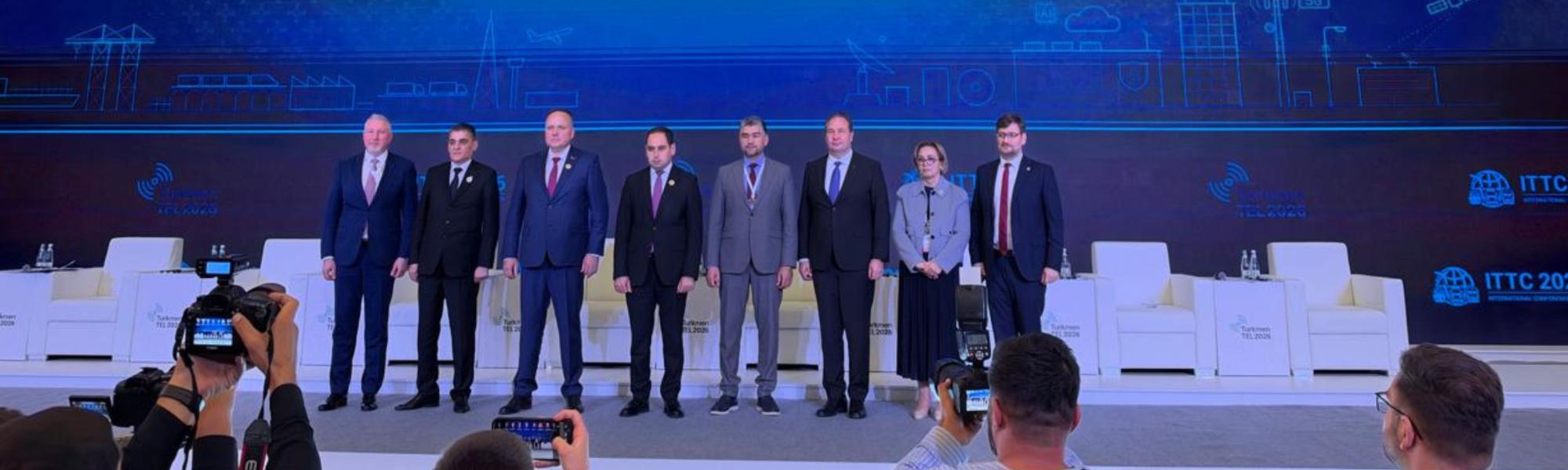
Speaking at ITTC in Ashgabat, Turkmenistan, IRU President Radu Dinescu highlighted these shared challenges during a high-level plenary that brought together transport and telecommunications leaders.
The session, moderated by IRU General Delegate to Eurasia Vadzim Zakharenko, explored how stronger international connectivity can support economic development and more resilient trade corridors.
“Connectivity doesn’t come from infrastructure alone. It comes from how that infrastructure works in an ecosystem of providers, users and regulators,” said Radu Dinescu. “In short, you need hardware and software to make the system work.”
For transport, that means combining physical infrastructure with harmonised rules, efficient border procedures and digital tools.
This is particularly important for landlocked countries such as Turkmenistan, where international road transport plays a vital role in connecting businesses to global markets.
Digital tools, smarter borders
Transport and telecommunications also share a major vulnerability: disruption.
Modern logistics depends heavily on digital connectivity. A loss of internet access or blocked communication channels can quickly paralyse operations.
“For our clients, it is no longer enough to have door-to-door delivery,” said Radu Dinescu. “Customers also expect online tracking, information on cargo conditions and security seals, and accurate arrival times.”
Meanwhile, operators are using AI, automation and digital simulations to optimise routes, match cargo with transport capacity and improve efficiency.
Yet border procedures often remain stuck in the past.
Trucks can spend up to 60% of their transit time at borders, undermining the benefits of modern technology.
The solution is to synchronise two flows: the physical movement of vehicles and goods, and the digital exchange of information.
“Digitalising information is only half the answer – the systems must also be harmonised,” said Radu Dinescu.
Interoperability is essential
Even when operators send cargo information electronically before reaching a border, they can still face long queues and repeated administrative procedures.
Harmonised standards allow different national systems to work together, reducing repeated data submissions and allowing information to move seamlessly across borders alongside goods.
“Harmonisation lays the groundwork for interoperability, which is key to eliminating the need to repeatedly submit documents to authorities at each border and removing digital barriers,” said Radu Dinescu.
International trade tools such as eTIR and eCMR provide common standards to support this process. The importance of these solutions is already evident in Central Asia.
Earlier this year, eTIR operations successfully connected Azerbaijan, Turkmenistan and Uzbekistan across the Caspian Sea.
One pilot covered more than 1,200km, combining maritime and road transport through Turkmenistan’s Turkmenbashi Port and the Farap border crossing between Turkmenistan and Uzbekistan.
These operations demonstrate how harmonised digital customs transit can strengthen the Middle Corridor, with Turkmenistan playing a strategic role in connecting the South Caucasus and Central Asia.
Celebrating sustainable transport
The conference marked World Sustainable Transport Day, celebrated globally on 26 November.
Initially proposed by IRU and subsequently established through a UN General Assembly resolution sponsored by Turkmenistan, the day recognises transport's essential contribution to sustainable development.
Radu Dinescu praised Turkmenistan's leadership in advancing international transport connectivity and facilitating digital transit.
He also stressed that road transport is indispensable to resilient supply chains, connecting different transport modes and providing the flexibility needed when established trade routes face disruption.
As with telecommunications, the future of transport connectivity depends on making networks work together efficiently and securely across borders.
Bilateral talks
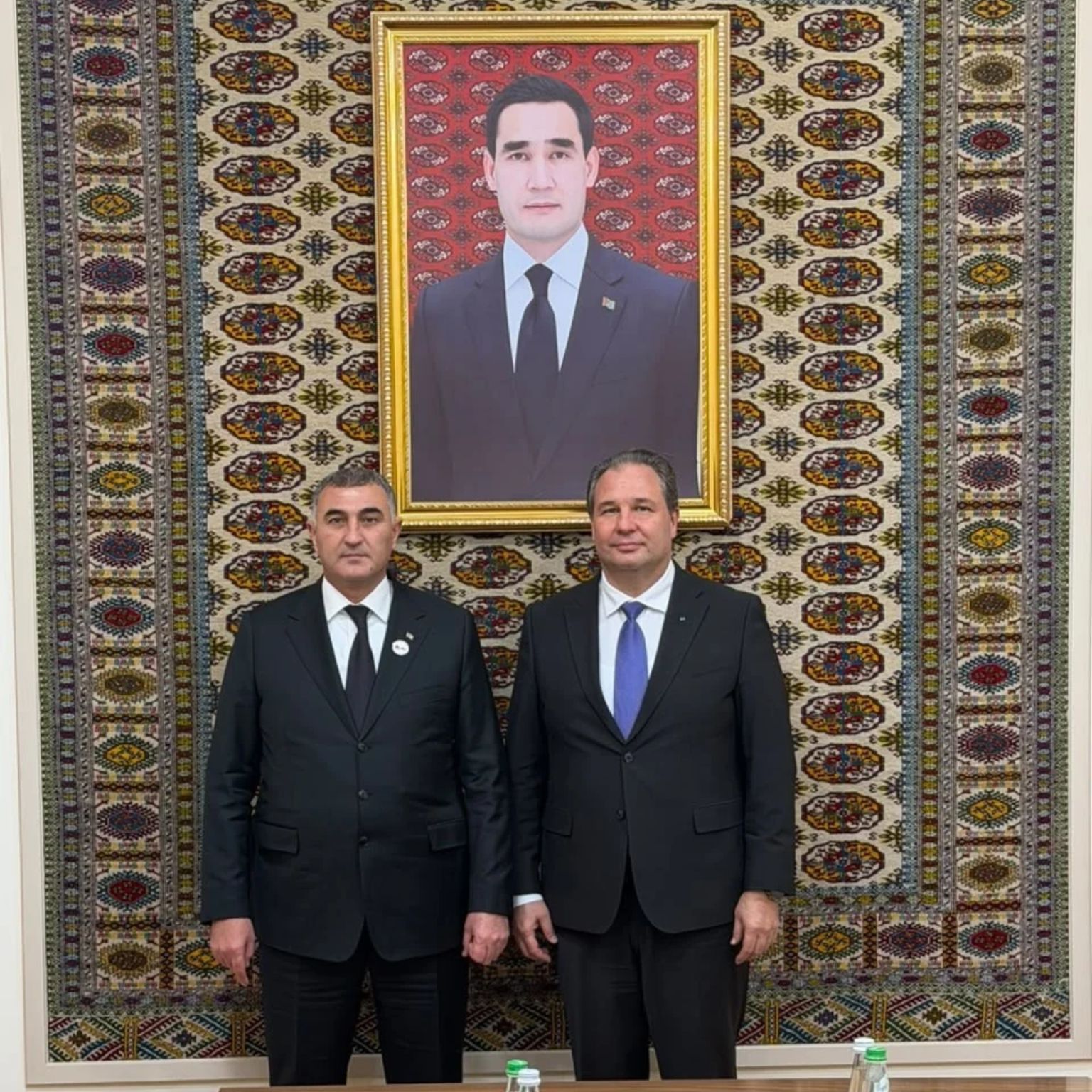
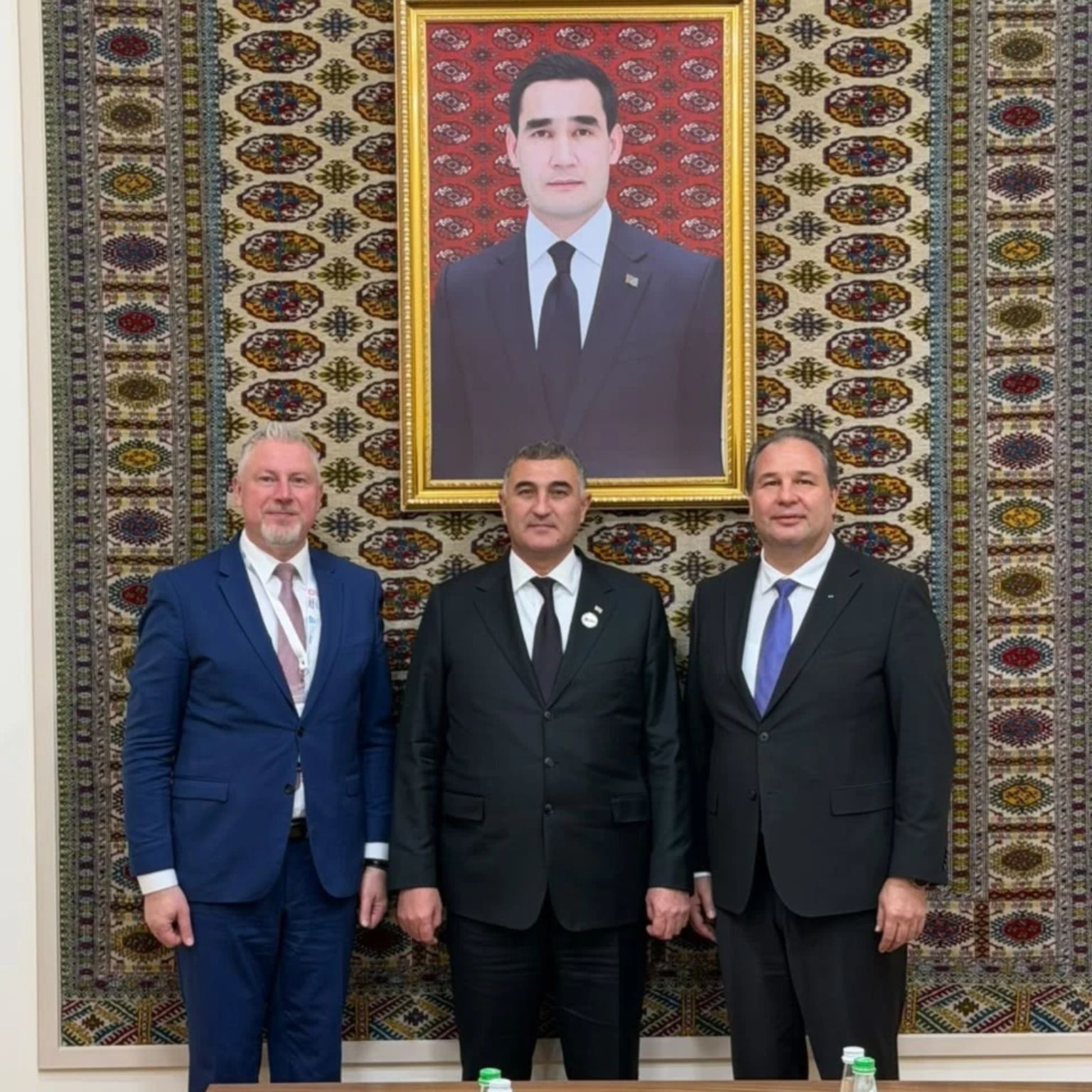
On the sidelines of the conference, IRU also held a meeting with H.E. Mr Begench Annadurdyev, Turkmenistan’s Minister of Road Transport.
Discussions focused on progress in eTIR implementation, extending Turkmenistan’s recently launched e-visa scheme to professional drivers, and the training of managers and drivers, notably on driving and rest times and the transport of dangerous goods.
IRU encouraged Turkmenistan to accede to the UN’s ADR Agreement and accelerate adoption of relevant procedures and start issuing digital tachograph cards.