Freight flows are realigning around new trade routes, but borders remain the weakest link. IRU presented concrete measures to streamline freight flows along the increasingly important Middle Corridor at a major Turkic Week event in Vienna.
The Middle Corridor is responding to shifting global supply chains, geopolitical risks and the demand for resilient land routes. Since 2022, many logistics actors have turned to the Middle Corridor as a viable alternative to traditional maritime routes.
Trade along the Middle Corridor is also evolving. Once dominated by raw materials such as petroleum and minerals, it is now rapidly shifting to container traffic, which has more than tripled in the past 12 months. Over 60% of container traffic consists of Chinese goods bound for Europe.
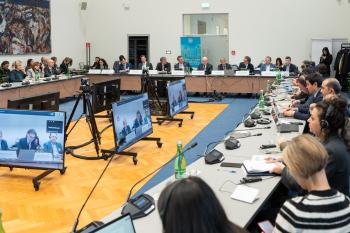
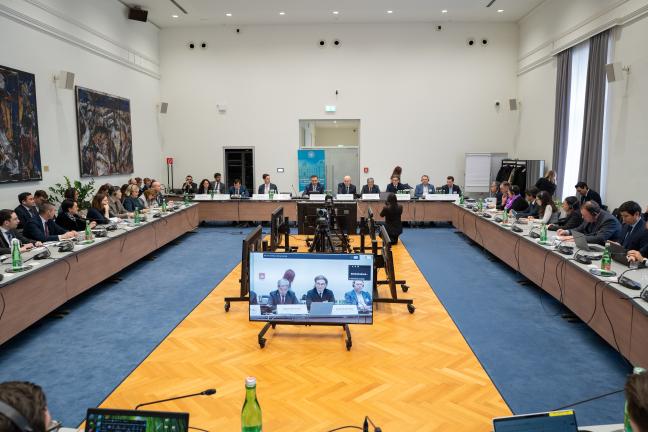
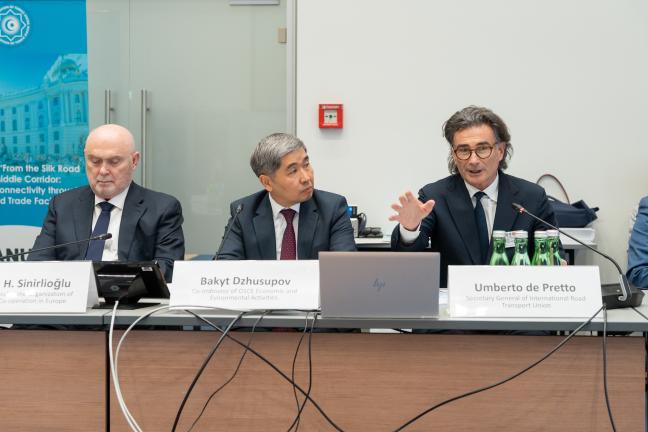
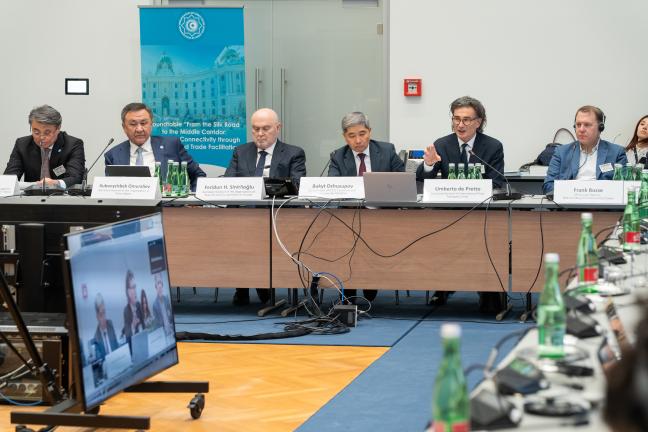
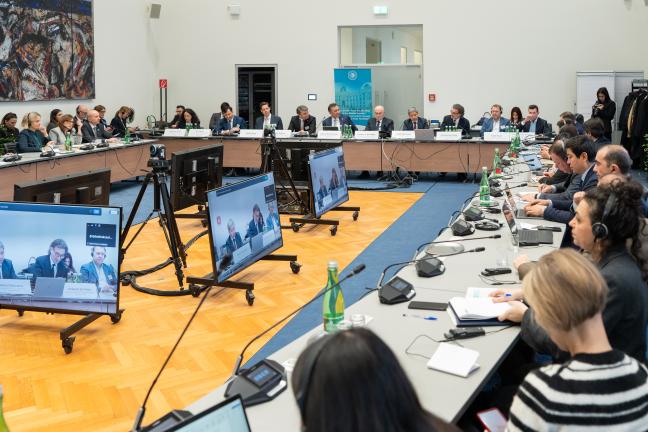
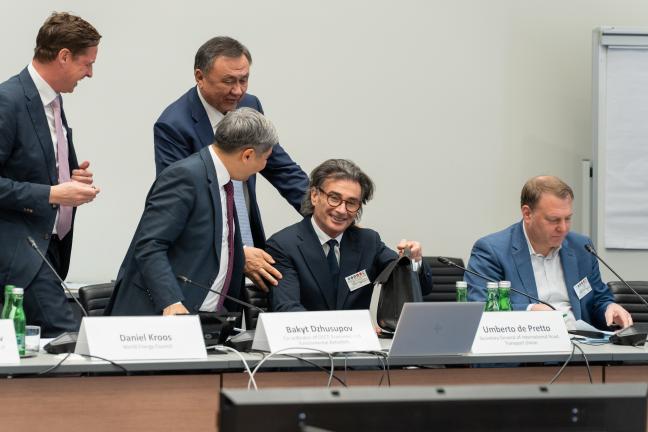
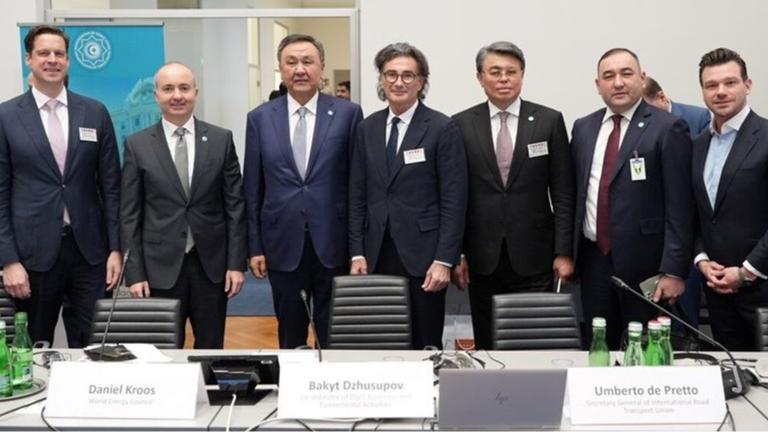
Speaking at a Turkic Week event in Vienna organised by the Organization of Turkic States and the Organization for Security and Co-operation in Europe, IRU Secretary General Umberto de Pretto said, “Trade along the Middle Corridor is rapidly growing, with freight volumes expected to triple by 2030.
“However, without enhancements to the corridor, including border-crossing procedures, demand for transport is forecast to fall 35% short of the expected growth.
“We are working to strengthen the Middle Corridor, which requires facilitation, predictability and cooperation.”

Current border challenges
Despite strong political commitment, border crossings remain the weakest link in the Middle Corridor.
- Key challenges include:
- Long waiting times caused by repetitive controls and lack of coordination
- Insufficient border capacity, especially during peak transit periods
- Insufficient RoRo capacity at the Caspian Sea
- Insufficient parking areas and humane conditions for drivers
- Fragmented procedures and limited mutual recognition between authorities
These bottlenecks undermine reliability, increase costs, and reduce the corridor’s competitiveness.
The solutions
Investments in roads lose impact if trucks wait for days on end at borders. One day at the border can cost more than hundreds of kilometres on the road.
Real connectivity requires risk-based controls, trust between customs administrations, and internationally harmonised procedures.
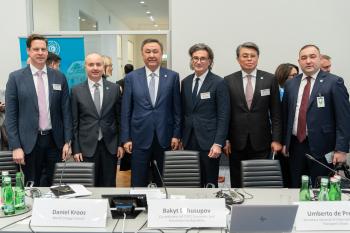
“The TIR system provides a globally recognised framework based on mutual recognition of customs controls, an international guarantee, and sealed, secure cargo movements,” said Umberto de Pretto. “By reducing physical inspections, documentation duplication, and uncertainty for operators, TIR is particularly well-suited for trans-regional corridors like the Middle Corridor.”
TIR now connects China with over 30 countries across Eurasia, slashing transit times and costs by 80% and 50%, respectively. Umberto de Pretto also discussed the growing importance of TIR Green Lanes at border crossings. They provide priority passage for compliant TIR trucks, faster border procedures, and predictable transit times.
All Central Asian countries, as well as Romania, Moldova, China, Mongolia and Saudi Arabia, have implemented priority lanes or windows for TIR.
“Green Lanes are not a privilege; they are incentives for compliance and transparency,” said Umberto de Pretto.
Digitalisation is also essential to scale facilitation across borders. eTIR reduces paper-based delays, driving transparency, security, and interoperability between national customs systems.
“The Middle Corridor’s success will be measured not by maps, but by minutes saved at borders. All that is needed is political will to properly implement TIR to effectively facilitate and secure trade, transforming the Middle Corridor into a predictable, competitive and resilient trade artery that will create jobs, drive progress, prosperity and ultimately peace,” concluded Umberto de Pretto.