The digital ECMT permit system is proving how paperless processes can simplify international road transport. At the latest ITF Group on Road Transport meeting in Rome, IRU called for that momentum to extend to eCMR, eVisas and other cross-border tools, while warning that unresolved AETR issues risk undermining the multilateral permit system.
IRU Senior Global Advocacy Adviser Jens Hügel joined governments in Rome this week for the International Transport Forum’s (ITF) Group on Road Transport.
The meeting reviewed the digital ECMT permit system following its launch on 1 January 2026 and looked ahead to the future of the ECMT Multilateral Quota system.
The quota enables road transport companies to perform cross-border operations across 43 participating countries.
Digital progress must go further
The successful launch of the digital ECMT permit system shows how technology can make international road transport simpler and more efficient.
“The digital ECMT permit system is a great example of collaboration between governments, the ITF Secretariat and industry to remove paper from international transport,” said Jens Hügel.
“However, we should not stop with permits. We need the same momentum behind eCMR, eVisas and other digital tools that can make cross-border operations simpler and more efficient,” he added.
AETR standstill threatens system
The meeting also addressed the future of the UNECE AETR agreement, which governs driving times, breaks, rest periods and recording equipment in international road transport.
For decades, AETR has supported road safety and fair competition across international markets. Compliance with AETR rules and tachograph requirements is also an essential element of the ECMT Quality Charter. Operators benefiting from ECMT multilateral licences are expected to comply fully with the applicable provisions.
“The AETR agreement is close to collapse,” said Jens Hügel. “Alignment between EU and AETR rules has been pending for several years, while the introduction of the smart tachograph into AETR is still lacking.”
IRU welcomed the inclusion of AETR challenges in the strategic action plan for updating the ECMT Multilateral Quota system, following its proposal.
“This is essential if the multilateral permit system is to remain credible and workable in the years ahead,” Jens Hügel added.
New guide for ECMT users
The meeting also marked the launch of the new joint IRU-ITF user guide for the ECMT Multilateral Quota system.
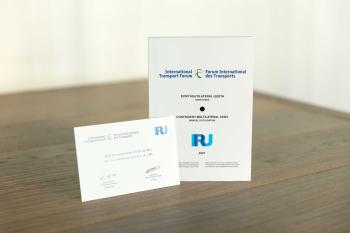
The guide is designed to help operators, control authorities and ministries apply the rules governing ECMT licences in daily operations.
The Rome discussions underlined a common theme: digitalisation, regulatory alignment and professional standards all need to move together if international road transport is to become simpler, safer and more efficient.