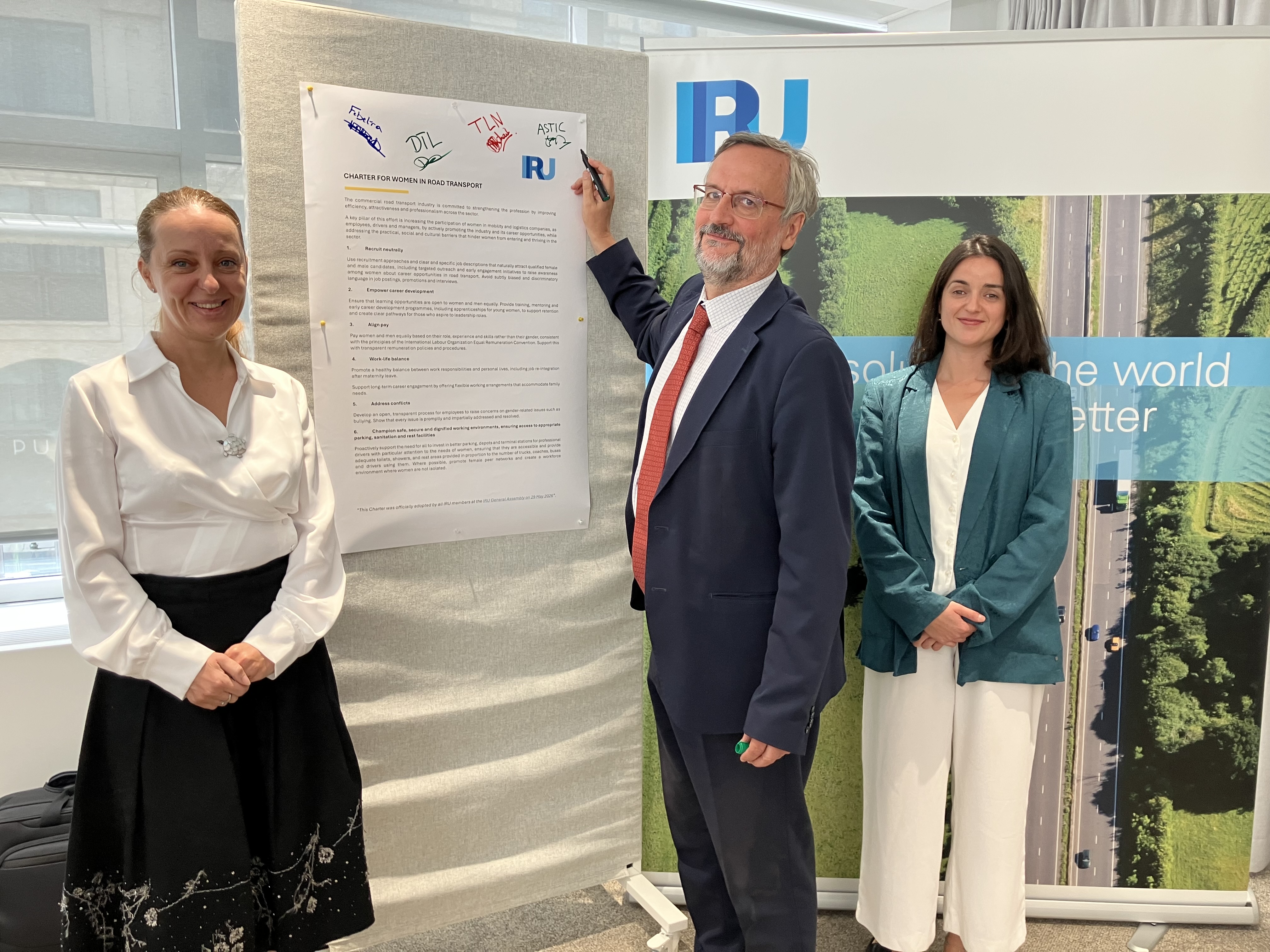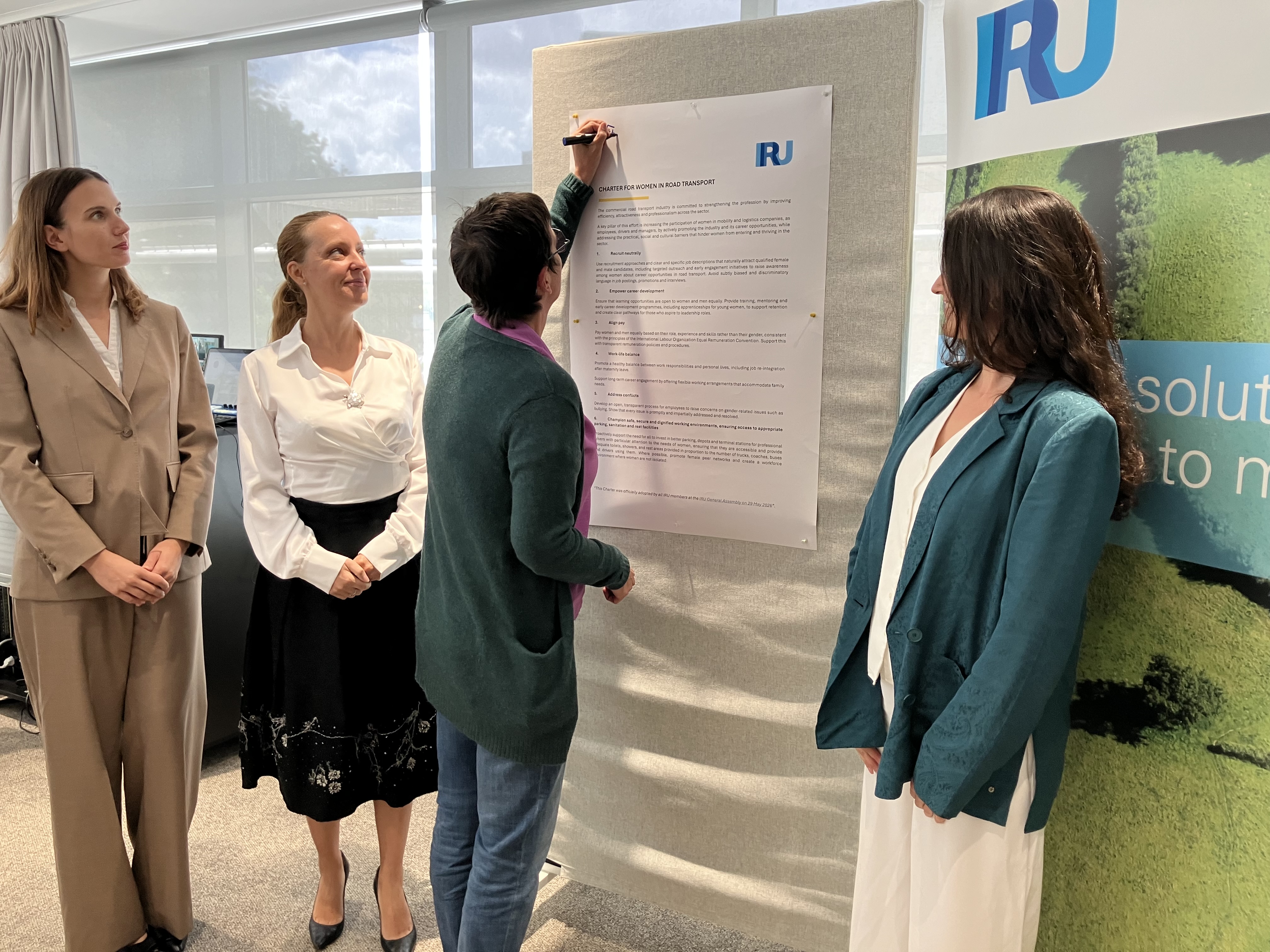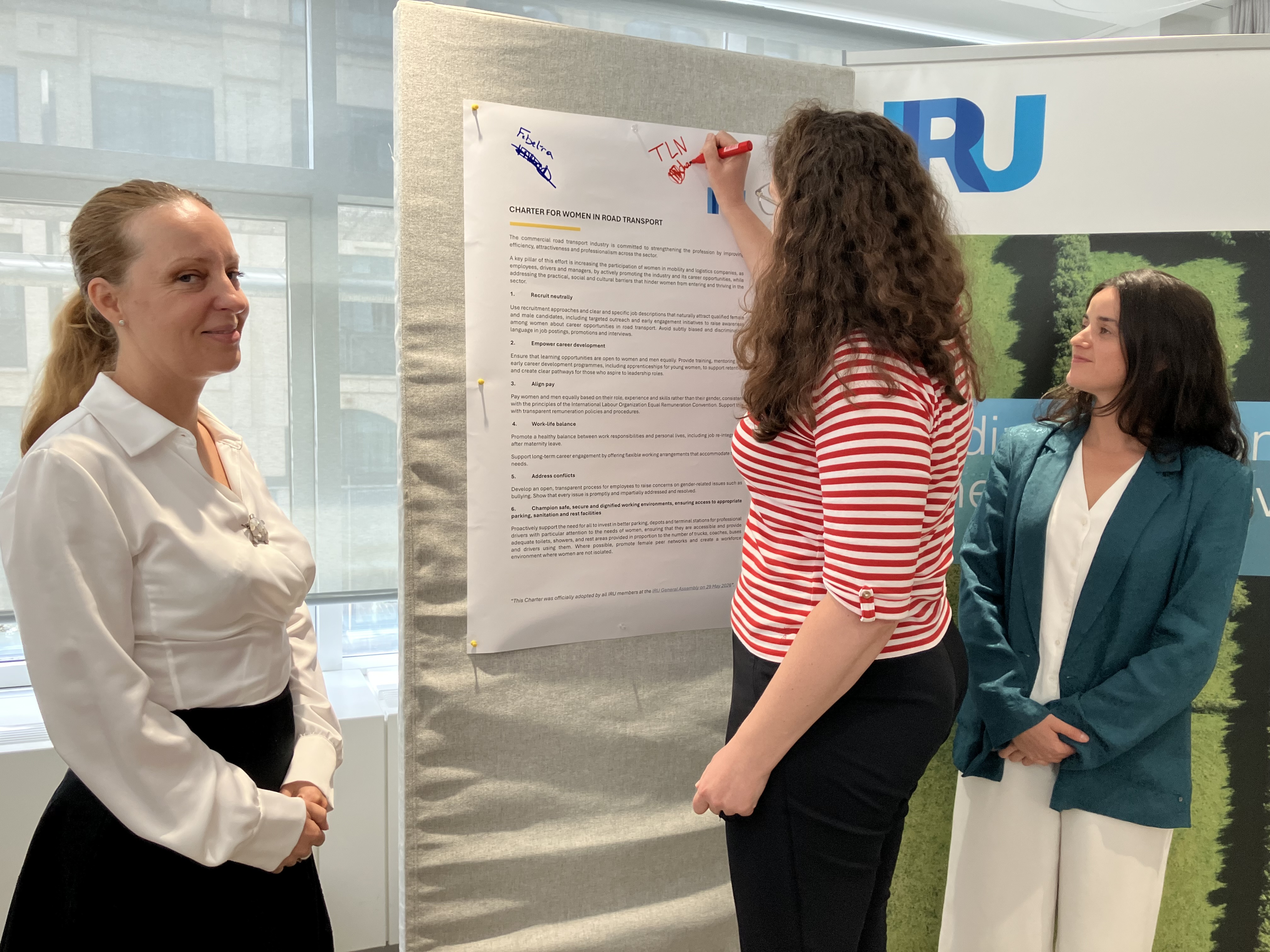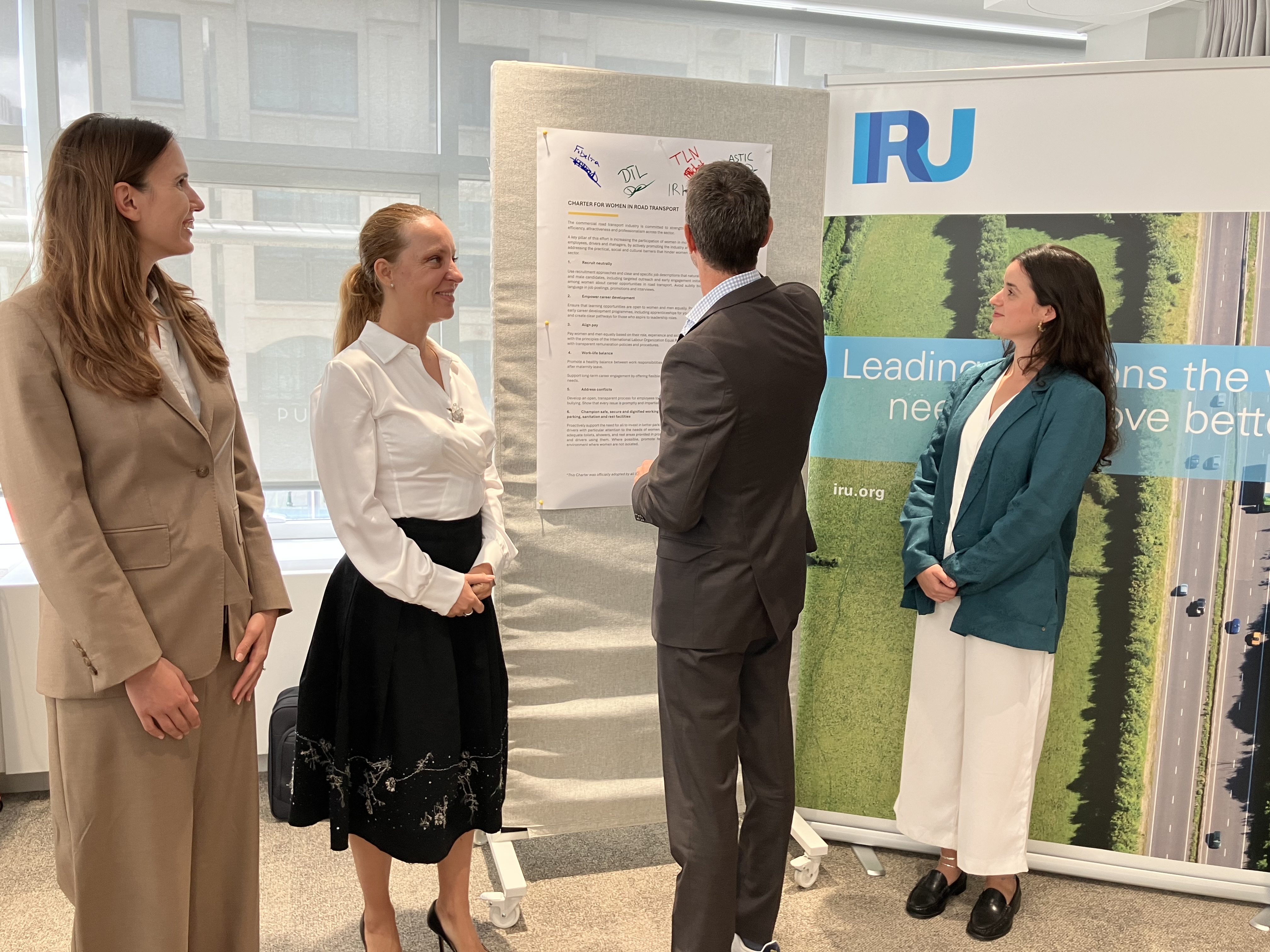
IRU has launched a new practical toolkit to help road transport companies unlock its largest untapped recruitment pool.
The IRU Charter for Women in Road Transport sets out six core principles to increase women's participation across the industry's workforce: neutral recruitment, equal access to career development, pay alignment, work-life balance, transparent conflict resolution, and safe, secure and dignified working environments.
IRU’s new toolkit turns those principles into practice.
With more than 90% of road transport operators being small and medium-sized enterprises, the toolkit provides practical, low-burden guidance for applying the charter. It also provides additional guidance for larger companies able to go further.
Voice your support
Road transport faces persistent workforce and skills shortages, and increasing women’s participation as drivers, employees and managers is central to the industry's response.
Every company and association that signs the IRU Charter for Women in Road Transport strengthens the sector's ability to close this gender gap and secure its future workforce.
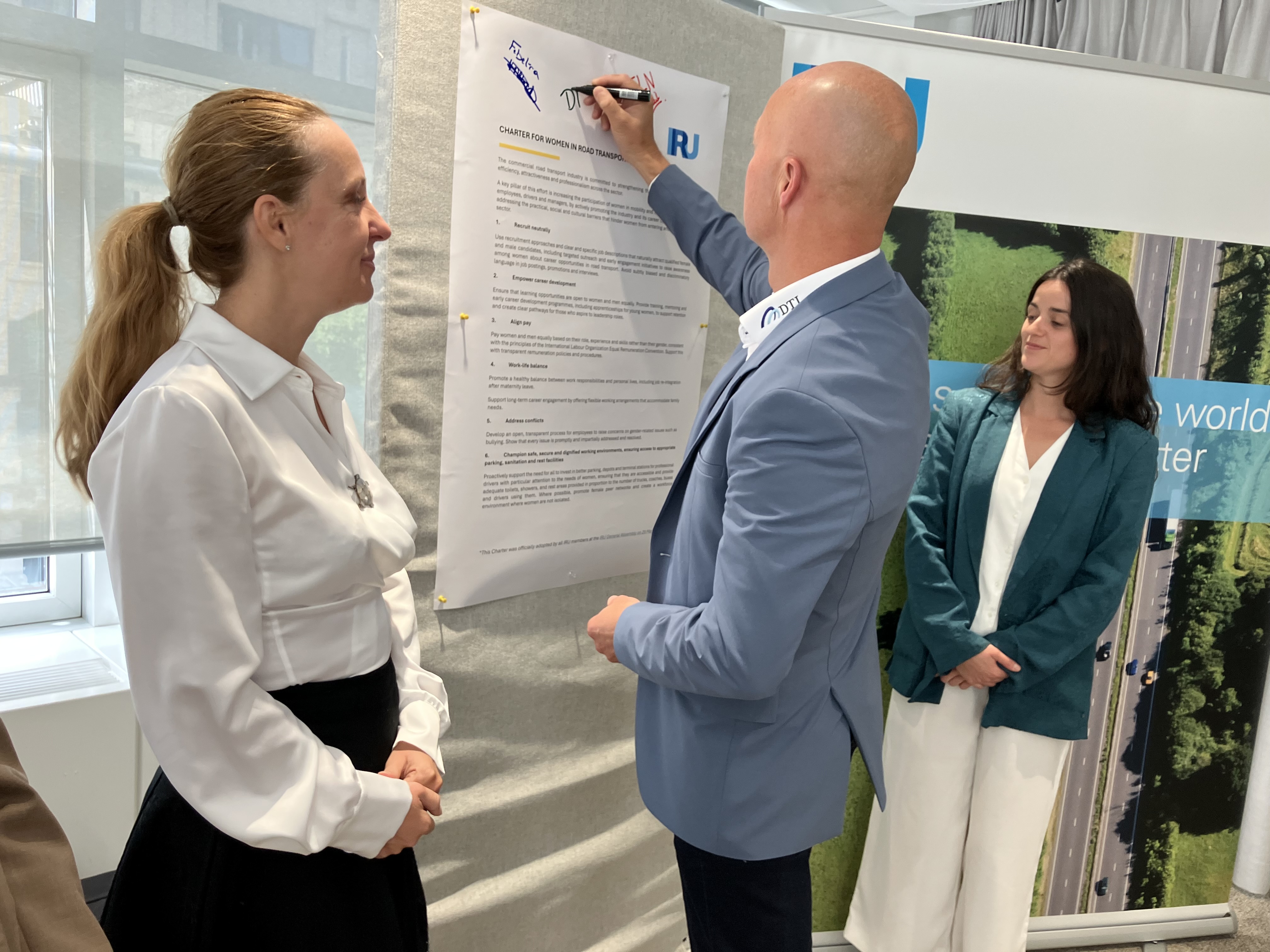
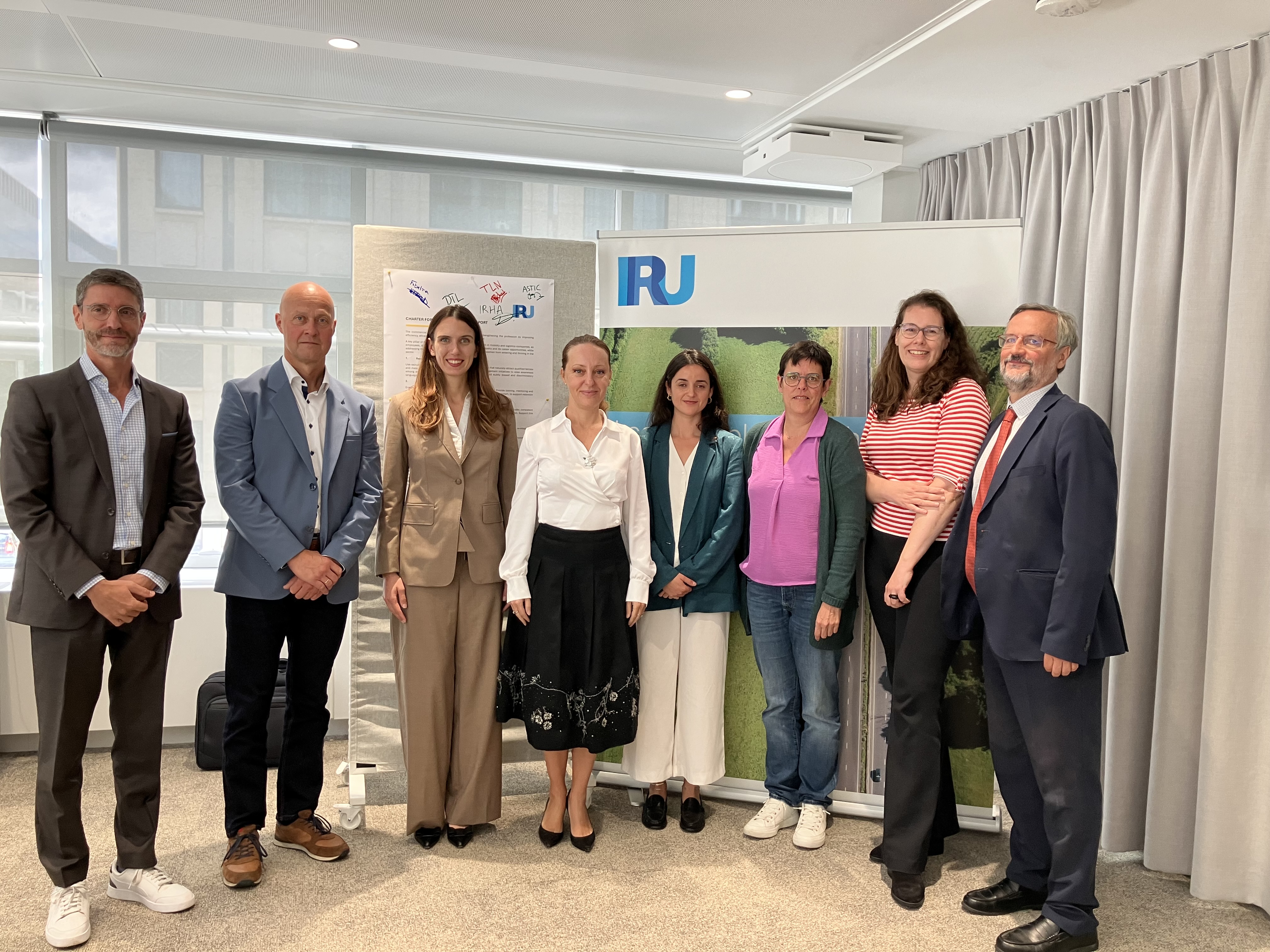
The new toolkit was launched during IRU’s Commission on Social Affairs (CAS) meeting in Brussels, where many CAS members, like AEBTRI or ZMPD, were the first to sign the charter.
What motivated some of the pioneering associations and companies to get on board?
José Manuel Pardo Vegezzi, ASTIC’s Technical Director & CAS’s President, said, “It is a source of pride for ASTIC and the Spanish road transport sector to be among the first associations to sign the charter. For us, increasing the entry of women into this profession represents another step towards overcoming gender stereotypes and role differentiation in our culture and society. And yes, it is also part of our efforts to alleviate the driver shortage.”
Frank Davidsen, DTL and CAS’s Vice President, said, “We want transport to be an attractive career choice for everyone with talent, interest and ambition. By signing the charter, we commit to promoting greater diversity and equal opportunities across the industry. A more diverse workforce strengthens recruitment, brings new perspectives, and helps create workplaces where more women choose to join, develop their careers, and remain in the profession.”
Araceli Carrasco, Sesé’s Global Transport Director, said, “We are joining this initiative to continue promoting talent regardless of gender or any other condition, both in the transport sector and in any position across the supply chain. Our company has been committed to making the most of talent regardless of gender and promoting female employment for years. This initiative will help extend these principles of equality across the sector as a whole.”
Jaime Rodríguez Medal, CONFEBUS’s Director, said, “Ensuring that more women can join, develop and build their careers in road transport is essential for the future of our sector. By signing the charter, CONFEBUS reinforces its commitment to equal opportunities and to a more inclusive, attractive and competitive bus and coach sector capable of attracting the talent it needs for the future.”
Philippe Degraef, FEBETRA’s General Manager, said, “In 2026, the transport sector remains far too much of a male bastion. That is not only outdated, but also an absolute shame. Because the women working as truck drivers today prove time and again that there is no difference whatsoever in driving ability or safe driving behaviour. They are in no way inferior to their male colleagues. It is high time that the transport world stopped looking at the gender behind the wheel and started focusing on the qualities of the driver.”
Ger Hyland, IRHA’s President, said, “The IRHA is proud to endorse the charter, reinforcing our own commitment to attracting more women into Ireland’s road haulage industry and opening up professional driving and wider transport careers to a much more diverse workforce. This builds on the IRHA’s ongoing calls for practical action to address the severe under-representation of female drivers, including by removing barriers to training and entry into the profession and making road haulage a more accessible and attractive career for women.”
Jan Boeve, TLN’s Director, said, “The transport sector faces a persistent labour shortage, and attracting more women into our industry must be part of the solution. This charter helps our members create a more inclusive working environment and supports them in recruiting, retaining and developing talent. That is essential for the long-term competitiveness of our sector.”
Additional resources and information are available on IRU’s dedicated Charter for Women in Road Transport web page.