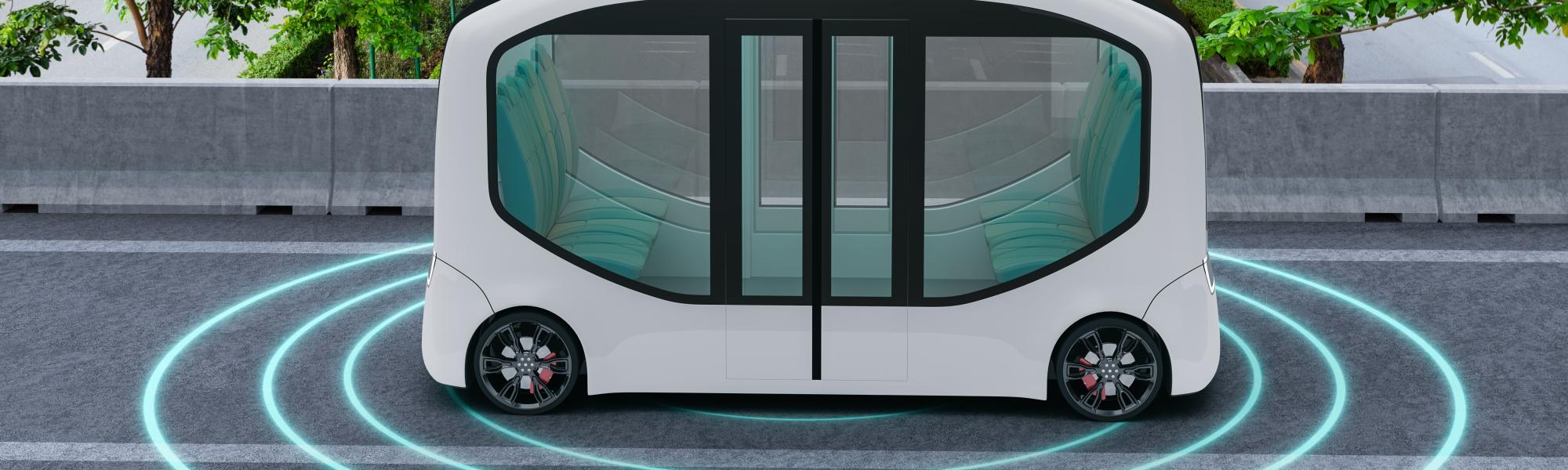
HARMO, a new Horizon Europe project, will help automated vehicles better anticipate real-world human behaviour. IRU leads the work on safety acceptance, regulatory evidence and policy engagement.
A driver who knows a road well behaves differently from someone encountering it for the first time. Familiarity can change how people approach junctions, react to pedestrians or anticipate what other drivers will do. For automated vehicles, understanding these behaviours is essential to operating safely in real traffic.
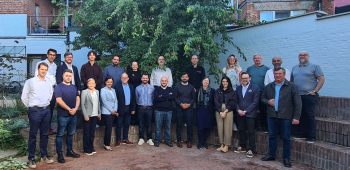
This is the challenge that HARMO (Human-Aware Road Mobility Optimisation), a three-year Horizon Europe project running from October 2026 to September 2029, aims to address. Its 13 partners from seven countries met in Leuven, Belgium, for the kick-off meeting, hosted by Transport & Mobility Leuven and coordinated by ITS Norway.
HARMO will develop validated models of how route familiarity influences human driving behaviour. It will then use them to train automated driving systems and test them in realistic traffic conditions. The project aims to make automated vehicles better at anticipating other road users’ actions while making their own behaviour more predictable.
For operators, the question is how to assess whether automated vehicles can handle these everyday interactions safely. HARMO will test its approach in mixed-traffic simulations and three real-world use cases involving urban delivery vehicles and shuttles. In most trials, the system will operate in “shadow mode”, predicting road users’ behaviour without controlling the vehicle.
Connecting safety evidence with regulation and market uptake
Bringing the perspectives of operators and drivers, IRU leads HARMO’s work on safety acceptance, regulatory alignment and market uptake. The organisation will help define safety acceptance criteria with regulators, operators, insurers and social partners and map relevant EU, UNECE and national rules.
IRU will also lead the development of a Safety Evidence Pack and Regulatory Evidence Toolkit to support type approval and trial admission. It will share the project’s findings with decision-makers through its policy engagement.
By bringing real-world road transport experience into this work, IRU will help translate HARMO’s research into practical safety criteria and regulatory evidence for assessing automated driving systems.

This project is funded by the European Union. Views and opinions expressed are however those of the author(s) only and do not necessarily reflect those of the European Union.