Reliable refuelling networks, competitive operating costs and EU policies that fit the needs of operators will determine how quickly hydrogen scales up in road freight. This was IRU’s key message at European Hydrogen Week 2026.
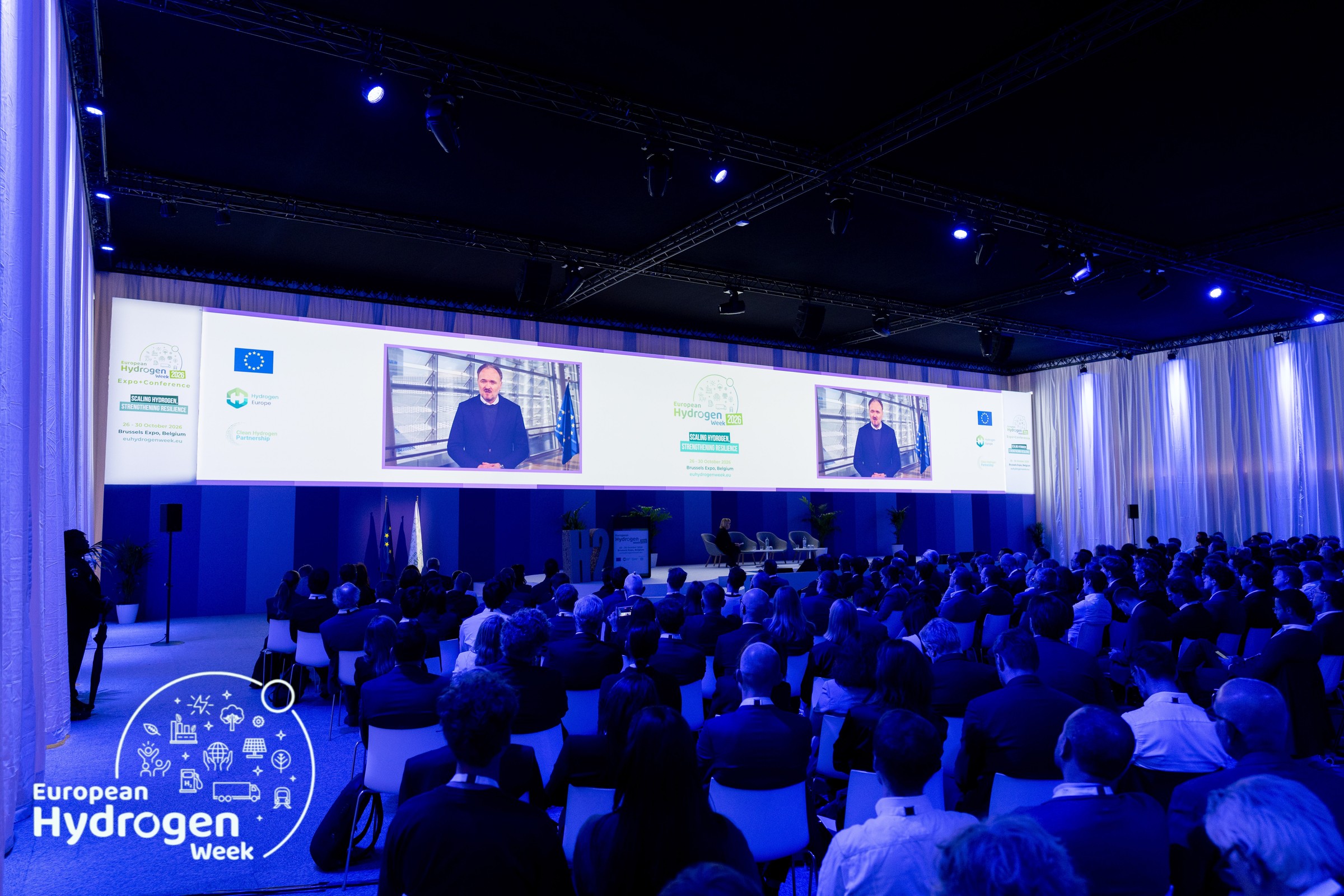
European Hydrogen Week, which brought more than 7,500 participants and over 220 exhibitors to Brussels, highlighted the growing interdependence between energy producers, infrastructure providers, vehicle manufacturers, investors and policymakers.
The development of hydrogen-powered heavy-duty transport depends on this entire value chain working together. Vehicle availability alone will not drive adoption. Operators also need accessible refuelling stations, a dependable supply of hydrogen, and operating costs that make investment commercially viable.
“Hydrogen can be an important solution for decarbonising road transport. The technology is advancing, and the opportunity is there. The priority now is to make it commercially viable for operators through reliable refuelling infrastructure and competitive operating costs,” said IRU General Delegate to the EU Raluca Marian.
“As the EU reviews its Alternative Fuels Infrastructure Regulation, it should maintain ambition for hydrogen refuelling coverage across Europe. This will give operators the confidence to invest and manufacturers the market conditions to scale up,” she added.
Approaching deployment
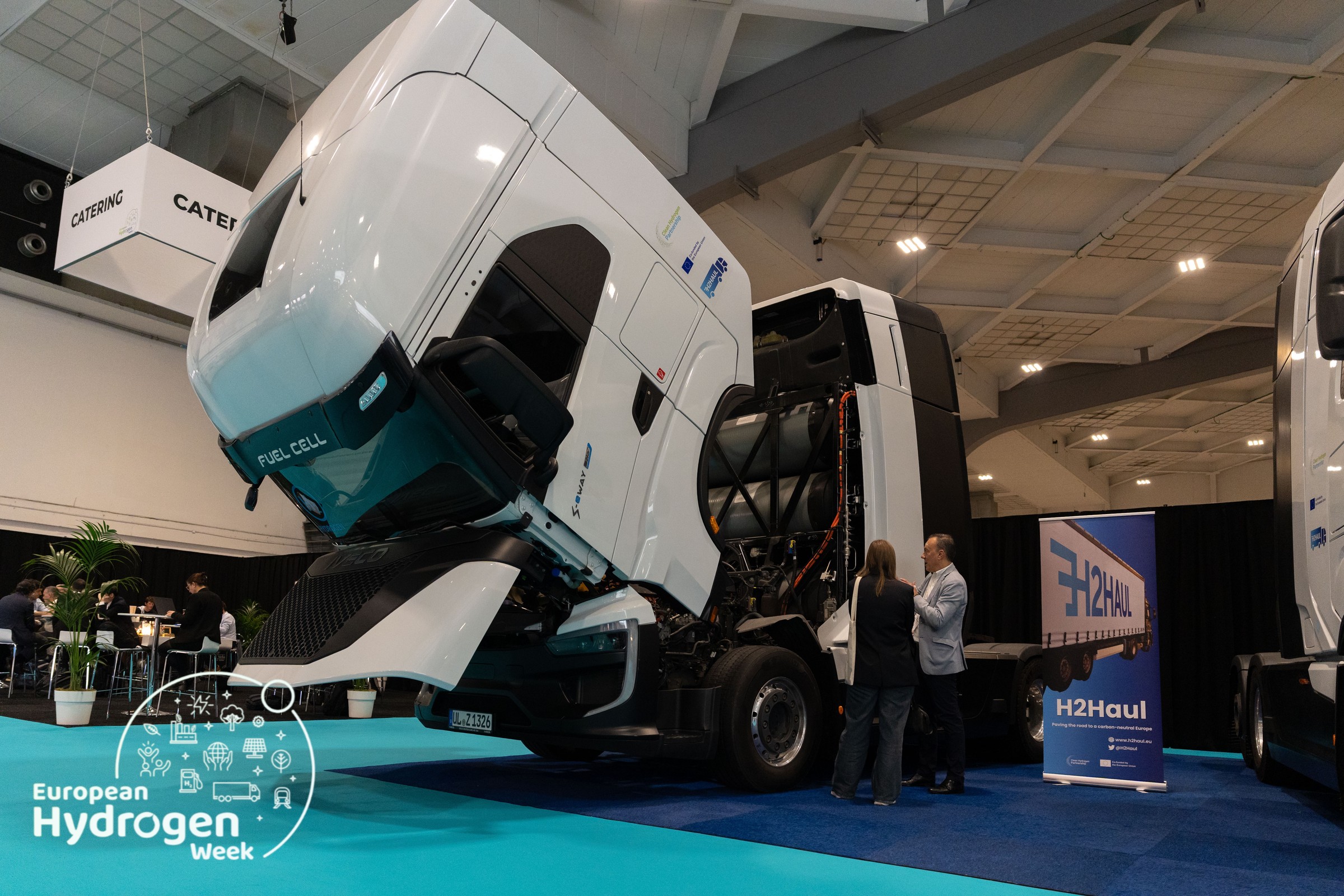
Alongside the policy discussions, IRU and its project partners showcased H2Haul and H2Accelerate TRUCKS at the European Hydrogen Week exhibition, alongside more than 220 exhibitors presenting developments across Europe's hydrogen value chain.
Both projects, funded by the Clean Hydrogen Partnership, are advancing the deployment of hydrogen-powered heavy-duty trucks in Europe. They are testing the technology in real-world freight operations and supporting the development of the refuelling infrastructure needed for wider uptake.
Building on this progress, H2Accelerate TRUCKS focuses on large-scale deployment of hydrogen fuel-cell trucks, with 125 vehicles planned, while H2Haul has developed the first fuel-cell truck prototypes and demonstrated them in several EU countries. Together, the projects are helping to build practical experience and demonstrate the potential of hydrogen in commercial freight operations.
This work also highlights a broader priority for the road transport sector: achieving Europe's decarbonisation targets will require a combination of complementary technologies and solutions that reflect the diversity of transport operations. Hydrogen, alongside battery-electric vehicles and other alternative-fuel technologies, can contribute to this transition, addressing different operational requirements across the sector.