Choose your language

IRU brings OEMs and operators together to advance vehicle data access
Global | Brussels

IRU brings OEMs and operators together to advance vehicle data access

17 Sep 2026 · Innovation

Road transport operators need effective access to the data generated by the vehicles they own, lease and operate. But how can this be achieved while protecting manufacturers’ intellectual property and maintaining cybersecurity and vehicle safety?

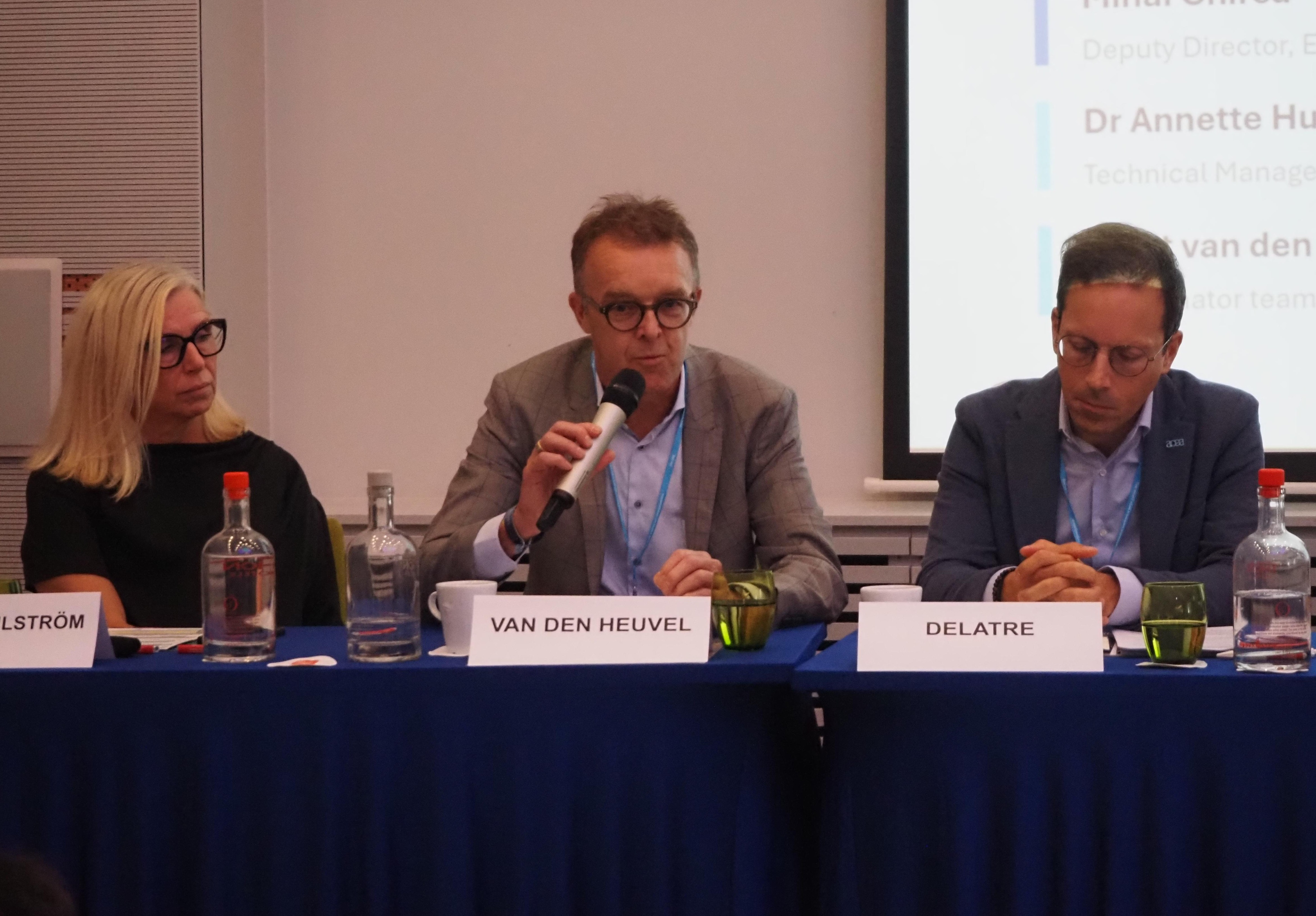
The panel discussion, “Towards a Common Vision for Access to Vehicle Data”, held during IRU’s Commission on Innovation and Technology (CIT) meeting in Brussels this week, brought together key actors from across the road transport ecosystem.

The panellists – Dr Annette Hultåker (Scania), Jocelyn Delatre (ACEA), Mihai Chirca (Transdev), Petra Eklund Åhlström (Swedish Association of Road Transport), and Wout van den Heuvel (TLN) – exchanged perspectives on the operational, technical and regulatory conditions needed to make access to vehicle-generated data work effectively in practice.

Panel Photo

From operational needs to a common position

Connected commercial vehicles generate increasing volumes of data on location, energy consumption, vehicle health, maintenance, safety and operational performance.

For operators, this data is becoming an essential operational resource. It can enable more efficient fleet management, predictive maintenance, improved energy efficiency, safer operations and the development of new digital services.

However, access alone is not enough. Operators managing mixed fleets need to be able to use data across different vehicle brands and systems. Fragmented definitions, formats, interfaces and contractual arrangements can make this difficult and limit the operational value of vehicle-generated data.

The panellists explored how manufacturers and operators can work together towards greater harmonisation, including interoperable interfaces, common data definitions and practical approaches that can work across mixed fleets.

The discussion also addressed the need to strike the right balance: operators should be able to access, use and share relevant data from the vehicles they own, lease or operate without unnecessary technical, contractual or commercial barriers, while manufacturers’ proprietary software, algorithms, AI and other intellectual property remain protected. Cybersecurity, vehicle safety and the secure handling of data must remain integral to this approach.

IRU brings OEMs and operators together to advance vehicle data access

CIT members agree on priority vehicle data

The panel discussion built on the work of IRU’s Informal Working Group on Access to Vehicle Data, which has been examining the concrete data needs of road transport operators and associations.

At the Brussels meeting, CIT members agreed on the priority categories of in-vehicle data required for efficient operations, providing IRU with a concrete industry basis for the next phase of its work.

The agreed approach is based on a clear principle: relevant vehicle data should be accessible, usable and shareable without unnecessary technical, contractual or commercial barriers. Access should be secure, interoperable, standardised and machine-readable, and provided under fair, transparent and non-discriminatory conditions, while respecting legitimate intellectual property rights and protecting proprietary software, algorithms and value-added services.

This provides a practical foundation for IRU’s advocacy on vehicle data access and for continued engagement with vehicle manufacturers, policymakers and other stakeholders.

Turning dialogue into action

The Brussels discussion demonstrated the value of bringing operators, associations and manufacturers together.

Operators and associations bring the operational reality of managing increasingly digital and mixed fleets, while manufacturers bring essential expertise on vehicle architecture, cybersecurity, safety and data management. Progress requires both perspectives.

“There is a clear need to foster dialogue between all stakeholders involved in vehicle data,” said IRU Technical Affairs Adviser Hamza Guirrou, who moderated the panel.

“Operators, manufacturers and technology providers each bring different perspectives, needs and constraints. IRU provides the space for these discussions, building mutual understanding and helping identify common ground that can lead to practical solutions for the sector,” he added.

Building on the CIT decision and the work of its Informal Working Group on Access to Vehicle Data, IRU will continue to bring manufacturers, operators, associations and other relevant stakeholders together to identify areas of convergence and develop solutions that can work across the sector.

The objective is not simply greater access to data, but meaningful and practical access that works across vehicles, fleets and borders.

By developing common principles, identifying operators’ priority data needs and maintaining dialogue across the sector, IRU aims to help shape a vehicle data ecosystem that supports innovation and competition while safeguarding cybersecurity, safety and intellectual property.

Vehicle data is becoming a critical operational resource for road transport. Ensuring that operators can access and use it effectively will be essential to unlocking the full potential of connected, efficient and increasingly automated road transport.