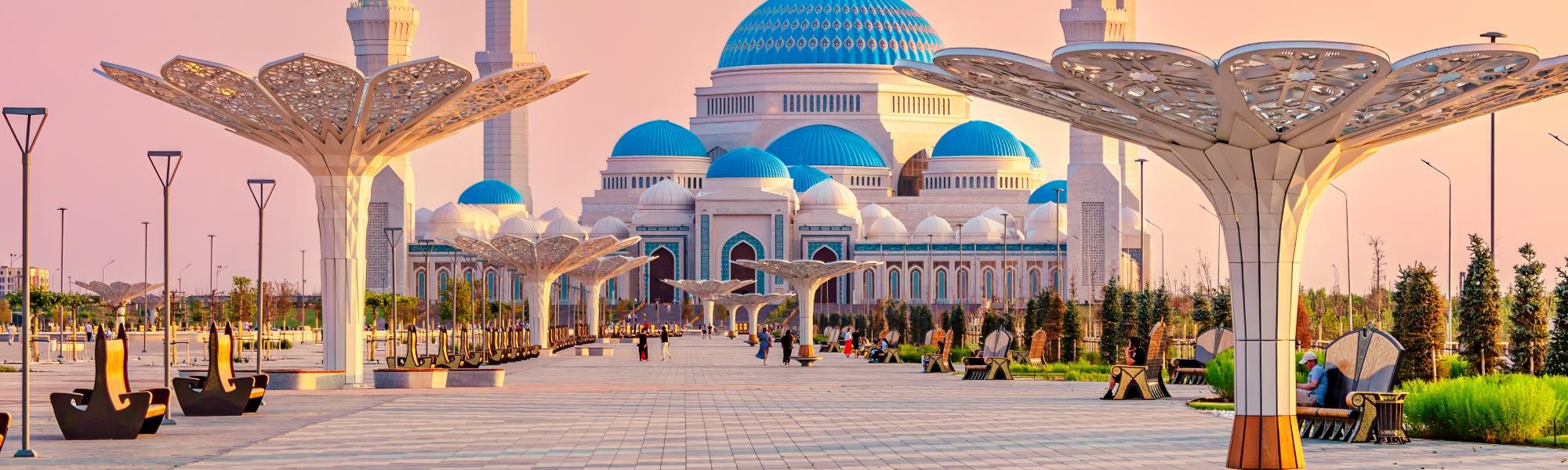
How can road transport operators reduce trade costs, improve efficiency and strengthen their competitiveness? Join industry leaders in Astana, Kazakhstan, on 14 October to explore practical solutions for more efficient, professional and resilient road transport.
Road transport is central to trade, connectivity and economic development. But inefficient border crossings, regulatory barriers and skills gaps continue to limit its potential, particularly for landlocked countries.
Bringing together governments, international organisations, development partners and industry leaders, IRU and UN-OHRLLS’s upcoming regional dialogue, Advancing the Awaza Programme of Action: Building a Professional and Resilient Road Transport Industry for Greater Connectivity and Competitiveness, will offer practical insights into improving transport operations, facilitating trade and strengthening the industry’s workforce.
The event will explore how operators and the wider industry can become more competitive and resilient, from improving cross-border transport to developing a skilled and professional workforce.
From efficient transport corridors to a stronger workforce
Reducing border delays and trade costs is essential to improving market access and competitiveness. Participants will discover how transport facilitation measures, efficient transit systems and digital solutions can make cross-border operations more efficient and predictable.
Discussions will also examine the policy and regulatory reforms needed to improve the performance of international transport corridors, improve regional connectivity and build more resilient transport networks.
But infrastructure and regulatory reforms alone are not enough. A skilled and professional workforce is equally important for safe, efficient and competitive road transport.
The dialogue will examine how internationally recognised standards, professional qualifications and workforce development can improve transport performance and service quality.
Participants will also gain insights into capacity-building initiatives, including the EU-funded Modernising Road Transport project, which supports professional development in the sector.
The dialogue supports the implementation of the United Nations Awaza Programme of Action for Landlocked Developing Countries (2024–2034).
It is organised by IRU, the United Nations Office of the High Representative for the Least Developed Countries, Landlocked Developing Countries and Small Island Developing States (UN-OHRLLS), and the United Nations Resident Coordinator Office in Kazakhstan, in cooperation with IRU member KAZATO.
The event will take place alongside TransLogistica Kazakhstan 2026, a leading Central Asian platform connecting freight transport stakeholders around regional connectivity and digitalisation, offering further opportunities to connect with transport and logistics stakeholders from across the region.