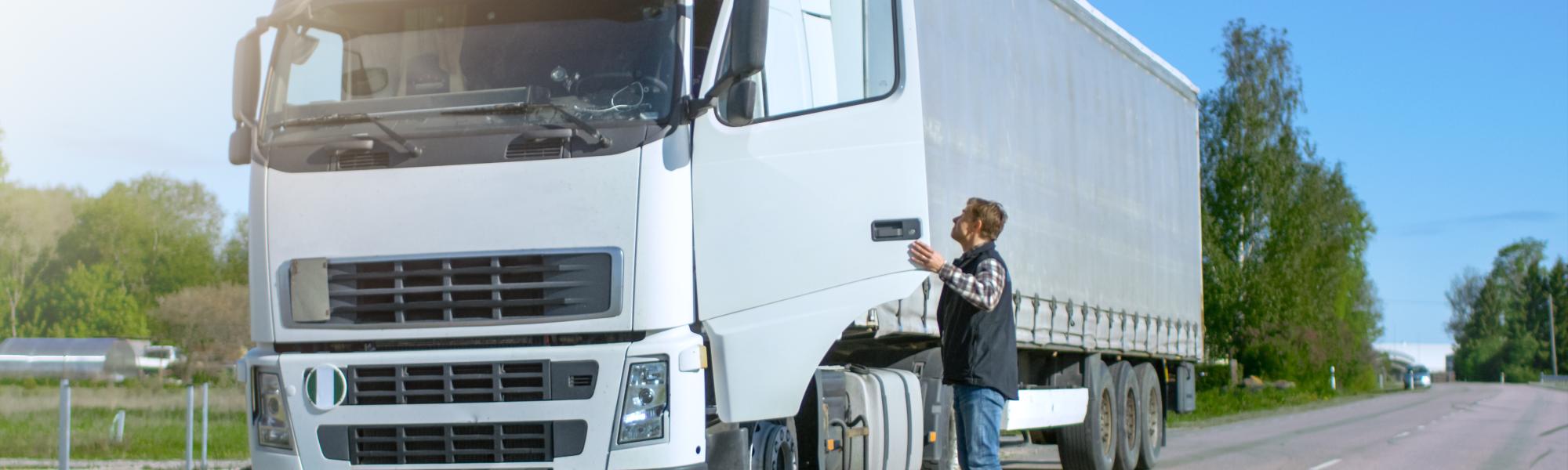
Estonia’s truck driver shortage is among the most severe globally, around 20% of positions are unfilled. For Tiit Parik, President of IRU member the Association of Estonian International Road Carriers (ERAA), the figure fully reflects the reality on the ground.
The causes behind Estonia’s driver shortage are complex. But geography plays a major role.
“Estonia is close to Finland and Sweden. Drivers can move easily within the EU. Many do,” Tiit Parik told us. “Higher pay and better conditions in neighbouring markets continue to pull Estonian drivers away.”
For international drivers, switching countries is relatively easy. They are already away from home, working across borders.
“If you are a driver working in international transport, you are away anyway,” said Tiit Parik. “What you want is the best pay for that work.”
This pressure is not new. It started nearly 20 years ago, when access to work in Finland became easier. The problem has since become structural.
Estonia also faces a serious demographic challenge. Around 36% of its current truck driver workforce is expected to retire by 2030. That means the sector needs new entrants. But attracting younger people is increasingly difficult.
Work expectations have changed. Since the Covid-19 pandemic, many people have become used to greater flexibility and more time at home. Truck driving offers the opposite, especially in international operations.
“Young people want more free time,” said Tiit Parik. “It is especially difficult to attract them to a driver position where they do not get home every day, or even every week.”
Companies are adapting. Many are investing more in driver comfort. In the past, trucks were often seen mainly as work tools. Now, some companies are designing vehicles around drivers’ needs.
This is a major shift. Better cabins, better comfort and better pay are becoming essential to attract and retain workers.
But companies cannot solve the shortage alone.
Dual purpose
ERAA is working to promote the profession more actively. It has launched campaigns to attract new drivers. These include stories from drivers and videos showing the profession in a more positive light. The response has been encouraging, with applicants from different age groups showing interest.
One promising initiative involves cooperation with Estonia’s defence forces. ERAA is exploring how military truck training could cover part of the professional driver training requirement.
“The idea is simple: training can serve both defence needs and the wider economy. Road transport is part of national resilience. Without drivers, shelves cannot be stocked. Goods cannot move. Basic services are affected,” said Tiit Parik.
More women
ERAA is also looking at how to attract more women. The barriers are significant. International driving is still difficult to combine with family life. Rest areas and conditions on the road also need improvement.
“Domestic and distribution transport may offer a first step,” said Tiit Parik. “These jobs can provide more regular hours and allow drivers to return home more often.”
The sector is also opening up to people at different stages of life. Part-time driving is becoming more common. Some retired drivers continue to work a few days or weeks per month. Their experience remains valuable.
But attracting the next generation is the main challenge.
Once young people choose another career, it is hard to bring them back. That is why early access, better training pathways and stronger promotion of the profession matter.
For ERAA, the message is clear. The shortage of drivers is not only a business issue. It is a national logistics issue. And solving it will require cooperation between companies, associations and public authorities.