Autonomous vehicles, AI and connected fleets promise safer, more efficient road transport. At Automechanika Dubai 2026, IRU highlighted the regulations, digital systems and professional skills needed to turn technological advances into practical benefits for operators.
At Automechanika Dubai's Innovation4Mobility event, IRU brought the voice of road transport operators to discussions on autonomous mobility, AI, road safety and vehicle data.
Autonomous vehicles need smarter borders

Speaking during a session on cross-border autonomous mobility, IRU Technical Affairs Adviser Hamza Guirrou highlighted a critical challenge: autonomous vehicles may be ready to cross borders, but are the systems around them ready too?
“Autonomous vehicles are advancing rapidly, but technology alone won't make cross-border operations possible,” said Hamza Guirrou. “Regulations, digital systems and border procedures must evolve together.”
Harmonised regulations, interoperable digital systems and efficient border procedures are essential for autonomous transport to operate safely across different jurisdictions.
Digital tools such as eTIR and eCMR can help simplify customs and transport procedures, reduce paperwork and improve efficiency.
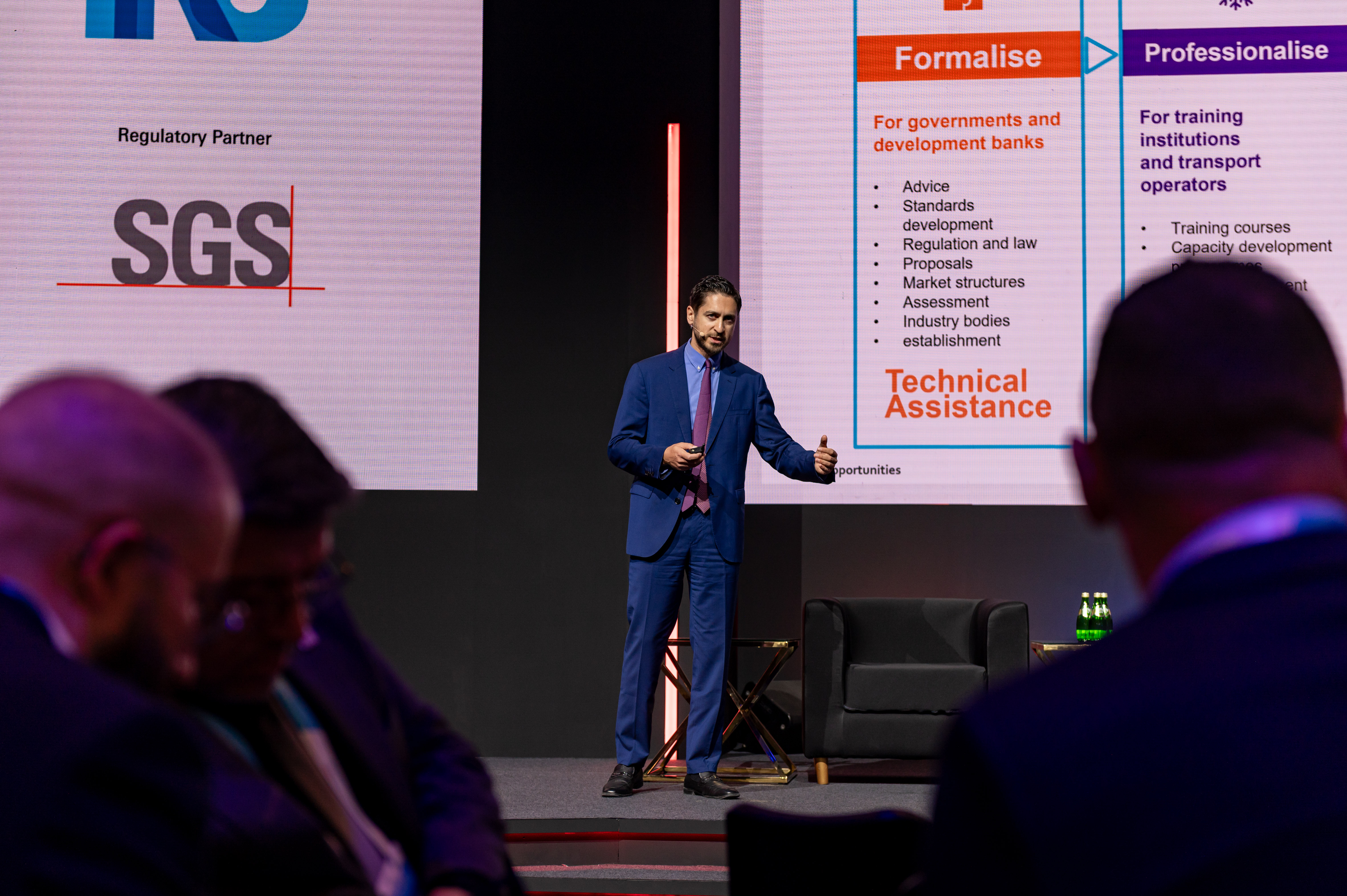
“Moving goods across borders requires much more than a vehicle capable of driving itself,” said Senior Manager for TIR & Transit Development Rami Karout. “The entire transport chain, from customs procedures to digital documents, must also be ready.”
AI: from potential to practical benefits
With 2.9 million truck driver positions unfilled across 18 markets, technology can help operators make better use of their existing workforce.
AI is already supporting route planning, driver scheduling, personalised training, driver monitoring and predictive maintenance.
Yet adoption remains limited. IRU's research shows that around 90% of small European operators have not adopted AI.
Bridging this gap requires affordable solutions, common data standards, cybersecurity safeguards and support for smaller operators.
“AI must complement human expertise rather than replace it,” said Rami Karout. “Human oversight, clear accountability and professional training are essential to responsible deployment.”
Technology and training: a safer combination

IRU also highlighted the potential of advanced driver-assistance systems. US research, for example, has linked automatic emergency braking to a 41% reduction in rear-end truck crashes.
But technology alone cannot eliminate road safety risks.
“Road safety is not just about having the latest technology. Drivers and operators need the skills to understand new vehicle systems, interpret digital information and respond effectively to hazards,” said Rami Karout. “Combining innovation with professional training is essential to making roads safer.”
Unlocking the value of vehicle data
During a separate panel on data ownership and monetisation, Hamza Guirrou called for fair, secure and non-discriminatory access to vehicle-generated data.
As fleets become increasingly connected, operators need access to relevant data to improve efficiency, strengthen safety and develop innovative services.
This is particularly important for mixed-brand fleets, where operators must be able to access and share data across different vehicle manufacturers and service providers.
“Operators need fair access to the data generated by their vehicles. Without it, we risk limiting competition, slowing innovation and missing opportunities to improve efficiency and safety,” said Hamza Guirrou.
A balanced framework must enable fair data access while safeguarding cybersecurity, intellectual property and commercial interests. (All other photos in a carousel here)