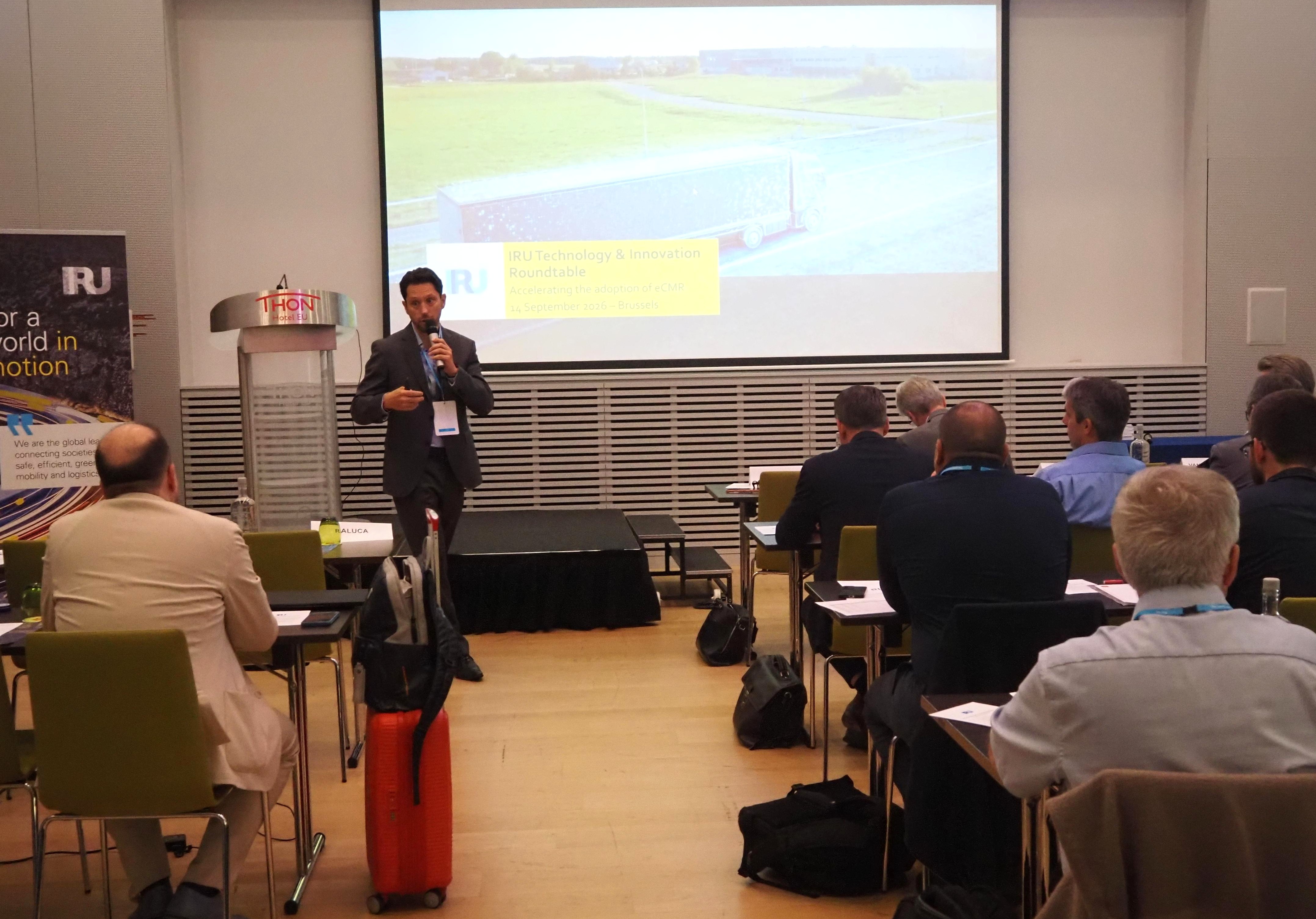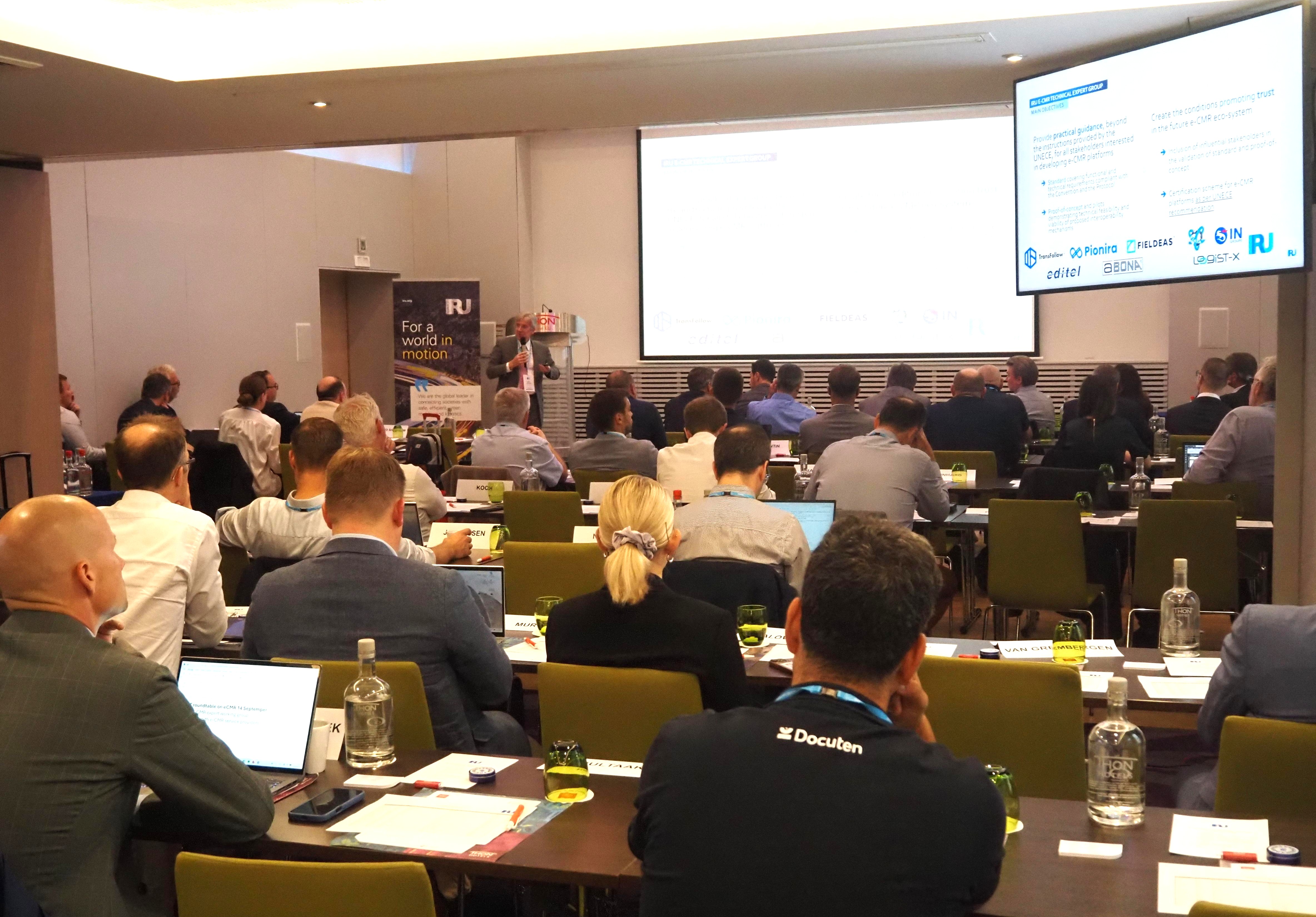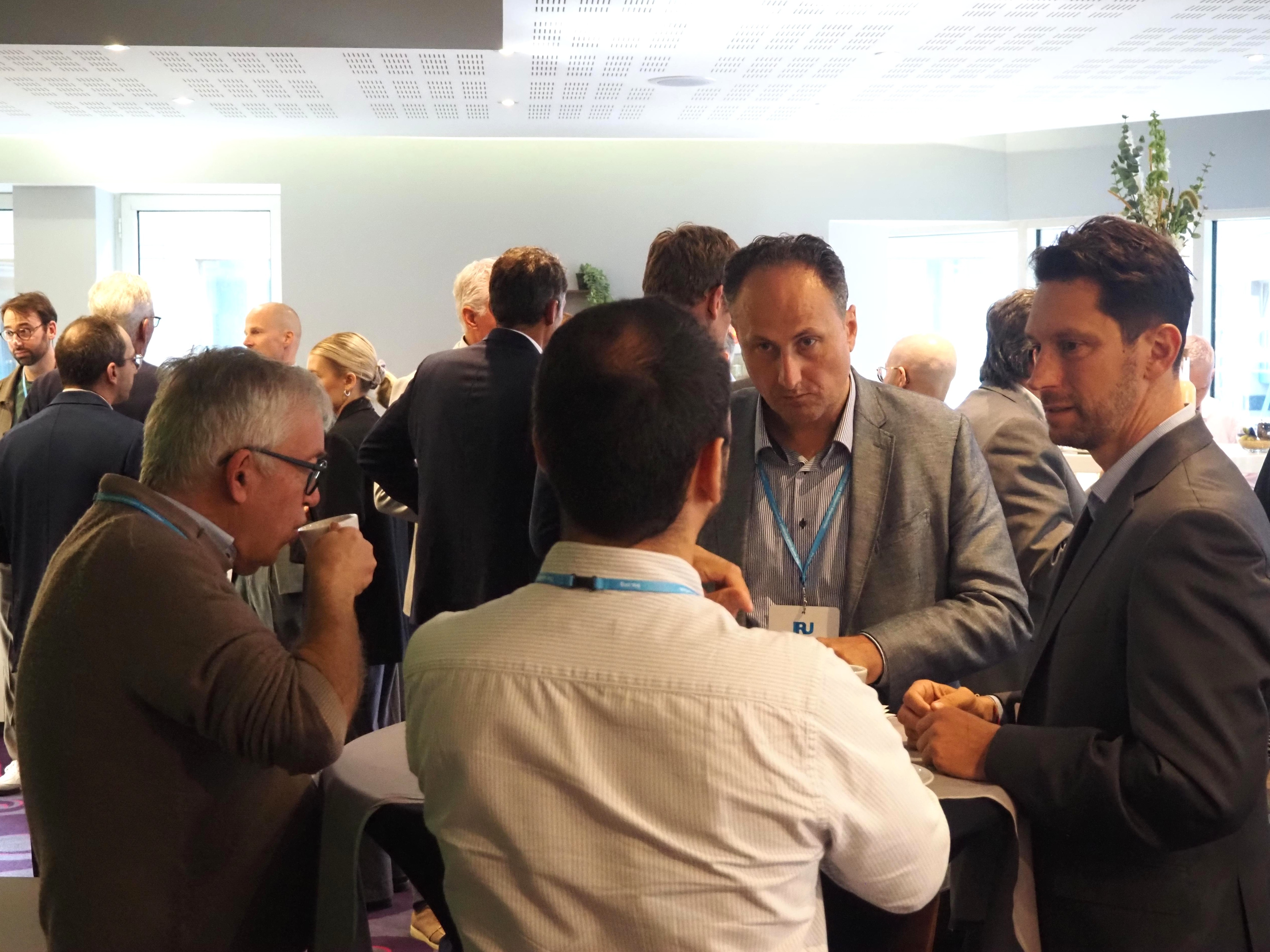
More than 50 experts from across the road transport ecosystem came together this week for the second edition of IRU’s Innovation and Technology Event. They explored avenues to unlock eCMR uptake.
With eCMR adoption accelerating, discussions centred on a key challenge for the next phase of road transport digitalisation: turning the CMR Convention and the eCMR Protocol into operational standards through clear specifications covering functional requirements, interoperability mechanisms and digital signatures.
Building the foundations for interoperability
The roundtable opened with an update on IRU’s eCMR Technical Expert Group and its work to advance interoperability across the sector.
Launched earlier this year by IRU and industry partners, the group is developing an open, scalable and global approach to B2B interoperability between eCMR solutions. Its work aims to support seamless information exchange between transport operators, shippers, freight forwarders and other supply chain actors, while remaining compliant with the CMR Convention and eCMR Protocol.
Participants then looked at the different layers needed to turn interoperability into practice. Discussions on the functional layer explored the requirements that eCMR platforms need to meet to ensure compliance with the CMR Convention.
The interoperability layer explored how platforms can communicate with one another, including through technical interfaces and APIs, common message formats, and open and scalable mechanisms for exchanging data. eCMR platforms should be able to connect with counterparties and systems they have not previously interacted with, without requiring prior system integration.
Building trust into digital freight
A second part of the roundtable focused on trust – an essential element when replacing traditional paper documentation with digital information.
Participants reviewed technical requirements for trusted digital signatures from consignors, carriers and consignees, and how these can work across different eCMR solutions.
The discussion also looked beyond business-to-business exchanges to business-to-government interoperability, particularly how eCMR platforms can interact with the EU’s electronic Freight Transport Information (eFTI) environment.
From discussion to implementation
The roundtable highlighted that wider eCMR uptake will depend on individual digital solutions being able to work together.
The conclusions and exchanges will feed into the ongoing work of IRU’s eCMR Technical Expert Group, as it develops practical approaches to interoperability and prepares for testing with users.
By bringing technology providers, transport experts and public authorities around the same table, IRU’s Innovation and Technology Event provided a platform to move the discussion from digital ambition towards practical implementation.