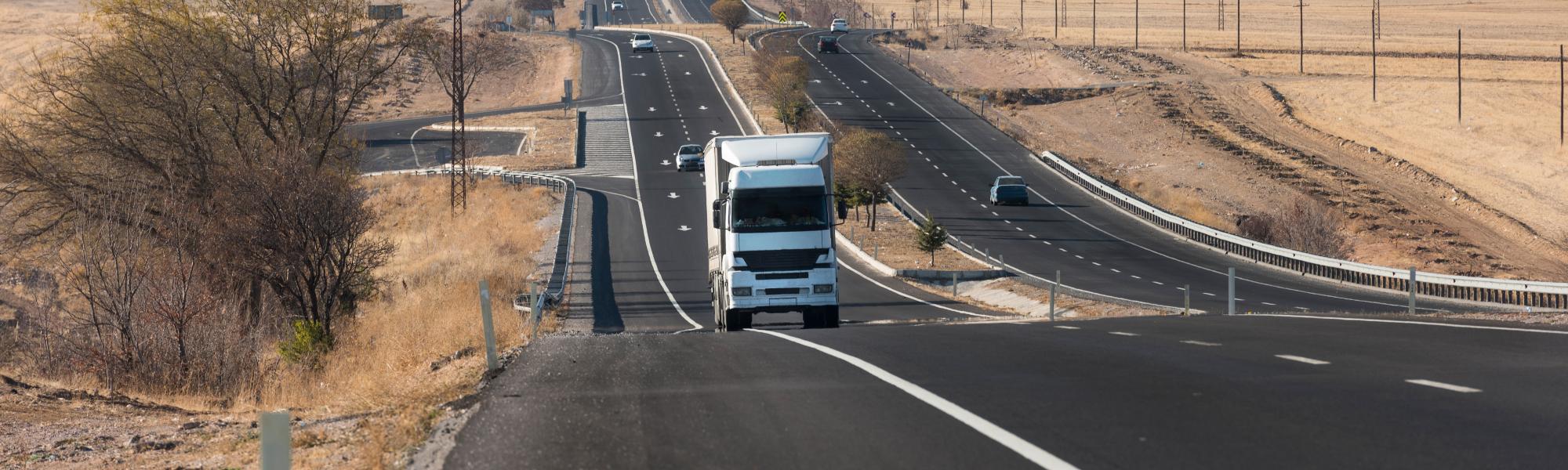
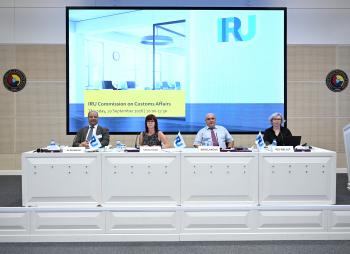
More than 30 delegates from 16 countries gathered in Türkiye for IRU’s Commission on Customs Affairs (CAD), putting emerging trade corridors, stronger regional connectivity and eTIR deployment at the centre of discussions.
Hosted by IRU member TOBB, CAD brought together IRU members and Türkiye’s Ministry of Transport and Infrastructure as well as its Ministry of Trade.
IRU Secretary General Habib Turki opened the meeting, highlighting the practical role of CAD. “CAD’s work is not theoretical,” said Habib Turki. “First-hand information from operators helps our industry remain agile, adapt to a volatile environment and turn knowledge into action.”
Emerging corridors
The wider development of new and emerging trade corridors took centre stage, particularly routes connecting Türkiye and Europe with the Middle East and Gulf Cooperation Council (GCC) region, and with China.
Road transport’s flexibility and resilience allow it to respond to changing trade flows. The expansion of TIR into new geographies is supporting this shift, with recent operations along emerging corridors demonstrating concrete time and cost savings.
“Disruptions to traditional supply chains affecting other transport modes have led to a shift of cargo towards road transport,” said CAD President Michaela Havelcova.
“These challenges require greater efforts to support logistics operators and shippers and help them navigate this constantly changing landscape, keeping services and supply chains moving. Amid this very uncertain context, road transport has adapted and proved highly effective,” she added.
eTIR gathers momentum
As implementation gains momentum across Eurasia, eTIR is moving from country-level deployments towards coordinated and interconnected regional transport corridors.
Building on the success of the first pilots, CAD members committed to advancing their work with customs authorities to support this progress.
Three operational eTIR corridors already connect countries in Central Asia.
Türkiye’s plans to extend eTIR connectivity in the coming weeks were also highlighted as an important milestone for east-west trade.
New horizons
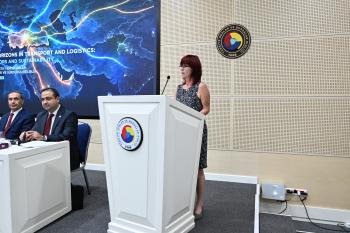
An open session with public authorities focused on Türkiye’s evolving transport, trade and customs landscape.
Senior officials from Türkiye’s Ministry of Transport and Infrastructure and Ministry of Trade presented developments in international road transport, customs initiatives and digitalisation, as well as progress in international trade in services and efforts to modernise intergovernmental regulatory frameworks.
Türkiye’s logistics and transport services have expanded substantially in recent years, rising from USD 2.7 billion in 2002 to USD 42.6 billion in 2025. Between 2019 and 2025, Türkiye’s road transport operations with EU countries increased by nearly 50%, while operations with the Middle East rose by almost 30%.
The emerging routes connecting Türkiye with the GCC featured prominently in the discussions. “These are no longer alternative routes; they are real trade corridors, driven by real market demand,” said IRU TIR & Transit Director Tatiana Rey-Bellet.
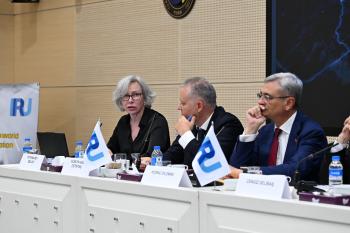
Turkish customs reaffirmed their commitment to making eTIR operational along the Middle Corridor. Digitalisation is also being expanded to electronic permits, with systems linking Türkiye with Uzbekistan, Azerbaijan, Kyrgyzstan, Turkmenistan, Georgia and Kazakhstan.
2027 priorities
CAD members reviewed implementation of the 2026 work programme and adopted their priorities for 2027. Next year’s programme will focus strongly on supporting new transport corridors, opening new opportunities for TIR operators, accelerating eTIR implementation, and setting conditions facilitating transit.
50 operators co-found hub
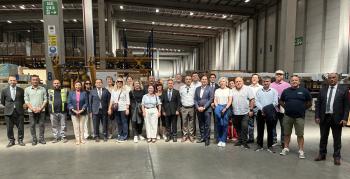
CAD concluded with a visit to the Ankara Logistics Hub.
The hub was developed in response to a shortage of modern warehousing capacity in the region. More than 50 operators came together as co-founders and investors to establish it.
Supported by Türkiye’s Ministry of Transport and financed entirely by the private sector, the initiative shows how competitors can work together to create new capacity and opportunities for the wider market.
The hub manages general cargo, temperature-sensitive goods, heavy and bulky freight and dangerous goods. It also has facilities for exports, imports and transit operations.
In addition, the hub offers services for drivers, including accommodation, catering and showers, alongside secure parking and vehicle maintenance facilities. It regularly hosts major exhibitions and industry forums and provides professional training.
Ministry talks
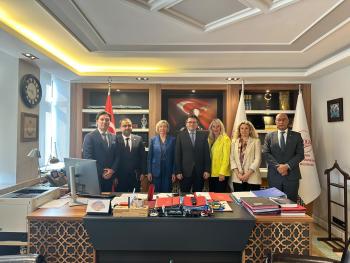
IRU also held meetings with TOBB and Türkiye’s Ministry of Transport and Infrastructure.
Discussions covered current challenges and opportunities for the industry, developments in the Middle East and measures to further strengthen international road transport connectivity.
The exchanges underlined the importance of close cooperation between governments, the industry and international organisations to remove operational barriers, facilitate border crossings and allow emerging corridors to reach their full potential.
About CAD
CAD works to improve the efficiency and security of border crossings, including through the increased use and modernisation of TIR.
It monitors trade facilitation legislation and works with IRU members and partners to promote simpler, more secure and efficient border procedures.


