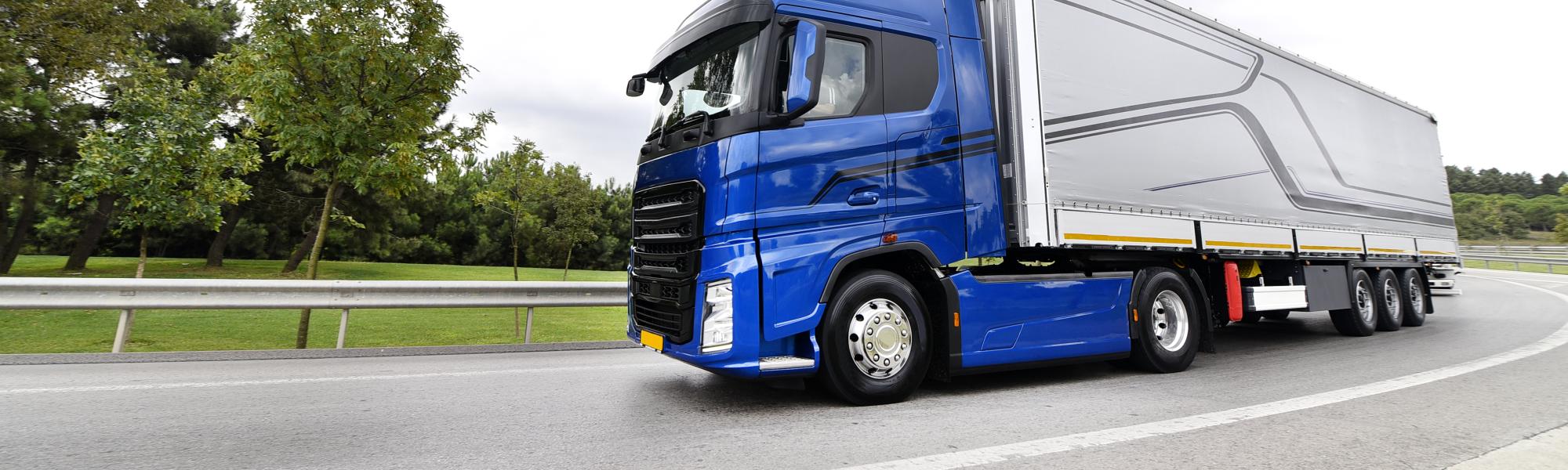
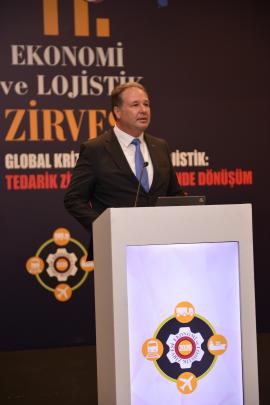
At the 11th Economy and Logistics Summit in Türkiye, IRU President Radu Dinescu highlighted road transport’s growing strategic importance and Türkiye’s central role in emerging trade corridors.
Addressing transport and logistics leaders, Radu Dinescu stressed that geopolitical tensions and disruptions to traditional supply chains are increasing demand for faster, more flexible, more resilient and more predictable transport alternatives.
Türkiye is particularly well positioned in this changing environment, connecting Europe with Central Asia and China through the Middle Corridor, while providing access to Iraq, the Middle East and the Gulf Cooperation Council (GCC) region through the Development Road and Syria corridors.
New opportunities through Iraq and Syria
IRU is actively supporting the development of road corridors connecting Türkiye and Europe with the GCC.
The Development Road Project through Iraq represents a major strategic opportunity to establish a fast land connection between the GCC, Türkiye and Europe.
Iraq’s implementation of TIR has already strengthened the corridor. Since 2025, more than 5,000 TIR carnets have been used on the Iraq route. IRU’s pilot TIR operations through Iraq and the Arar border crossing also demonstrated its potential, with cargo travelling from Gaziantep to Riyadh in 3.9 days and to Medina in 3.7 days.
The reactivation of the Syria corridor in 2025 has also restored an important historical road connection between Türkiye, Jordan and the GCC. More than 5,000 TIR carnets have been used since the corridor became active again, demonstrating strong demand for this renewed route.
Strengthening the Middle Corridor
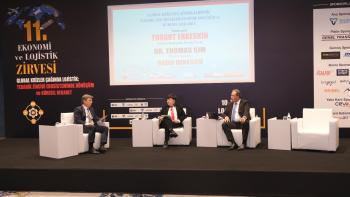
Radu Dinescu highlighted the growing strategic importance of the Middle Corridor, connecting China and Central Asia with Europe through the Caspian region and Türkiye.
As businesses diversify their supply chains, the corridor offers an increasingly important alternative for Europe–Asia trade. Türkiye has a major opportunity to strengthen its position as a key logistics and connectivity hub by making transport along the corridor faster, more digital and more predictable.
IRU is supporting this transformation through TIR, TIR green lanes, TIR-EPD and eTIR, working with governments and customs authorities to reduce border waiting times and unnecessary procedures.
The successful first eTIR operations across the Caspian Sea in July 2026, connecting Azerbaijan, Turkmenistan and Uzbekistan, marked another important step towards IRU’s vision of seamless digital connectivity linking China and Central Asia with Türkiye and Europe.
IRU recognised for its contribution
During the summit, IRU was recognised for its contribution to the transport and logistics industry amid the challenging environment facing the region.
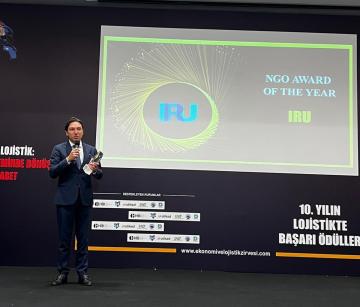
The recognition reflects IRU’s continued work to support the industry, keep trade moving and strengthen transport connectivity across Türkiye and the wider region.
Concluding his remarks, Radu Dinescu stressed that emerging corridors must be supported not only by infrastructure, but also by efficient borders, digitalisation and harmonised procedures.
IRU will continue working with governments, customs authorities and the transport industry to transform the Middle Corridor, the Development Road and the Syria corridor into fast, secure and predictable trade routes, supported by TIR and digital trade facilitation.