
The trucking industry in North America is grappling with several major challenges, including additional tariffs, stricter rules-of-origin requirements, and rising fuel prices. IRU recently brought together Mexican vehicle makers and US carriers to discuss what keeps them up at night.
- Vehicle production costs and prices could rise soon
- Diesel Exhaust Fluid (DEF) availability is emerging as a key concern
- Mexico plans to restrict imports of older used US commercial vehicles
- The upcoming review of the region’s trade agreement is adding to the uncertainty
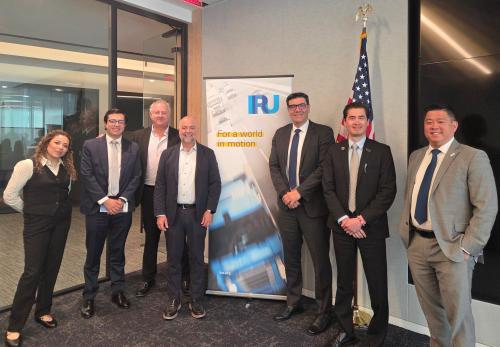
IRU’s North American Transportation Forum (NATF) and member the American Trucking Associations (ATA) recently hosted ANPACT, Mexico’s truck and bus manufacturers association, in Washington DC.
ANPACT President Rogelio Arzate led the delegation, which included executives from Daimler and Paccar. They were welcomed by ATA Senior Vice President and IRU CTM Vice President Bob Costello, along with IRU’s Martin Rojas, who led the discussions.
Talks focused on the outlook for North American trade, geopolitics and energy, with participants highlighting growing uncertainty across the region.
Among the main concerns raised were the potential impact of additional tariffs and stricter rules-of-origin requirements for commercial vehicles and components. For original equipment manufacturers with operations in North America, such measures could increase production costs and ultimately drive up vehicle prices.
Participants also discussed how global political tensions could weigh on consumer confidence and trucking operations, potentially affecting future purchases of commercial vehicles by motor carriers. They noted that the trucking industry is beginning to see signs of market improvement. However, the improvements are being driven by supply-side factors rather than stronger demand for freight services.
Fuel prices remain a key concern, alongside the future availability and quality of DEF, a diesel additive like AdBlue, particularly given the conflict in the Middle East.
The meeting also covered Mexican initiatives to limit imports of used US commercial vehicles, with participants highlighting that the proposed restrictions are focused on vehicles aged 10 years or older.
Participants also expressed concern about possible outcomes for the future of the United States–Mexico–Canada Agreement (USMCA), also known as TMEC and CUSMA. Issues discussed included the timing of the agreement’s review and the possibility that certain matters could be addressed through bilateral negotiations rather than under regional terms.
The meeting underscored the importance of continued close communication and information sharing through NATF to help keep regional trucking industry representatives informed on key developments affecting the sector.