
IRU underscored the need for clearer and more practical labour mobility pathways for professional drivers between North Africa and the EU at a recent labour mobility workshop with the private sector, policymakers and labour mobility experts in Turin, Italy.
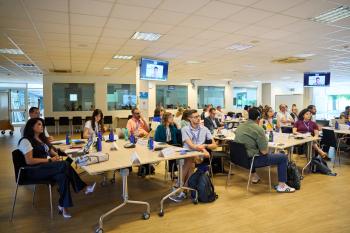
At the “From Labour Shortages to Shared Solutions: Strengthening the Role of Employers in EU–North Africa Talent Partnerships” workshop, organised by the International Labour Organization (ILO) THAMM Plus and the International Training Centre of the ILO, IRU stressed that legal mobility must be easier to manage for both drivers and operators.
For the EU road transport sector, the shortage of professional bus, coach and truck drivers is particularly urgent. Recruitment from third countries can complement measures seeking to attract more young people and women from the local talent pool, but current procedures remain complex, slow and fragmented.
Visa issuance and work permit procedures remain among the main barriers. Even where operators have identified qualified candidates, lengthy administrative processes can delay recruitment and create uncertainty for employers and workers.
Qualification recognition is another major challenge. Professional drivers recruited from outside the EU are required to complete a full EU Certificate of Professional Competence (CPC), often in the local language, even when they already hold professional qualification credentials and have substantial driving experience in their home countries.
Non-EU countries can support future recognition by strengthening their professional driver training and qualification requirements – a clear win-win situation.
These messages reflect the findings of the IRU-led study published by the European Commission – the STEER2EU project – on the recruitment and integration of third-country professional drivers into the EU labour market.
The study identified qualification gaps, legal and administrative barriers, and examples of good practice across both third countries and EU Member States. It concluded that clearer pathways, streamlined procedures and targeted training and examination can support recruitment while safeguarding working conditions, road safety and EU professional standards.
IRU, together with its members the Federazione Autotrasportatori Italiani (FAI), the National Union of Road Hauliers from Romania (UNTRR) and other public and private partners, is currently working on implementing the Skilled Driver Mobility for Europe (SDM4EU) Project, which includes driver mobility pilot initiatives from Morocco to Italy and from Egypt to Romania.