Two expert panels at IRU member CANACAR’s 2026 National Convention looked at how tougher cabotage, visa and language rule enforcement can lead to more efficient and competitive cross-border trade in North America. IRU Vice President Iro Doumani added a global perspective to the debate.
The IRU North American Transportation Forum (NATF) panels in Cancun, Mexico, put the latest US enforcement and regulatory changes under the spotlight, with perspectives from both government and industry.
At the heart of both discussions was a shared challenge: how to strengthen compliance without creating unnecessary barriers for the drivers and operators moving goods across the region.
IRU Senior Adviser for the Americas Martin Rojas, who moderated the discussion, highlighted the importance of having enough drivers while effectively enforcing rules.
US Customs and Border Protection’s Liliana Flores set out several of the measures shaping cross-border operations, particularly cabotage rules, B-1 driver requirements, cargo security and developments under the Customs Trade Partnership Against Terrorism.
She also discussed work on the Electronic Export Manifest for sharing outbound cargo manifest data with government authorities, including an upcoming pilot ahead of wider implementation.
Fair and effective enforcement
Industry representatives broadly supported stronger enforcement where rules are being abused, particularly around cabotage.
Werner Enterprises Chairman and CEO Derek Leathers said action against the illegal use of B-1 drivers for domestic cabotage operations was necessary to protect fair competition.
Derek Leathers also welcomed increased enforcement by the Federal Motor Carrier Safety Administration of English language proficiency requirements. He underscored the importance of drivers being able to communicate effectively with law enforcement and others while operating in the US.
The challenge is ensuring tougher controls do not disrupt compliant operations.
IRU member ATA’s Chief Economist, Bob Costello, stated that cross-border trade had rebounded in 2026 following a slight decline in 2025, reinforcing the importance of keeping legitimate freight flows moving efficiently.
He stressed that enforcement should remain fair and proportionate, with industry continuing to work closely with US authorities and transport associations across North America.
Keeping borders moving
The second panel turned more directly to the practical impact of these rules on drivers and operators.
Justen Thomas of the US Consulate General advised drivers applying for or renewing B-1 visas to come well prepared for interviews. Language proficiency is one of several factors that can influence visa decisions.
From the Mexican industry perspective, CANACAR President Augusto Ramos said action against illegal cabotage was understandable and necessary. But he warned that intensified border enforcement can create delays and operational difficulties.
Augusto Ramos called for closer coordination between industry, customs and other supply chain actors to improve border throughput and efficiency.
IRU Goods Transport Council President Iro Doumani brought in the European perspective, highlighting how coordinated systems and digitalisation can help reconcile effective controls with smoother international freight operations.
While the EU operates without customs controls between its member states, external border procedures can still be complex and time-consuming. She also noted that the shortage of drivers is making operations more challenging.
Across both panels, the message was consistent: enforcement and facilitation should reinforce, rather than undermine, one another. Stronger coordination between regulators and industry will be essential to keep North American trade both compliant and moving.
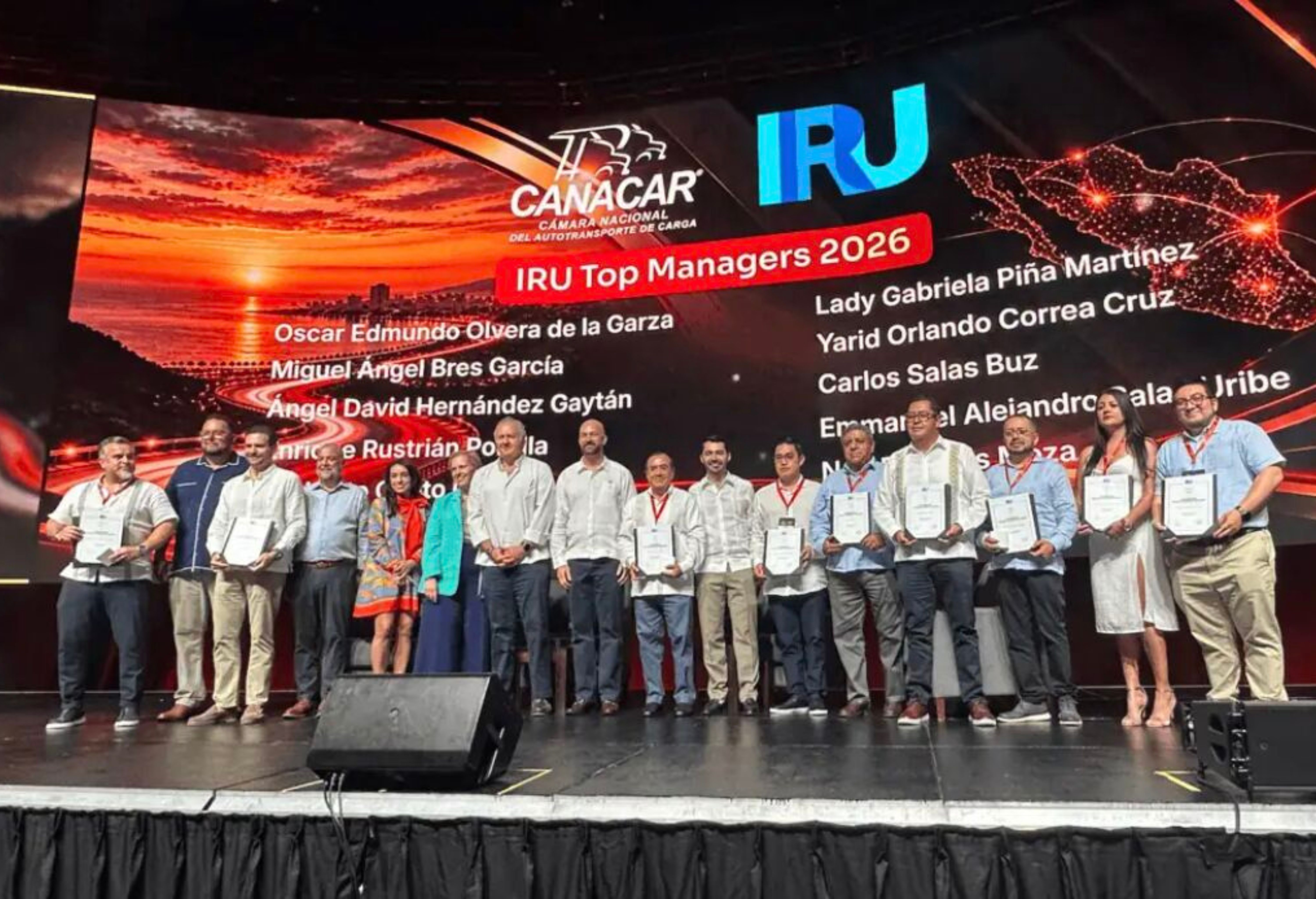
The panellists then handed out the IRU Top Road Transport Manager Awards to ten motor carrier executives who demonstrate excellence in road safety, sustainability and productivity.
NATF will continue to bring together the industry from across the region to improve coordination and cooperation through ongoing dialogue and information sharing.