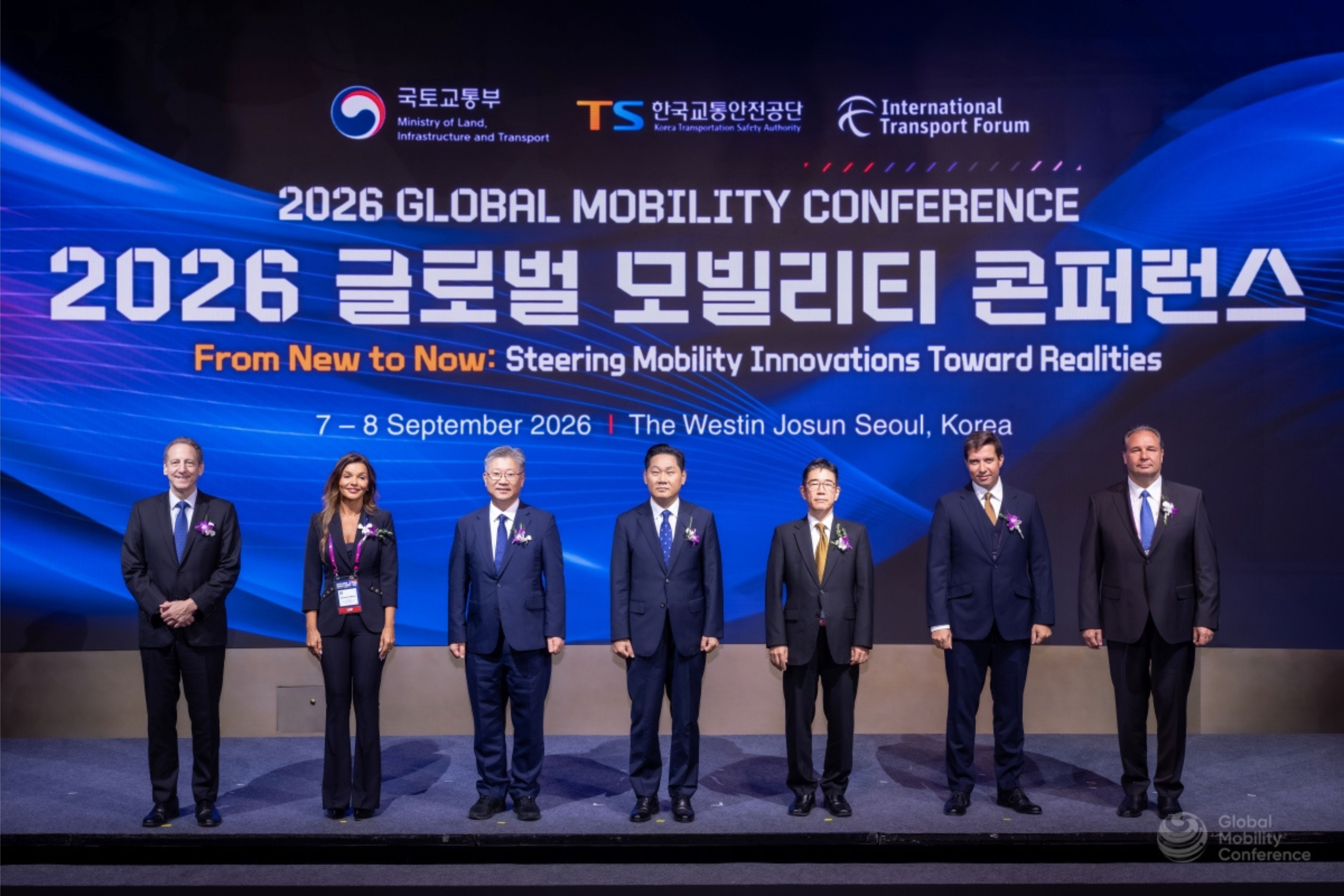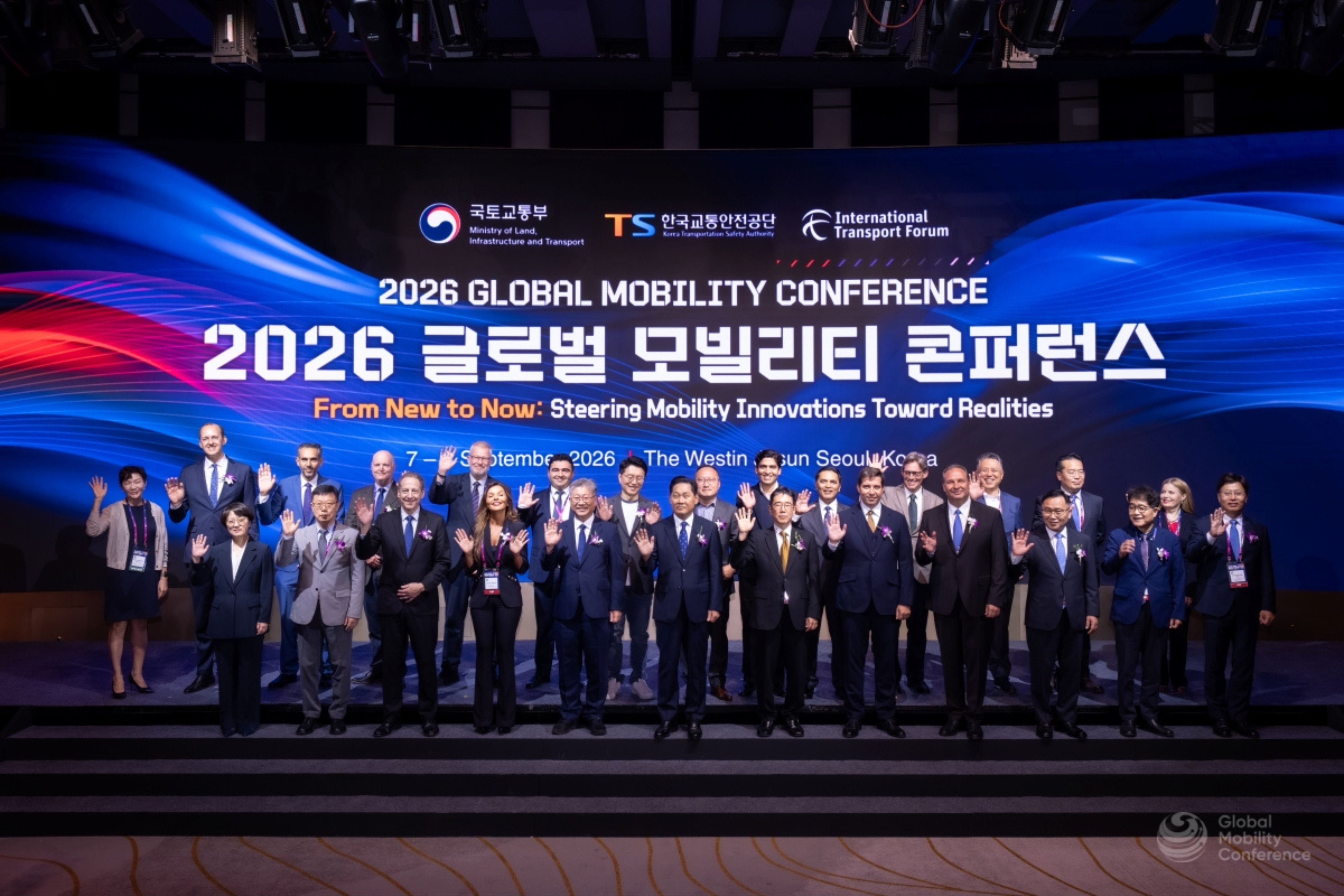
Artificial intelligence, automation and greater connectivity can help road transport respond to major challenges. But successful deployment will depend on common standards, trusted governance and keeping people at the centre, IRU President Radu Dinescu told transport leaders in Seoul.
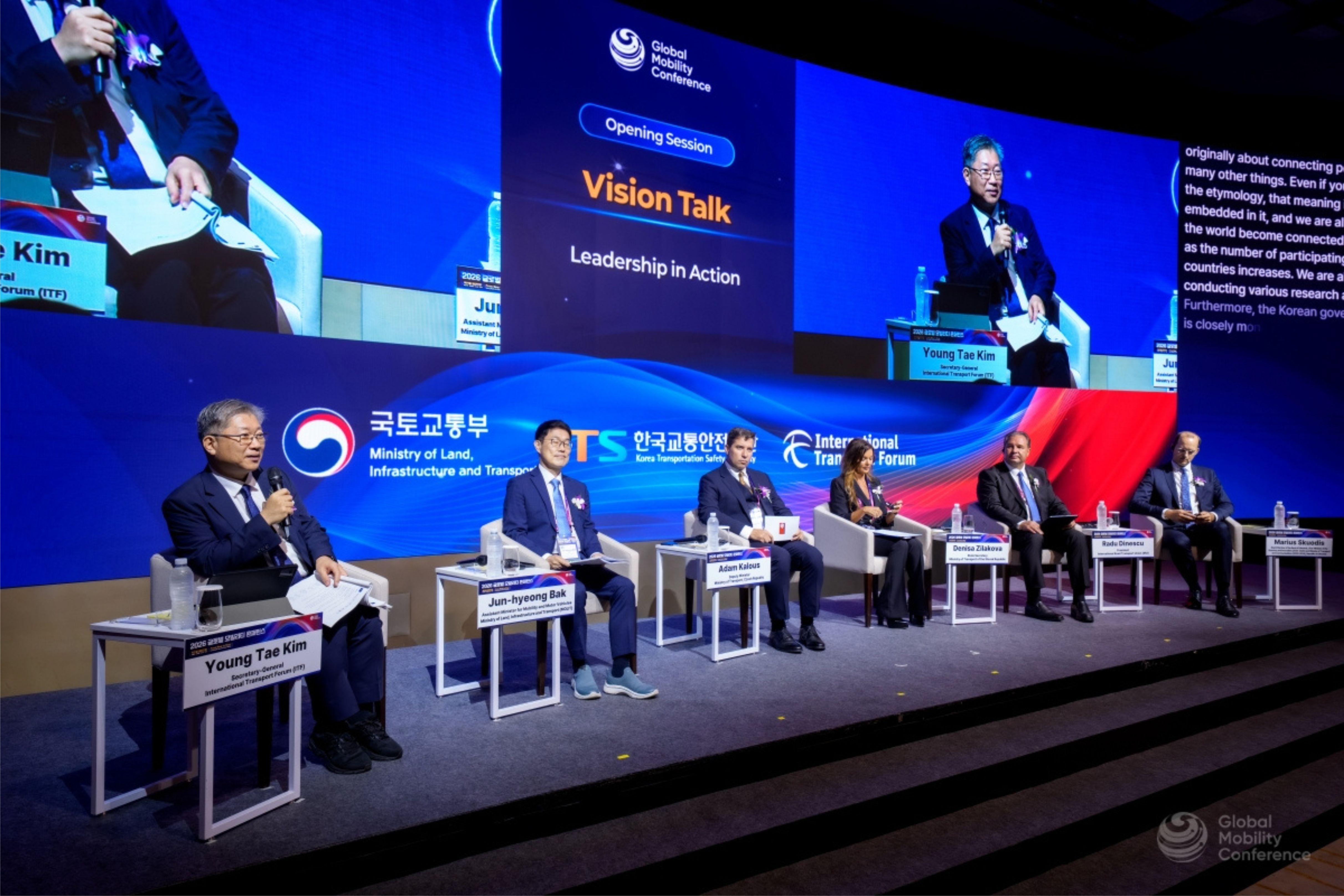
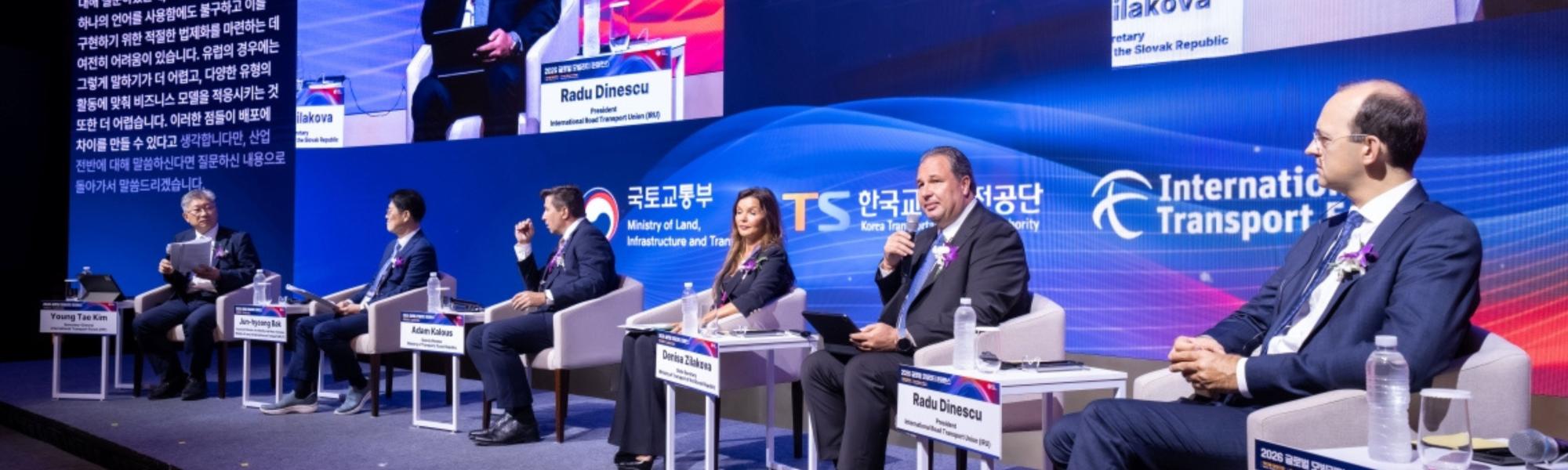
Speaking at the 2026 Global Mobility Conference, Radu Dinescu set out how AI and autonomous technologies could reshape road transport while stressing the need for a realistic, human-centred approach.
During the Vision Talk on “Leadership in Action”, moderated by ITF Secretary-General Dr Young Tae Kim, Radu Dinescu highlighted four priorities for scaling connected transport solutions: common data and interoperability standards; trusted governance and accountability; public-private cooperation; and a human-centred deployment model.
“AI will be a key enabler of future connected transport ecosystems, linking vehicles, infrastructure and logistics operations in ways that improve efficiency,” said Radu Dinescu. “However, we need to ensure a human-centred approach built on collaboration between industry, technology providers and policymakers.”

Technology already delivering benefits
AI is already supporting operators across a growing range of activities. It can optimise routes, vehicle utilisation, energy consumption, dispatch and scheduling, while predictive maintenance can identify failures before they occur and reduce downtime.
Real-time data can also improve situational awareness, road safety and traffic management, helping cut congestion, emissions and journey times.
But scaling these applications requires vehicles, fleets, infrastructure managers and logistics platforms to exchange data seamlessly. Operators and regulators also need to understand how AI systems reach decisions, making explainability, cybersecurity and clear accountability essential to wider deployment.
Automation and the workforce challenge
Technology also has an important role to play in addressing road transport’s workforce pressures. IRU’s 2025 driver shortage survey found that there are around 2.9 million unfilled truck driver positions across 18 markets. In Europe, only 5% of drivers are aged 24 and under, while around 660,500 are expected to retire by 2030.
AI can help operators make better use of existing capacity, reduce administrative burdens and improve driver safety. Autonomous vehicle technology could also ease some workforce pressures over time, particularly on specific corridors and in controlled environments.
Large-scale deployment of fully driverless trucks, however, remains some way off. Even highly automated operations will continue to require people for cargo management, customer interaction, regulatory compliance, border procedures and incident response.
Addressing workforce pressures therefore still requires attracting more young people and women, improving access to training and licensing, enhancing conditions at loading and unloading sites, and making the profession more attractive.
For the industry, the wider opportunity is to use technology to make operations safer, more efficient and sustainable while supporting the people who keep road transport moving.