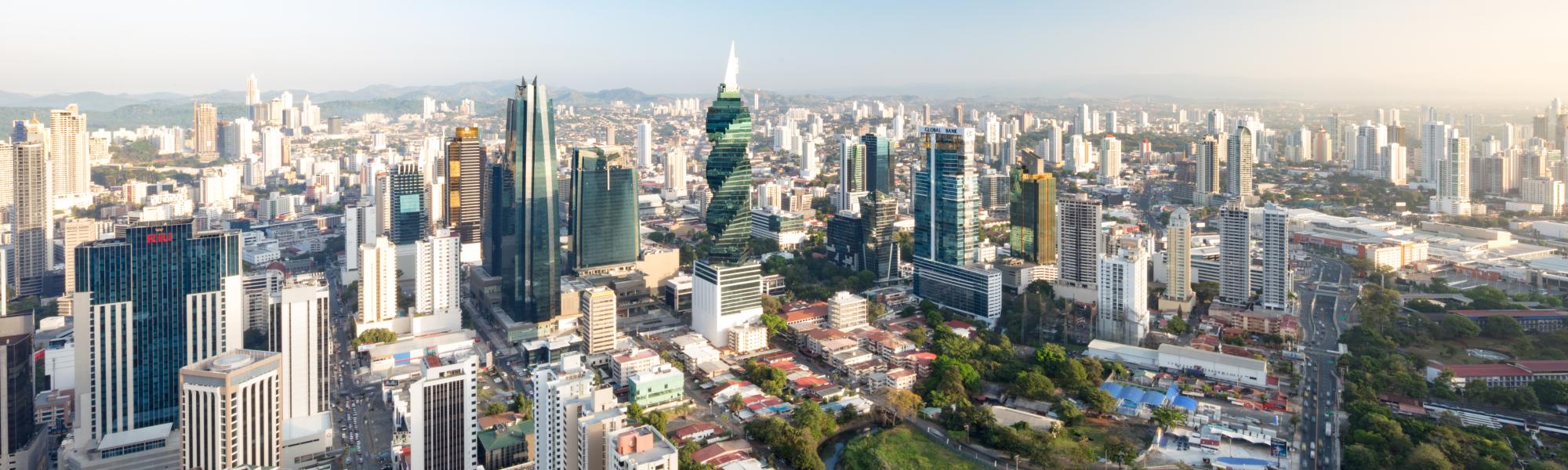
At the 12th World Free Zones Organization (WFZO) Congress in Panama City, IRU’s Secretary General warned that the era of single-route supply chains is over, urging free zones and governments to build trade corridors backed by agile, harmonised and digital frameworks.
Speaking during the WFZO Congress panel on “Global Gateways – Redefining the Future of Trade and Connectivity”, IRU Secretary General Umberto de Pretto said the real transformation in global commerce is not just about where goods move, but how supply chains are designed.
“We need to move away from single-route optimisation towards supply chain agility and resilience.”
Recent shocks have made that shift impossible to ignore. Disruptions in the Strait of Hormuz and the Red Sea, along with the COVID-19 pandemic, have exposed how fragile global trade can be when it depends too heavily on a single route or mode. “This is not a temporary disruption; it’s a structural wake-up call.”

Road transport is increasingly acting as the agility layer of supply chains. When maritime or air routes are disrupted, road is often the mode that can adapt the fastest.
Umberto de Pretto described this as the “electricity principle”. “When one route is blocked, cargo flows through another – but only if the procedures, guarantees and legal frameworks are already in place. Alternatives must be built, tested and certified before the crisis, not improvised during.”
This is where harmonised tools such as the TIR system become critical. By supporting multimodal, door-to-door transport under one guarantee and one declaration, TIR connects corridors and modes under a single trusted framework. It turns intermodality into an operational reality rather than just a policy ambition.
For example, in response to the operational challenges triggered by the current crisis in the Middle East, TIR is playing a key role in maintaining the movement of essential goods between Qatar and Saudi Arabia. Qatar Airways cargo arriving in Doha is being transferred to sealed TIR-approved vehicles and transported to Saudi Arabia.
Brazil is the most recent Latin American country to join the TIR system, alongside Argentina and Chile. As more countries in the region join, Latin America will benefit more from an efficient, secure and harmonised cross-border trade system.
“The off-the-shelf solution for security and facilitation already exists. The question is not whether Latin America needs it. The question is how quickly you move.”