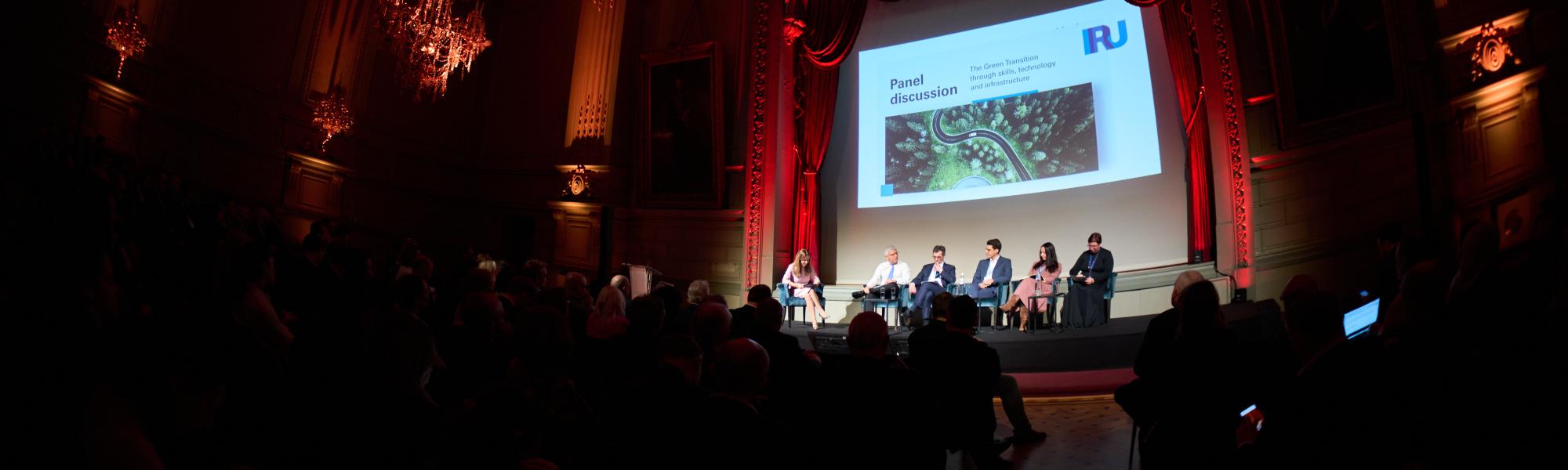
As the EU road transport sector accelerates its green and digital transition, the spotlight is increasingly on the people who will make it work on the ground. That was the message from a week of IRU discussions in Brussels, where EU policymakers, industry leaders and operators gathered to focus on one priority: how to align skills, technology and regulatory frameworks to deliver the transition.
This week in Brussels, IRU shifted the focus of the debate to the people who will ultimately make the transition work in practice.
At the heart of the week was IRU’s flagship conference, “Future-proofing transport: Skills, technology and transition”, which brought together several hundred participants from EU institutions, the road transport sector, and the broader automotive and transport ecosystem.
The importance of keeping people at the centre of the transition was underlined in the opening speech of Roxana Mînzatu, the European Commission Executive Vice-President for Social Rights and Skills, Quality Jobs and Preparedness.
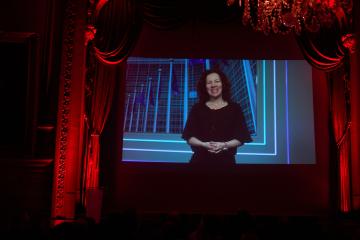
Roxana Mînzatu said, “Road transport is the backbone of Europe’s economy. Truck drivers, technicians and fleet managers are the ones that keep Europe moving, and we should never forget that. Today, the sector is changing, driven by digitalisation and broader structural shifts.”
“Technology must support drivers in their tasks, improve their safety and make the profession more attractive. Through the Fair Labour Mobility Package, we will scale up our digitalisation ambition with the introduction of a European Social Security Pass that will fully digitalise the paper documents that drivers today need to carry when working across borders,” she added.
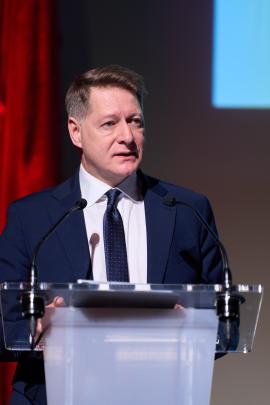
The message was complemented by the emphasis on collaboration between EU institutions and the sector in the keynote address delivered by Cosmin Boiangiu, the Executive Director of the European Labour Authority Ambassador.
Cosmin Boiangiu said, “Our cooperation has developed into a strong and trusted partnership over the years. IRU has played an important role in supporting EU dialogue on key issues such as driver shortages and fair labour mobility, bringing valuable insights from the road transport sector.”
“As road transport navigates the twin transitions of decarbonisation and digitalisation, cooperation between authorities and industry will be essential to ensure the workforce has the skills and support needed for a transition that is both competitive and socially sustainable,” he added.
The message had already been highlighted the evening before the conference at IRU’s annual spring cocktail, where Chair of the European Parliament’s Committee on Transport and Tourism, MEP Elissavet Vozemberg-Vrionidi, delivered the opening address.
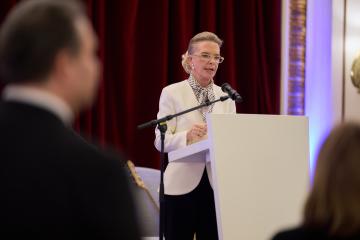
Elissavet Vozemberg-Vrionidi said, “Europe’s road transport sector stands at the crossroads of major transformations. If we want the green and digital transition to succeed, we must place people and skills at the heart of our policies.”
“The sector needs not only more drivers, but better trained professionals equipped with the digital and green skills required by a modern and sustainable transport system. Achieving this will require close cooperation between policymakers and industry to ensure that our ambitions remain firmly grounded in operational realities,” she added.
Speaking during the panel discussion on the green transition and skills, Member of the European Parliament’s Committee on Transport and Tourism Merja Kyllönen highlighted the importance of grounding EU policy discussions in the operational realities faced by transport companies.
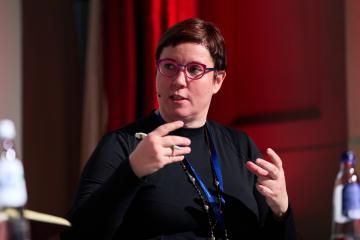
Merja Kyllönen said, “It is essential that policymakers remain open to listening and understanding the challenges faced by transport operators. I hear these concerns directly from Finnish transport companies, from the greening of fleets to persistent driver shortages and the need to equip the workforce with new skills.”
“The transition will require more solutions than simply electrification. We need a pragmatic approach that supports operators with workable technologies, the right training and policies that reflect the realities on the ground,” she added.
The discussions then turned to the practical implications of the sector’s transformation for transport operators and their workforce.
Industry representatives highlighted how the rapid deployment of zero-emission vehicles, digital compliance systems and emerging automation technologies is already reshaping daily transport operations. Participants pointed, in particular, to the operational challenges linked to charging predictability, integrating charging time into drivers’ schedules and adapting fleet management to new technologies.
Several participants also warned that electricity grid capacity is emerging as a major constraint for scaling charging infrastructure, highlighting the need for closer coordination between transport and energy planning.
Additionally, speakers stressed that the digital transition is changing the skillsets required across the sector. From drivers and technicians to transport managers and planners, companies increasingly need professionals who can operate advanced vehicle systems, digital tools and data-driven logistics platforms.
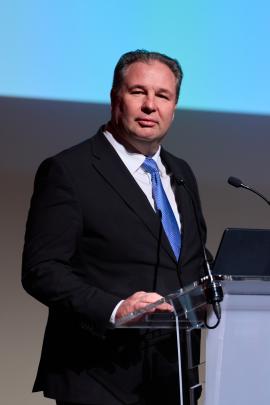
At the same time, participants emphasised that training frameworks and qualification systems must evolve alongside technological change. Ensuring that professional drivers and transport workers can continuously upgrade their skills will be essential for maintaining safe and efficient transport operations.
IRU President Radu Dinescu said, “The EU’s road transport sector is already moving forward with the green and digital transition.”
“The key question now is how we ensure that drivers and transport professionals have the skills, training and regulatory clarity needed to make this transformation work in practice,” he added.
“The discussions this week showed that policymakers and the industry are ready to work together to make the green and digital transition deliverable in practice. IRU will continue to drive this dialogue and help shape policies and solutions that enable the EU’s road transport workforce to lead this transformation,” concluded IRU EU Director Raluca Marian.


