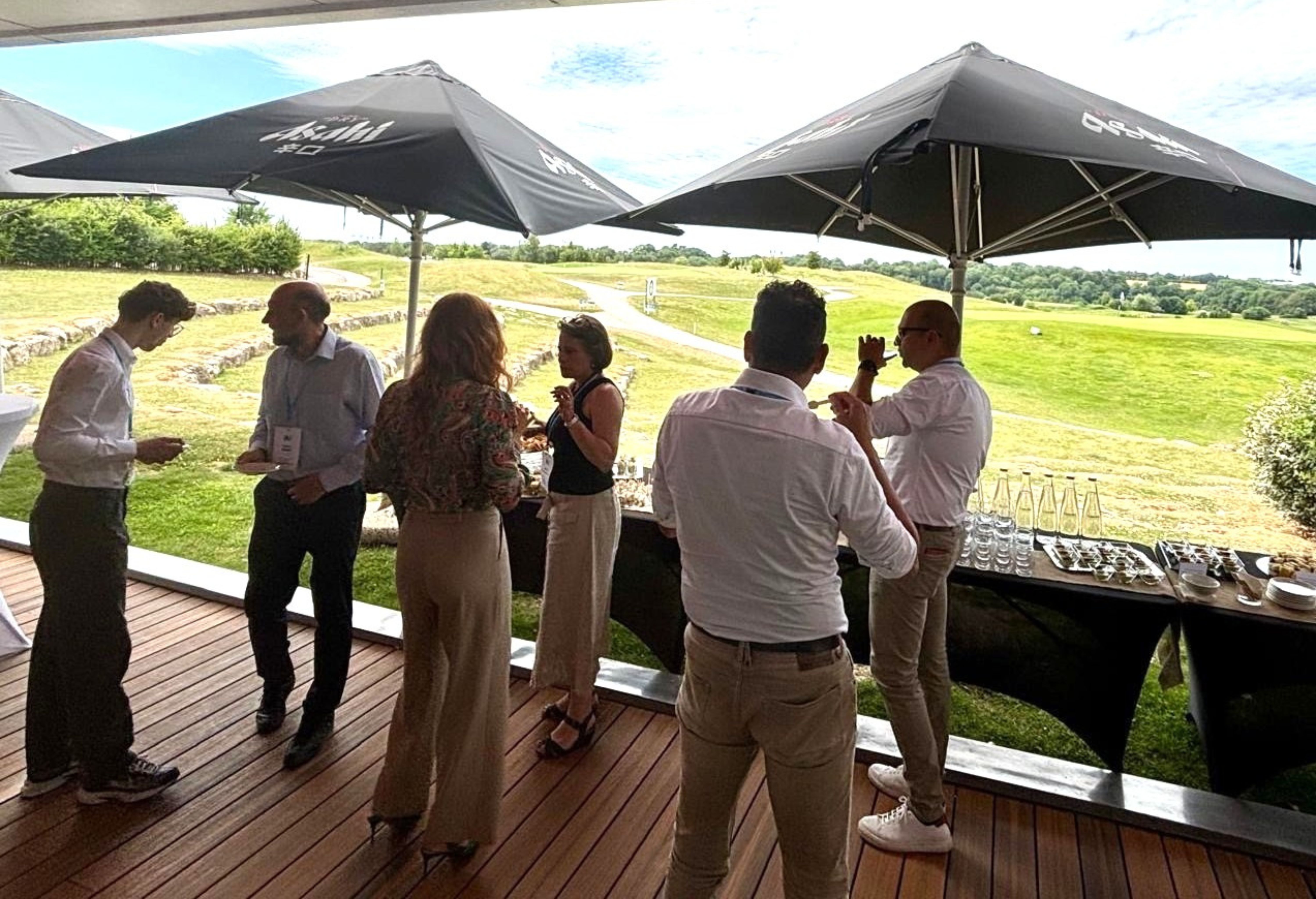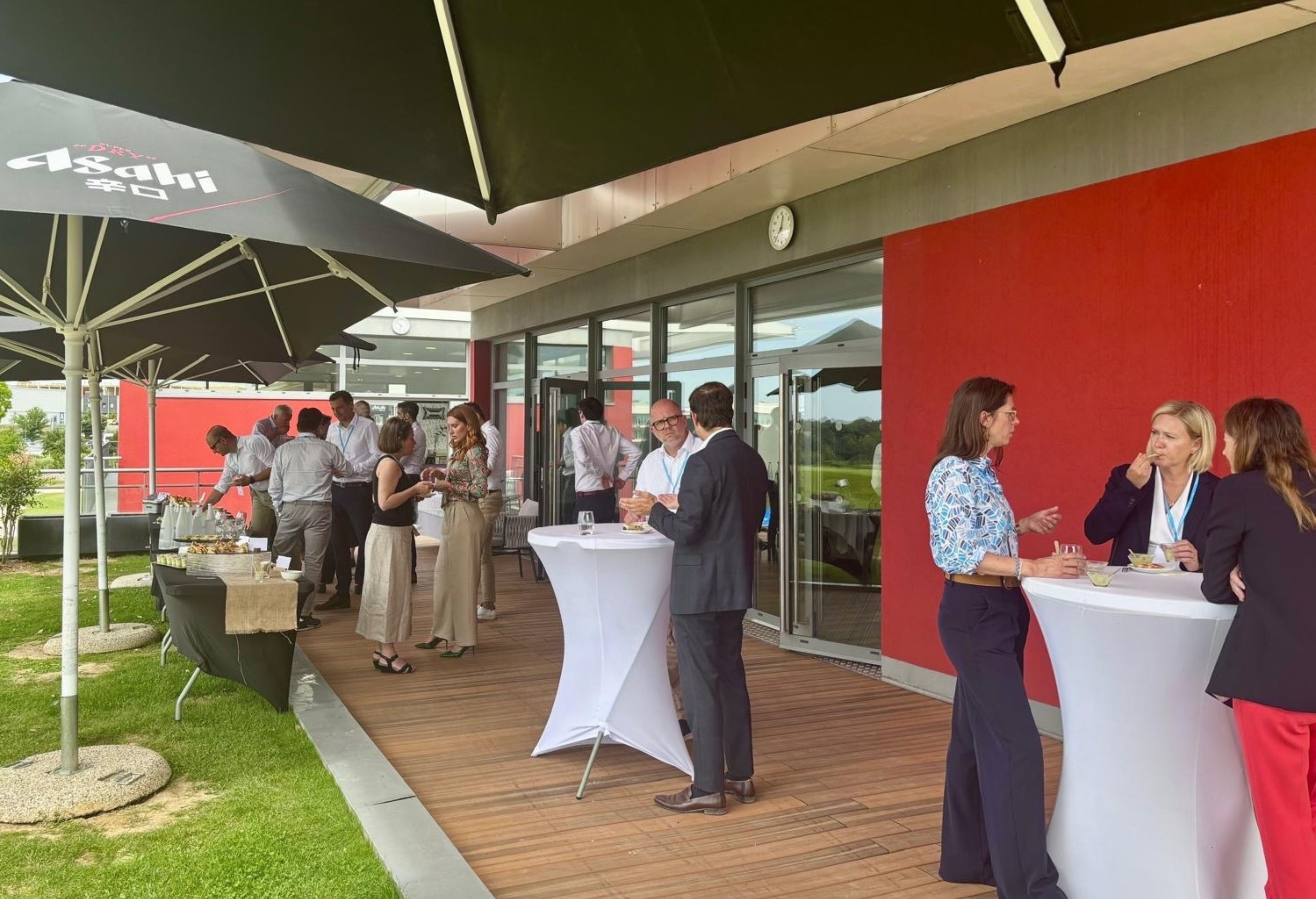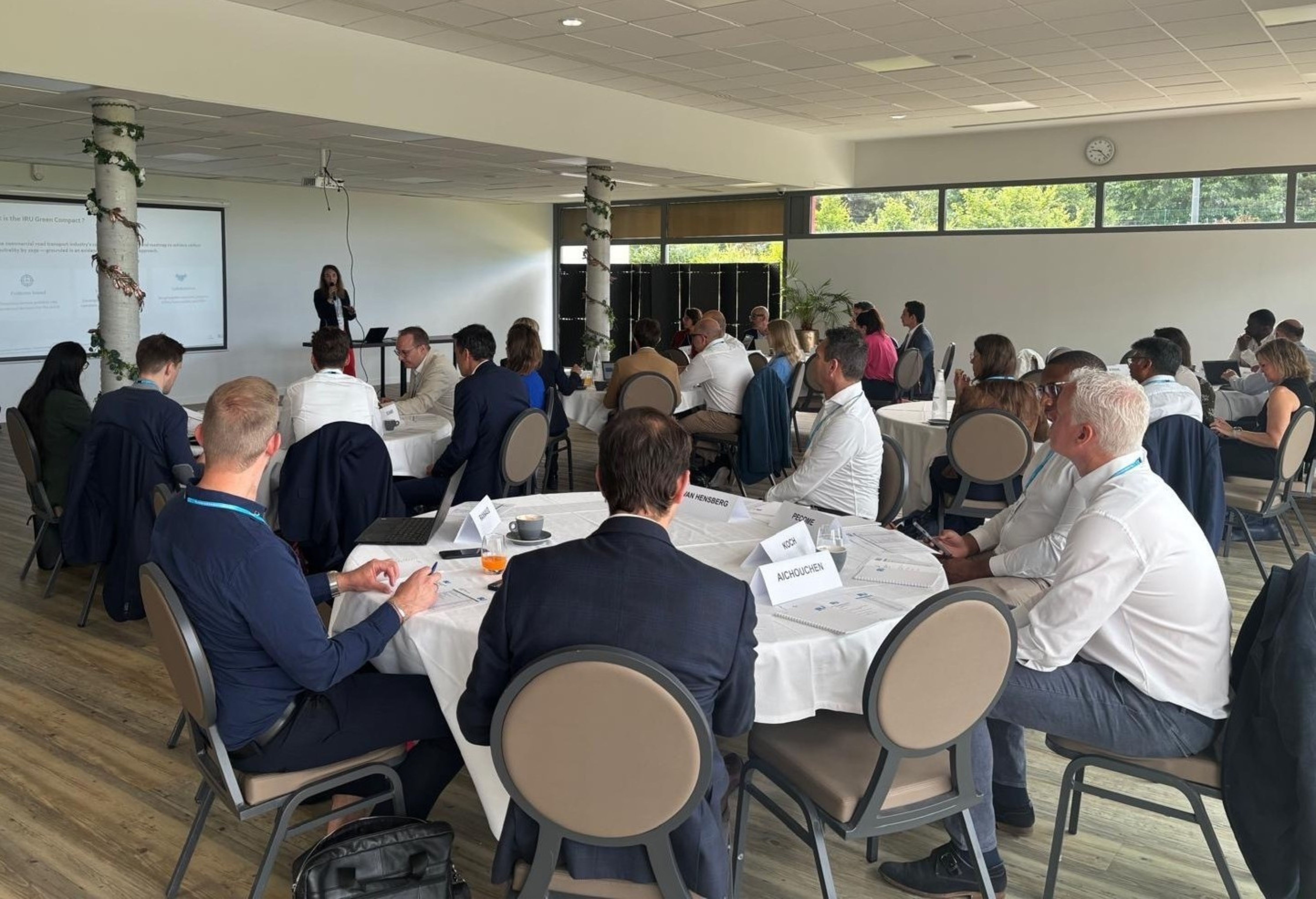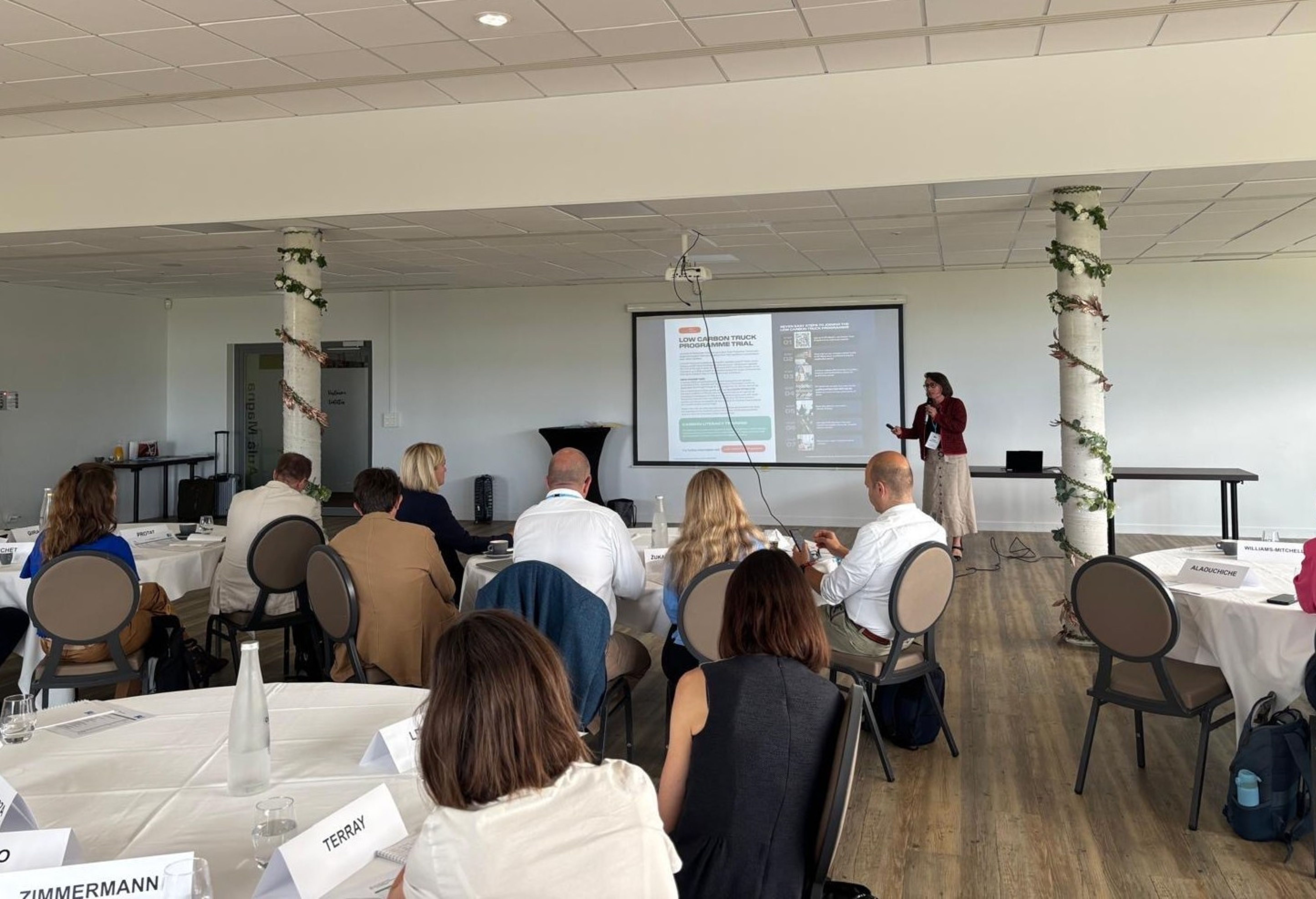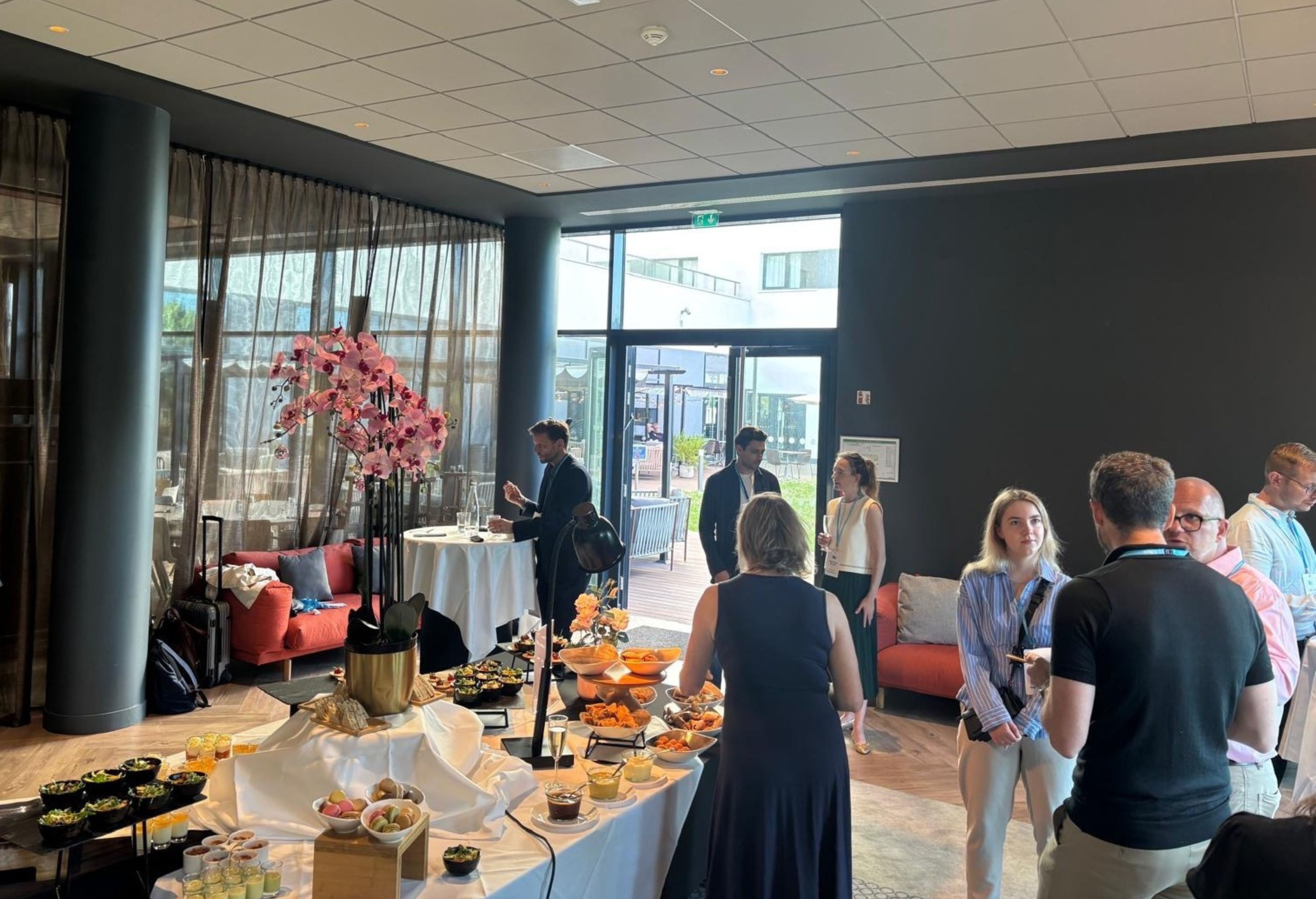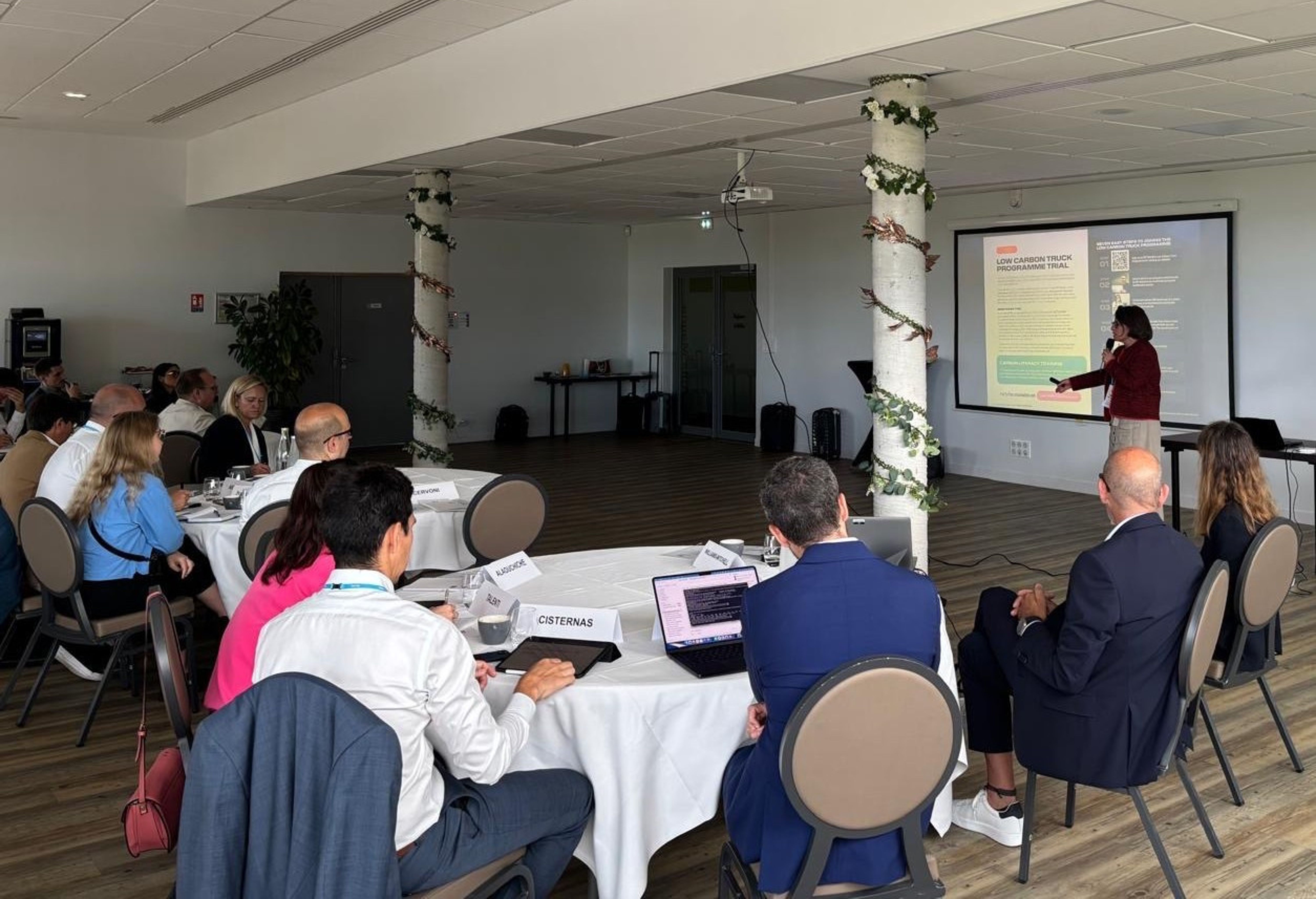
Road transport is highly fragmented with large numbers of small and medium-sized (SME) operators. How can the sector help SMEs transition to carbon neutrality without putting their businesses at risk? This question was at the centre of the latest IRU Green Compact Roundtable, hosted by IRU member DP World in Paris, France.
Over 30 senior representatives from across the industry – operators, shippers, OEMs, energy suppliers and service providers – took part in the seventh edition of the IRU Green Compact Roundtable.
IRU kicked off the closed-door roundtable with an overview of the industry’s decarbonisation challenge and the main regulatory developments expected in the coming years.
Participants considered the pace of fleet renewal, rising operating costs and the difficulties faced by smaller operators in financing alternative fuel vehicles, particularly battery-electric vehicles that are two to three times more expensive than conventional trucks.
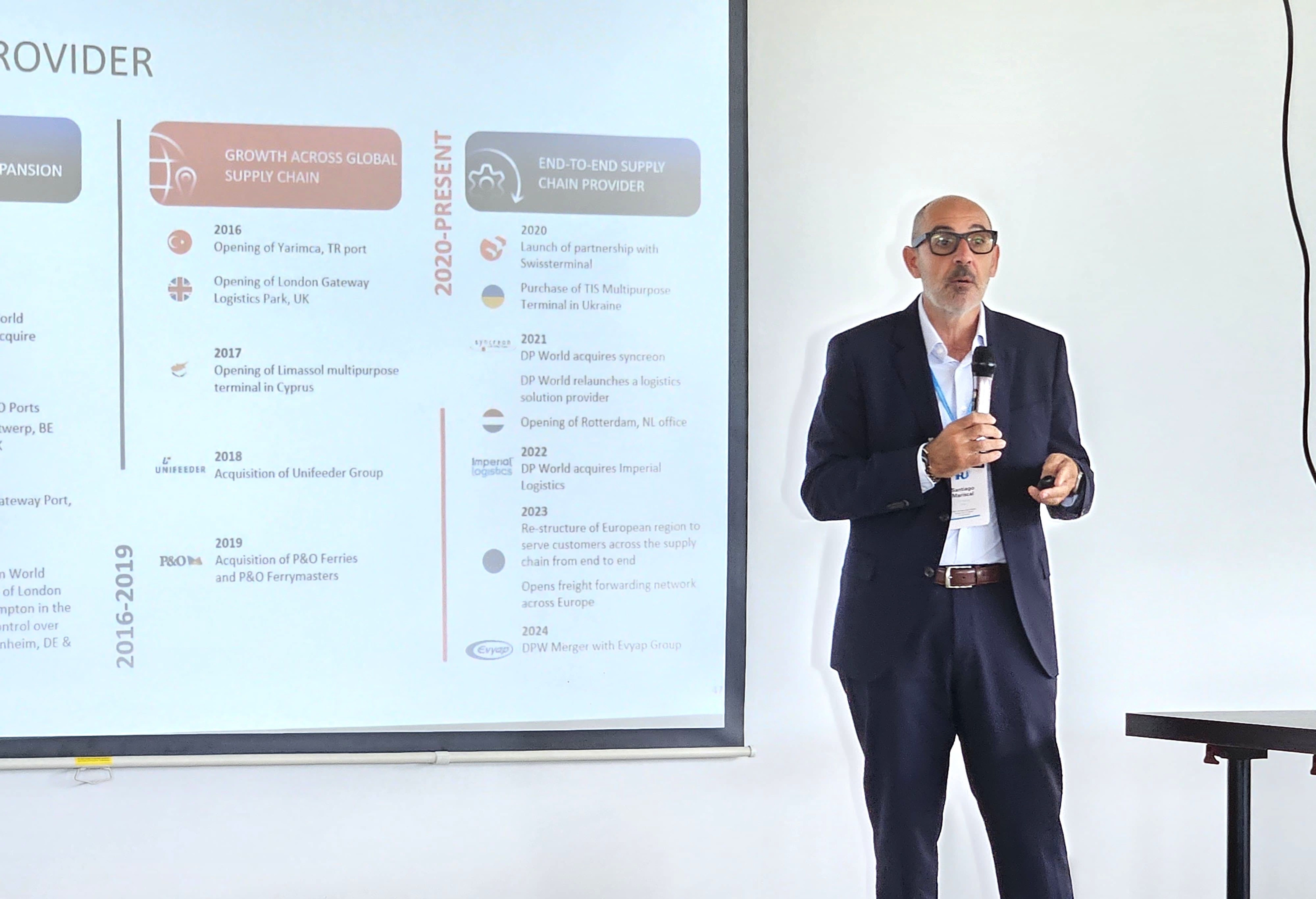
DP World presented its sustainability strategy and several programmes designed to reduce road freight emissions. These included electric truck trials, lower-carbon fuels, carbon insetting, modal shift and tools to measure transport emissions.
A first dedicated session took a deep dive into the total cost of ownership of alternative fuel vehicles and depot charging solutions. It covered site audits, smart charging, energy management and supervision, subsidy identification, and energy contracting, including fixed-price energy agreements of up to three years to provide operators with greater cost certainty.
A second session examined how larger companies can support SME transport partners through training, group purchasing, financing arrangements and practical operational tools. Reducing empty journeys, improving vehicle loading and expanding intermodal transport were among the efficiency measures discussed.
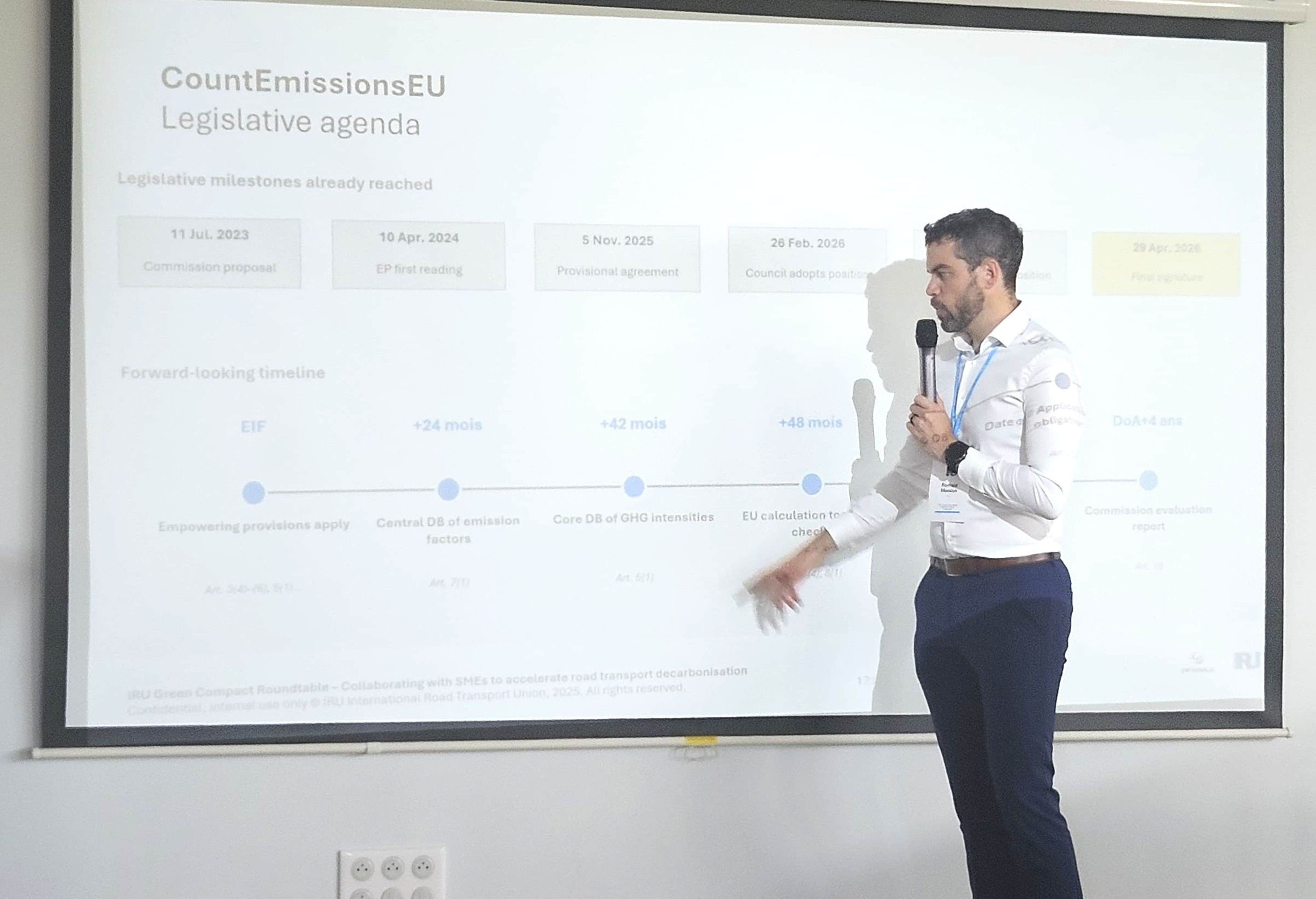
The roundtable also considered the upcoming CountEmissionsEU regulation and the challenges of collecting and sharing emissions data across subcontracting chains. Clear guidance and accessible tools, particularly for smaller companies with limited internal resources, are needed.
The closing discussion zeroed in on whether transport companies can decarbonise while operating on narrow profit margins. Progress will require close cooperation between operators, customers, energy providers, manufacturers and policymakers.