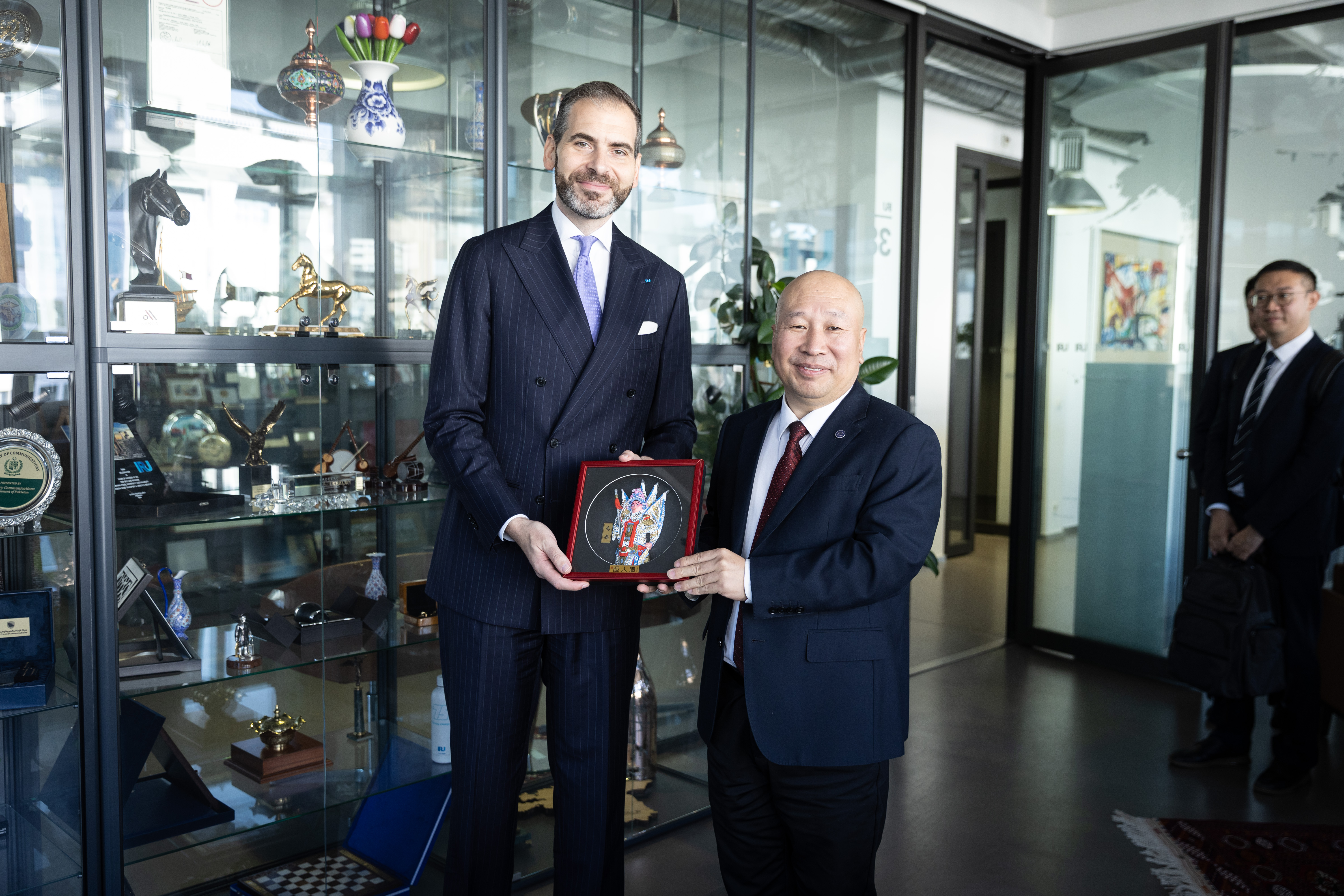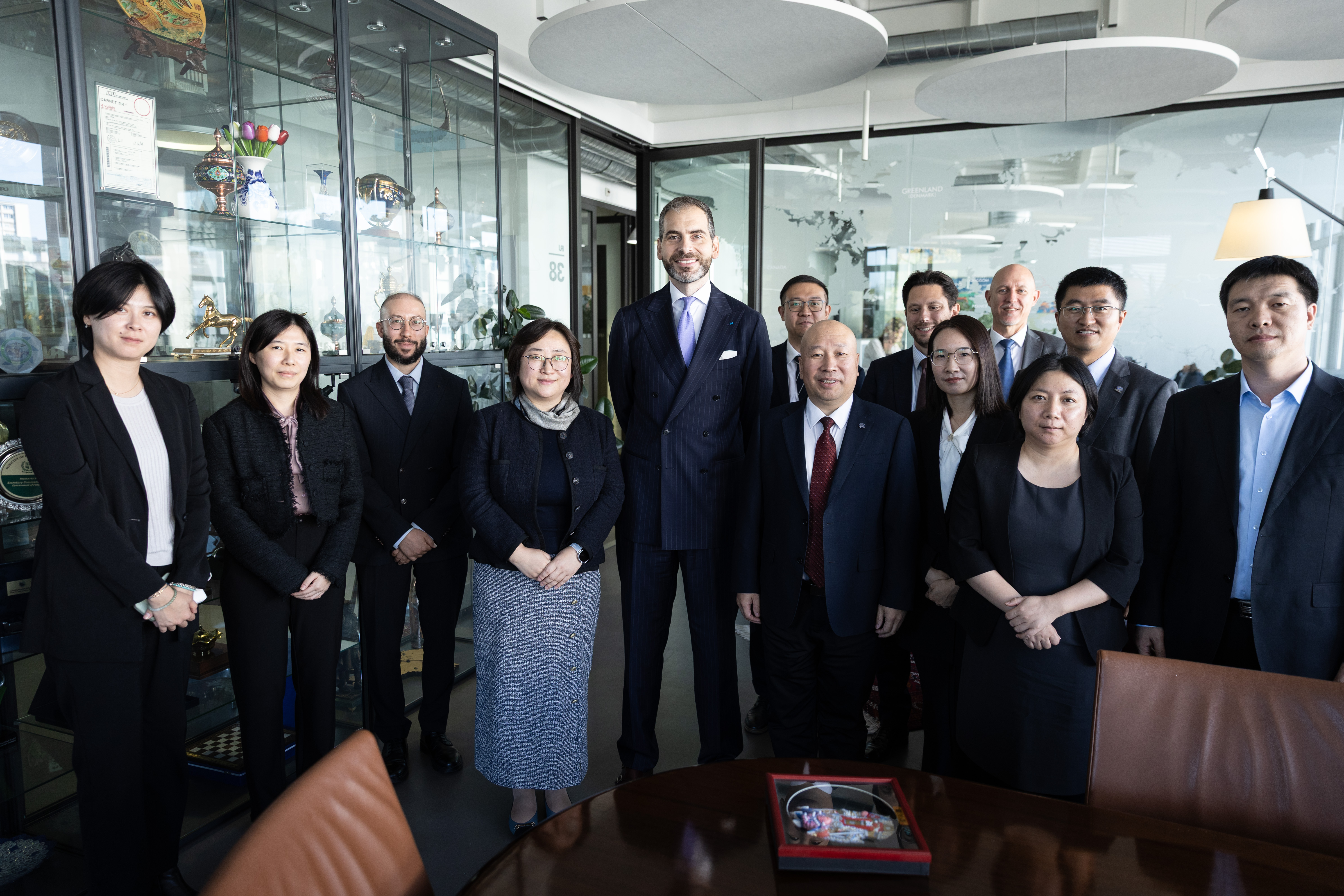
IRU welcomed a high-level Chinese delegation in Geneva, bringing together automotive associations CATARC and CASIC, as well as companies BYD, Huawei, Xiaomi and Great Wall Motor, for an in-depth exchange on the global road transport sector.
The discussion came at a time when China’s automotive industry is expanding rapidly into international markets.
In the first half of 2026, new-energy vehicles accounted for nearly half of China’s vehicle exports. Chinese companies also accounted for over 70% of the global power battery market in 2025.
This growing international presence creates significant opportunities for the global transport sector. It also raises technical questions around regulation, standards, data, connectivity and market deployment.
From technology to real-world deployment
The exchange focused on three main areas: global road transport trends and regulatory developments; standards, intellectual property and technology deployment; and cross-border compliance and risk management.
Particular attention was given to the rapid digitalisation of vehicles and the growing use of connected and intelligent technologies. As vehicles integrate more software, connectivity and automated functions, manufacturers and operators must increasingly navigate complex requirements relating to vehicle data, cybersecurity, privacy, cross-border data flows, data localisation and technology licensing.
The delegation also highlighted the growing role of standard-essential patents and ICT technologies in connected vehicles, illustrating how automotive innovation is becoming increasingly interconnected with telecommunications, software and digital regulation.
A win-win for global road transport
As for vehicle and automative suppliers in all countries, closer engagement between IRU and Chinese stakeholders can help bridge the gap between technology development and real-world transport operations.
For manufacturers and technology companies, dialogue with the road transport sector provides a better understanding of operational requirements, market conditions and regulatory expectations in international markets.
For road transport operators across the globe, closer engagement with technology developers can provide earlier visibility into emerging solutions in areas such as electrification, batteries, connected vehicles, automation and digital fleet services.
And for policymakers and industry organisations, stronger exchanges can help identify common technical challenges earlier and support regulatory approaches that enable innovation while remaining practical for commercial transport.
"Operators everywhere welcome more choice in vehicles and technology, and Chinese manufacturers are bringing real innovation, particularly in batteries and electrification,” said IRU Senior Director for Strategy and Development Vincent Erard.
"Success in road transport depends on trust: delivering reliability and efficiency on the road, and meeting shared expectations on safety, cybersecurity and data protection, as every manufacturer must. Early, open exchanges like this help everyone get there faster," he added.
As the delegation underlined, internationalisation requires more than exporting vehicles. It also means adapting to different regulatory systems, intellectual property frameworks, standards and compliance requirements.
The exchange marked an important step towards closer cooperation between automotive innovators and the global road transport industry, with the shared objective of turning technological progress into safe, competitive and commercially viable transport solutions worldwide.