


What we do

IRU is the trusted voice for mobility and logistics, upholding the interest of bus, coach, taxi and truck operators as well as the broader mobility and logistics industry.

IRU promotes and enhances cooperation between the industry and decision-makers, helping facilitate trade and build prosperity.
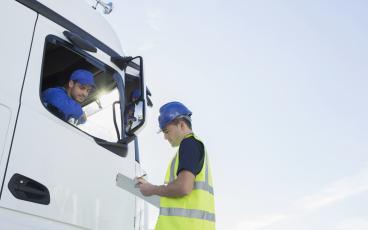
IRU champions excellence in road transport through international certification standards that create real competitive advantage.
Highlights






Latest news

EU | Brussels
Dense EU charging and refuelling network needed to meet CO₂ targets
A timely roll-out of alternative fuels infrastructure is a basic requirement for a large-scale shift to zero-emission vehicles, but Member States show no sign of supporting this ambition. Earlier this month, the EU Commission released its long-awaited proposal on CO₂ standards for heavy-duty vehicles.
28 Feb 2023 · Environment
Pakistan | Islamabad
TIR system expedites delivery of humanitarian aid to Türkiye
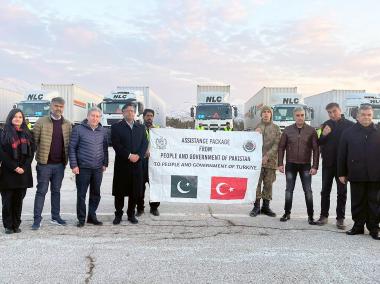
Pakistani operator National Logistics Cell (NLC) has delivered essential relief items to people impacted by the devastating earthquake in Türkiye. A caravan of 21 trucks operated by NLC, a TIR carrier in Pakistan, transported humanitarian aid – including tents, blankets and other basic aid supplies – to Türkiye.
28 Feb 2023 · People

Switzerland | Geneva
Iraq can become regional trade hub and boost non-oil sectors with TIR
On the sidelines of the UN’s 85th Inland Transport Committee (ITC) session last week, IRU’s Secretary General and Iraq’s Minister of Transport discussed the country’s highly anticipated accession to the TIR system. The Republic of Iraq, with the support of its Ministry of Transport, has completed all national requirements to join TIR, laying the ground for the final official accession step with the UN.
27 Feb 2023 · Prosperity
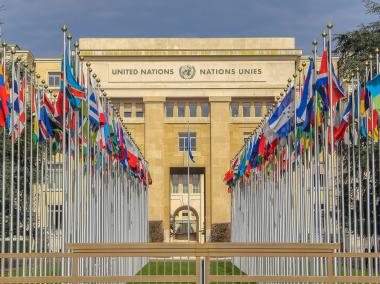
Switzerland | Geneva
IRU at UN Inland Transport Committee: highlights of the week
IRU was involved in a wide range of activities at the UN’s 85th Inland Transport Committee (ITC) session this week, driving road transport forward with its members, governments and international organisations. It was a busy week in Geneva. Road transport actors from around the world were in town for the 85th ITC session, including delegations from the UN Economic Commission for Europe (UNECE)’s 56 member states and far beyond.
24 Feb 2023 · Prosperity
Our members
