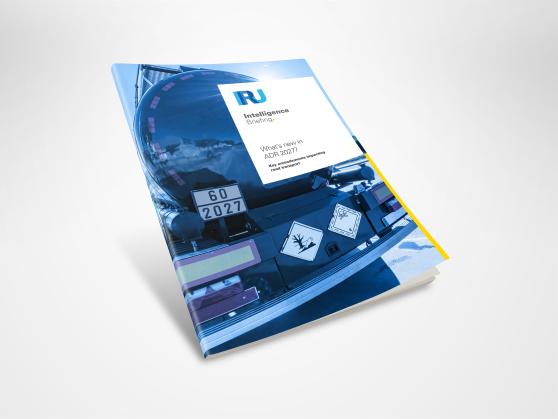

IRU Intelligence Briefing - What's new in ADR 2027

05 Nov 2026

What's new in ADR 2027?

This IRU Intelligence Briefing examines the key amendments to the Agreement concerning the International Carriage of Dangerous Goods by Road (ADR), entering into force on 1 January 2027, and their implications for the road transport supply chain.

The new provisions reflect evolving transport technologies, safety requirements and operational practices, with important developments affecting battery transport, alternative fuel vehicles and driver training.

Battery transport is a major area of change, with new provisions covering lithium and sodium-ion batteries installed in cargo transport units, hybrid batteries, and repaired or refurbished batteries.

Driver training is also evolving, with the introduction of remote training and e-learning options, offering greater flexibility while maintaining essential practical training requirements.

Vehicle safety requirements are being updated to reflect technological developments, particularly for electric and hydrogen-powered vehicles, alongside new provisions for tyre pressure monitoring systems and electrical safety.

Further amendments address dangerous goods classification, exemptions, packaging, marking and labelling, transport documentation, waste transport, and the construction and testing of tanks and equipment.

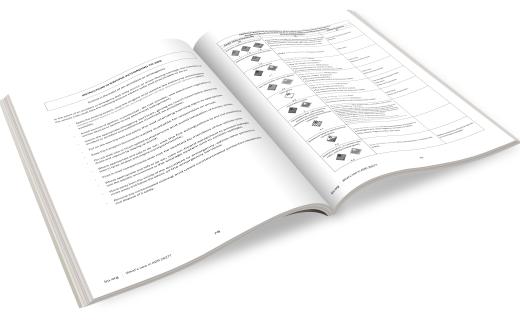
The briefing provides a detailed examination of these regulatory developments, highlighting amended provisions and transitional measures to help operators, safety advisers and other industry stakeholders understand the changes and prepare for ADR 2027 compliance.

Price EUR 390

Who is it for?

What is it for?

Identify the amendments entering into force on 1 January 2027 and what they mean for your operations

Identify the amendments entering into force on 1 January 2027 and what they mean for your operations

Prepare for new battery transport provisions: lithium, sodium-ion, hybrid, and repaired or refurbished batteries

Prepare for new battery transport provisions: lithium, sodium-ion, hybrid, and repaired or refurbished batteries

Update driver training, taking advantage of remote training and e-learning options

Update driver training, taking advantage of remote training and e-learning options

Adapt vehicles and equipment to new rules for electric and hydrogen vehicles, tyre pressure monitoring and electrical safety

Adapt vehicles and equipment to new rules for electric and hydrogen vehicles, tyre pressure monitoring and electrical safety

Review classification, packaging, marking, labelling and documentation, and plan around transitional measures

Review classification, packaging, marking, labelling and documentation, and plan around transitional measures

Stay ahead of the amendments entering into force on 1 January 2027 – assess your compliance gaps, update your procedures, prepare early.

Full 136-page briefing contents:

  • Chap 1: Introduction
  • Chap 2: Battery transport
  • Chap 3: Driver training: remote training and e-learning
  • Chap 4: Vehicle safety requirements
  • Chap 5: Classification and exemptions
  • Chap 6: Packaging, marking and labelling
  • Chap 7: Transport documentation
  • Chap 8: Waste transport
  • Chap 9: Construction and testing of tanks and equipment
  • Chap 10: Transitional measures
  • Chap 11: Key takeaways

Purchase options

One-time purchase

Buy the Intelligence Briefing as standalone PDF report - zero commitment.

EUR 390

Buy this option

Turn this purchase into as subscription

With the Strategic plan, you get access to this briefing as well as many other actionable data on market trends and regulatory updates available exclusively on the IRU Intelligence Platform.

EUR 332.5 per month

Buy this option

New to the intelligence Platform?

The IRU Intelligence Platform is designed for transport operators, shippers, manufacturers, consulting firms, and businesses looking to optimise operations, anticipate market trends, and make informed strategic decisions.

Discover the IRU Intelligence Platform